Theopolis Logo

Writing

Explore our collection of theological essays, biblical studies, and reflections on faith and culture.

See all
tanner-mardis-xuxghzhibn4-unsplash-1-2
Biblical Studies

Tweets-turned-Notes on the Bible’s Chronology

Summary In what follows, I will consider the “year-stamps” employed in Scripture, i.e., statements of the form, “Such-and-such an event took place in the Xth year of Y.” In the process, I will suggest some ways in which the Biblical narrative might relate to events in the extra-Biblical world, though…

by James BejonJuly 16, 2019
durer-prodigal-son-2
Luke

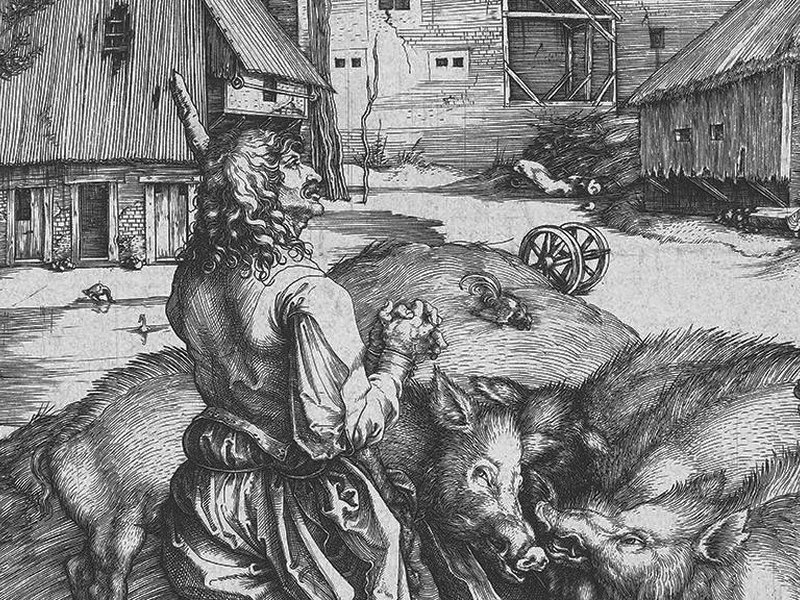
Perspectives on the Prodigal, (Part 2)

In the first essay on the parable of the Prodigal Son, I suggested that the problems commentators and others encounter in interpreting Jesus three-part parable are not accidental. These are not just problems in our ignorance of cultural background. They are intentional features of the stories —stories designed to poke…

by Ralph Allan SmithJuly 11, 2019
durer-prodigal-son-2
Luke

Perspectives on the Prodigal, (Part 1)

The story of the Prodigal Son is perhaps the most well-known story in the Bible. As others have observed, it may also be one of the most misunderstood. In two short essays, I will point out features of this story that are commonly neglected, aspects of Jesus’ parable that might…

by Ralph Allan SmithJuly 9, 2019
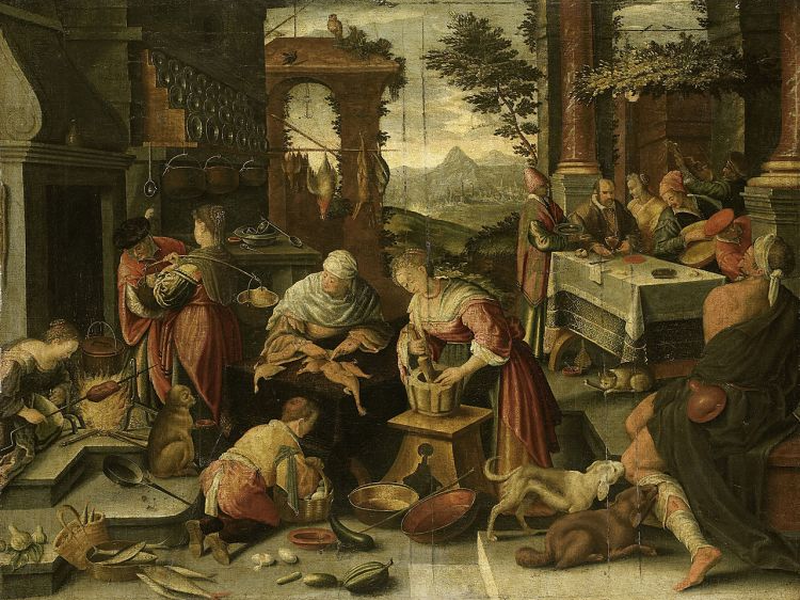
de-rijke-man-en-de-arme-lazarus-by-jacopo-da-ponte-16th-century
Luke

Lazarus and the Rich Man

The parable of Lazarus and the nameless rich man is not an independent story. It is part of a long context that begins in Luke 15:1, where Jesus is eating with tax collectors and sinners and the scribes and Pharisees grumble. In response to their hardheartedness, Jesus tells a three-part…

by Ralph Allan SmithJuly 4, 2019
aaron-burden-uynrnfdkjwg-unsplash
Luke

Everybody has Dropsy - Luke 14:1-24

The Bible is written so that even when a reader cannot pick up on what might be deeper or more detailed aspects of a text, there is virtually always a message to be heard. In the ancient world, where the “reader” of Scripture would likely be a church official facing…

by Ralph Allan SmithJuly 2, 2019
communion
Biblical Theology

Fruit Trees and Grain Plants

The distinction between garden (or vineyard) and field begins in Genesis 2. This relates to the ordering of the formless world. Plants of the field are contrasted with the garden planted by God in Genesis 2:5&8. Later on, under the Old Covenant the Israelites will be required to keep their…

by James B. JordanJune 27, 2019

Showing page 77 of 309

See all

Showing page 34 of 43

See all

Jesus’ Masculinity in Matthew

The current issue of Semeia (#45) is devoted to “New Testament Masculinities,” and is a contribution to the growing academic study of masculinity. Jerome Neyrey has an interesting article here on Jesus’ masculinity in the gospel of Matthew. Two of his conclusions are particularly noteworthy: 1) “Matthew rarely locates [Jesus]…

December 18, 2003

Thoughts on the Renaissance

A couple of thoughts on the Renaissance, inspired by Spenser: First, Spenser’s emphasis on the proper use of the body (Book 2 of the Faerie Queene , the book of temperance) highlights the anti-Platonic thrust of Spenser’s viewpoint. That was, if Greenblatt is to be believed, a central thrust of…

December 17, 2003

Creation and Babel

There are a number of allusions to the original creation account in the account of Babel in Genesis 11. First, there is the general point that Yahweh is destroying what men have built ?Ea rebellious creation “decreated” by Yahweh. Second, the creation echoes are strengthened by Yahweh’s sarcastic “let us”…

December 16, 2003
Theology

Feminist Theology

Here’s a thesis to explore: The problems of feminist theology are intertwined with issues of sacramental theology and theological semiotics. If the SYMBOLISM of male and female is epiphenomenal, then feminist theology makes sense. If symbol and essence are co-determining, then feminist challenges to the Christian tradition are basically off-track.

December 16, 2003

Eucharistic Meditation, December 14

Eucharistic meditation for Third Sunday of Advent: Deuteronomy 12. During Israel’s wilderness wanderings, the tabernacle, Yahweh’s royal tent, was set in the middle of the Israelite camp, and was the place of worship and feasting. In the wilderness, an Israelite could not eat meat unless the animal had been slaughtered…

December 14, 2003
Theology

Exhortation, December 14

I want particularly to address our out-of-town college students this morning, though what I have to say has some application to everyone. So, don’t tune out. This coming week, most of you students will be returning home for the holidays, and as you return home you will be faced with…

December 14, 2003

Showing page 2151 of 2212

Browse by Category

In Medias Res

Your weekly digest for all things Theopolis.

Donate

Theopolis is nearly 100% donor-supported. Consider joining us on our mission.