Theopolis Logo

Writing

Explore our collection of theological essays, biblical studies, and reflections on faith and culture.

See all
aaron-burden-1ebsmyrau-s-unsplash
John

Moses & Jesus: Friends or Foes?

A Look at John 1.17 For the law was given through Moses, but grace and truth came through Jesus Christ. The above quotation is John 1.17 and comes from the New King James Version of the Bible. It is quite similar to the original translation in the old King James…

by Mark HorneJune 6, 2002

ben-white-w8qqn1pmqh0-unsplash
Christology

Grace Apart From Sin

And the Child continued to grow and become strong, increasing in wisdom; and the grace of God was upon Him. There is nothing faulty in this translation (New American Standard Bible); Jesus was the recipient of the grace of God His Father from whom He is eternally begotten and with…

by Mark HorneJune 6, 2002
ivan-aleksic-16yxcjsoaek-unsplash
Philemon

Flesh and Lord: Philemon 15 & 16

When Paul wrote to Philemon asking him to forgive his runaway slave, Onesimus, he gave Philemon an interesting perspective on how God used Onesimus’ action to bring about his conversion: For perhaps he was for this reason parted from you for a while, that you should have him back forever,…

by Mark HorneJune 6, 2002
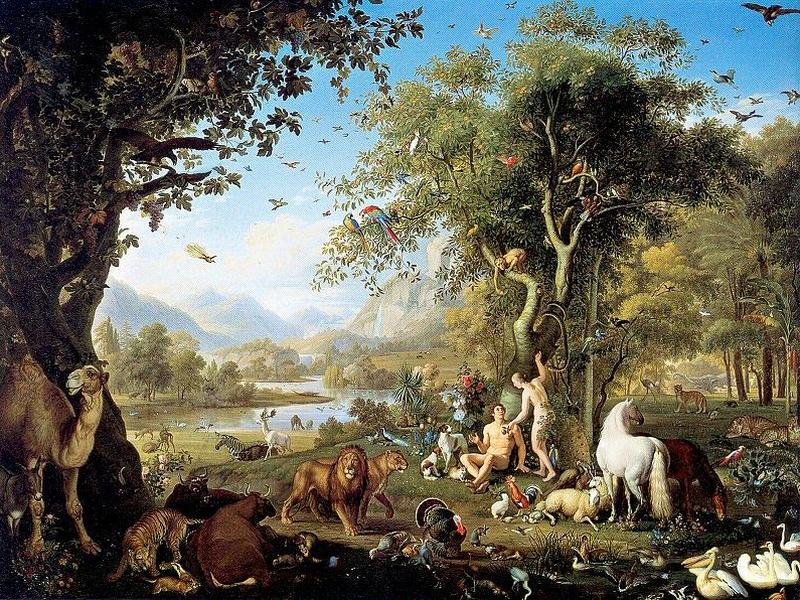
adam-and-eve-in-the-garden-of-eden-wenzel-peter
Covenant

Covenant of Works?

Adam’s good works were acceptable to God. He could do them and God would receive them. Our own “good” works, our very best works, require the forgiveness of God and the continual intercession of Jesus Christ due to their impurity. Thus, it is appropriate to describe God’s covenant with Adam…

by Mark HorneJune 6, 2002
sixteen-miles-out-al48tflf4e8-unsplash
Mark

Blasphemy Against the Holy Spirit?

In Mark’s Gospel we read: “And the scribes who came down from Jerusalem were saying, ‘He is possessed by Beelzebul,’ and ‘He casts out the demons by the ruler of the demons’” (3.22). Jesus replied in part, “Truly I say to you, all sins shall be forgiven the sons of…

by Mark HorneJune 6, 2002
e99a4713
Ecclesiology

A Visionary Ecclesiology

A Primer for Church Members on the Nature and Functions of the Body of Christ Introductory Note: I intend this paper to serve as something of a “user’s guide” for church members, though church leaders may also find it valuable in developing vision statements for their local bodies. I have…

by Rich LuskJune 5, 2002

Showing page 237 of 309

See all

Showing page 34 of 43

See all

Tangled

E mma Tarlo's recent Entangled is a study of the global market in human hair. In a TLS review , Kathryn Hughes describes a “multi-billion-dollar global hair market.” Tarlo explores “the processes by which the greasy hairballs unpicked in Mandalay get refashioned into ‘frothy toppers' and ‘dome bowlers' in New…

December 2, 2016

Stop!

“S cott Alexander” (a pseudonym) applies some common sense the media characterization of Trump as an “openly racist” candidate dedicated to courting the KKK. He estimates, for instance, that there are 3-5000 Klansman in the US. Over the course of the campaign, he estimates that at least 14,000 articles were…

December 2, 2016

Three Forms of Madness

I n an editorial introduction to King Lear , GK Hunter observes that the play depicts three forms of madness. First, “The Fool has a quality of savage innocence that the other two lack. . . . His stock consists in the main of songs and riddles, nonsense-rhymes and a…

December 2, 2016

Slapstick Tragedy

A lexander Leggatt ( King Lear ) captures the oddity of King Lear by calling attention to the blunt physicality of the play: “The tortured body is a recurring image. . . . According to J.I.M. Stewart, ‘The blinding of Gloucester represents a sort of crystallizing of this element of…

December 2, 2016

Structure and Theme in Lear

N ote #1: Act 1, scene 2 of King Lear , which initiates Edmund's plots against father Gloucester and brother Edgar, is structured chiastically: A. Edmund's first soliloquy. B. Edmund with Gloucester, accusing Edgar. C. Edmund's second soliloquy. B'. Edmund with Edgar, sowing suspicion that Gloucester is suspicious of Edgar.…

December 2, 2016

Freak of History

Diarmaid MacCulloch starts his study of the Reformation, All Things Made New , with a sketch of the medieval world. It's a bit rosy, emphasizing the unity of medieval Europe: “The most noticeable characteristic of Western Europe in what we call the Middle Ages was its cultural and religious unity…

December 2, 2016

Showing page 227 of 2212

Browse by Category

In Medias Res

Your weekly digest for all things Theopolis.

Donate

Theopolis is nearly 100% donor-supported. Consider joining us on our mission.