Theopolis Logo

Writing

Explore our collection of theological essays, biblical studies, and reflections on faith and culture.

See all
tanner-mardis-xuxghzhibn4-unsplash-1-2
Biblical Studies

Tweets-turned-Notes on the Bible’s Chronology

Summary In what follows, I will consider the “year-stamps” employed in Scripture, i.e., statements of the form, “Such-and-such an event took place in the Xth year of Y.” In the process, I will suggest some ways in which the Biblical narrative might relate to events in the extra-Biblical world, though…

by James BejonJuly 16, 2019
durer-prodigal-son-2
Luke

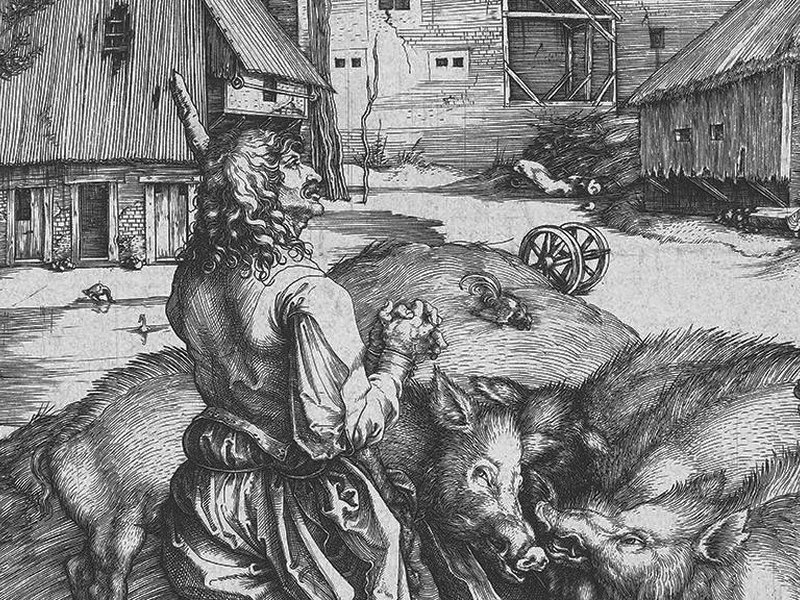
Perspectives on the Prodigal, (Part 2)

In the first essay on the parable of the Prodigal Son, I suggested that the problems commentators and others encounter in interpreting Jesus three-part parable are not accidental. These are not just problems in our ignorance of cultural background. They are intentional features of the stories —stories designed to poke…

by Ralph Allan SmithJuly 11, 2019
durer-prodigal-son-2
Luke

Perspectives on the Prodigal, (Part 1)

The story of the Prodigal Son is perhaps the most well-known story in the Bible. As others have observed, it may also be one of the most misunderstood. In two short essays, I will point out features of this story that are commonly neglected, aspects of Jesus’ parable that might…

by Ralph Allan SmithJuly 9, 2019
de-rijke-man-en-de-arme-lazarus-by-jacopo-da-ponte-16th-century
Luke

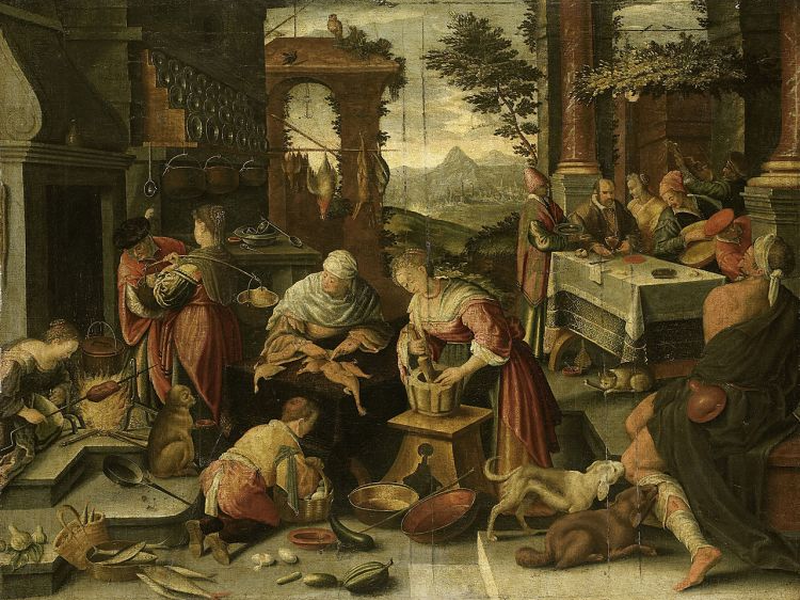
Lazarus and the Rich Man

The parable of Lazarus and the nameless rich man is not an independent story. It is part of a long context that begins in Luke 15:1, where Jesus is eating with tax collectors and sinners and the scribes and Pharisees grumble. In response to their hardheartedness, Jesus tells a three-part…

by Ralph Allan SmithJuly 4, 2019
aaron-burden-uynrnfdkjwg-unsplash
Luke

Everybody has Dropsy - Luke 14:1-24

The Bible is written so that even when a reader cannot pick up on what might be deeper or more detailed aspects of a text, there is virtually always a message to be heard. In the ancient world, where the “reader” of Scripture would likely be a church official facing…

by Ralph Allan SmithJuly 2, 2019
communion
Biblical Theology

Fruit Trees and Grain Plants

The distinction between garden (or vineyard) and field begins in Genesis 2. This relates to the ordering of the formless world. Plants of the field are contrasted with the garden planted by God in Genesis 2:5&8. Later on, under the Old Covenant the Israelites will be required to keep their…

by James B. JordanJune 27, 2019

Showing page 77 of 309

See all

Showing page 34 of 43

See all

Jacob Have I Loved

W illiam Johnstone points out in the first volume of his commentary on 1 & 2 Chronicles that the Chronicler's (C) list of the kings of Edom oddly repeats the phrase “then king so-and-so died and there reigned in his place” seven times. In part, this places greater stress on…

June 23, 2016

Jesus the Teacher

I f not unique, Robert Banks's Reenvisioning Theological Education is a rarity among studies of theological education in the amount of attention he devotes to biblical models of education and training. In reviewing recent literature on efforts to rethink seminary education, he notes again and again that little attention is…

June 23, 2016

Fulfilling Paganism

R obert Pogue Harrison ( The Dominion of the Dead ) spends several pages on Walter Pater's novel, Marius the Epicurean . A deathbed convert to Christianity, Marius is struck in his first encounter with the church by the continuities between Christianity and the oldest of Roman religions, the religion…

June 22, 2016

Ancient Memory

R emember the poor,” Paul told the Galatians. But what did that mean? Peter Brown ( The Ransom of the Soul: Afterlife and Wealth in Early Western Christianity , 39-40) explains that “For early Christians, as for many other ancient persons, memory was far more than a passive storage space.…

June 22, 2016

Attention Deficit

A ccording to Lily Gurton-Wachter's Watchwords: Romanticism and the Poetics of Attention , “the first documentation of the disorder we now call Attention Deficit Hyperactivity Disorder” is found in “a medical text published in London in 1798.” Scottish physician Alexander Crichton described the “morbid alterations to which attention is subject”…

June 22, 2016

Can An Architect Save Us?

R obert Pogue Harrison calls the twentieth century “the fitful and prolonged continuation of a process that began in earnest a century earlier: the end of the Neolithic era” ( Dominion of the Dead , 31). One might think that we left the Neolithic a long time ago, but Harrison…

June 21, 2016

Showing page 276 of 2212

Browse by Category

In Medias Res

Your weekly digest for all things Theopolis.

Donate

Theopolis is nearly 100% donor-supported. Consider joining us on our mission.