Theopolis Logo

Writing

Explore our collection of theological essays, biblical studies, and reflections on faith and culture.

See all
aaron-burden-1ebsmyrau-s-unsplash
Biblical Horizons

The Sin of Ham and the Curse of Canaan, Part 1

The history of the sin of Ham and the curse of Canaan comes in the middle of the Generations of Noah, a section of Genesis that begins at Genesis 6:9 and extends to the closing notice, Genesis 11:9. To understand the story better, it is necessary to get in mind…

by James B. JordanJune 3, 1997

david-weber-f_nj26i9wyo-unsplash-1
Eucharist

You and Your Son and Daughter: Christ’s Communion with Young Children

This paper was written to persuade people who were members of the Presbyterian Church in America. It should be accessible to anyone who believes in baptizing infants–especially to those who consider themselves a part of the Reformation Tradition. References to “our Confession” or “our standards” invoke the Westmeinster Confession of…

by Mark HorneJune 3, 1997
screenshot-2023-07-27-at-10-25-35-am
Baptism

The Westminster Standards & Sacramental Efficacy

Version 1.2 I write this brief essay in order to address a problem I have encountered. I keep reading explanations of doctrine of the sacraments fundamentally empty of the content which was once held by virtually all Reformed confessions and formulations. Furthermore, I read explanations and commentaries on the Westminster…

by Mark HorneJune 3, 1997
aaron-burden-h8s0pf2rcqs-unsplash
Biblical Chronology

John Sailhamer Weighs In, Part 2

We continue our analysis of John Sailhamer’s book *Genesis Unbound: A Provocative New Look at the Creation Account* (Multnomah Books, 1996), which argues that Genesis 1:2ff. is not about the creation of the whole world, but about the preparation of the Land of Eden, which is also the Promised Land.…

by James B. JordanMay 31, 1997
screenshot-2023-08-30-at-11-50-23-am
Matthew

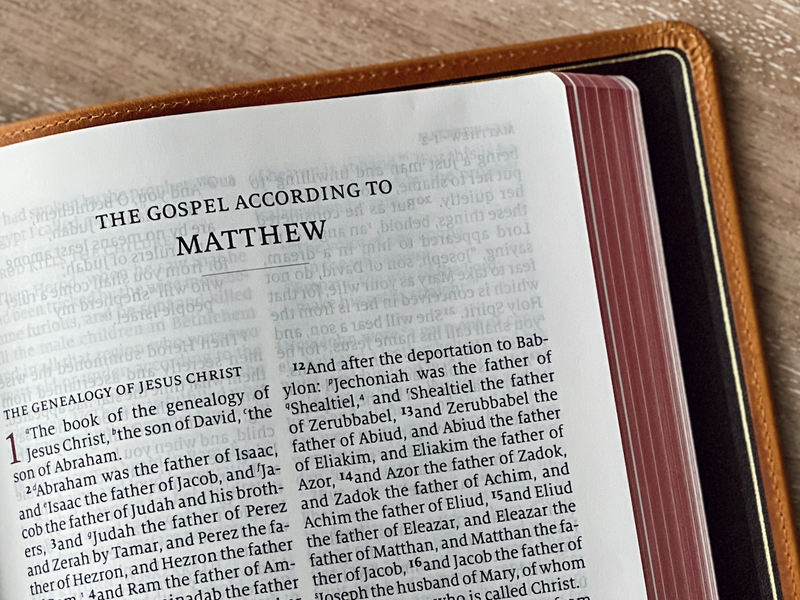
Toward a Chiastic Understanding of the Gospel According to Matthew, Part 2

III. Death of God’s Firstborn in the real Egypt: This huge chiasm has as its center the betrayal of Peter, as the leader of the disciples himself rejects Jesus. Peter holds an oficial position as high priest among the disciples of the incarnate Lord. His rejection of Jesus is the…

by James B. JordanMay 31, 1997
aaron-burden-qjdzyt_k8xg-unsplash
Eucharist

A Response to Rev. Bacon’s Argument that Manna was not a Sacrament

I wrote a response to Rev. Richard Bacon’s tract, What Mean Ye by This Service , a copy of which I borrowed from the library at Covenant Theological Seminary. However, I recently discovered that a new appendix was added to the version available on the Blue Banner’s web page. This…

by Mark HorneMay 29, 1997

Showing page 257 of 309

See all

Showing page 34 of 43

See all

Ritual and Spontaneity

For the first 1500 years of its existence, Christianity was a liturgical faith. That began to change with Wyclif and the Hussites, and the Reformation produced permanent forms of un- and even anti-liturgical Christianity. Ceremony took on negative connotations, synonymous with hollowness and superstition. Ritual was no longer seen as…

October 13, 2015

Locusts and Honey

John the Baptist is presented in the gospels as the fulfillment of the Old Testament promise that God would send His messenger to prepare the way for the coming of the glory of the Lord (Isaiah 40), and the promise to send Elijah before Him to turn the people to…

October 12, 2015
Eucharist

Showing the Lord's Death

How does the Lord’s Supper proclaim the death of Jesus until He comes? (1 Corinthians 11:26). Historically, liturgists have attempted to locate some act in the rite of the Supper that corresponds to the death of Jesus: the fraction (breaking of bread), or the fact that bread and wine are…

October 12, 2015

Eucharistic Modalism

One of the earliest Trinitarian heresies is called “modalism.” It taught that the “persons” of the Trinity are not distinct persons, but only the masks or roles that the one Person of God adopts at various times. The fundamental problem with modalism is that it stretches out a veil, or…

October 12, 2015

Irritability and Intellect

We like to pretend our notions are the product of careful study and rational analysis. We like to pretend our likes and dislikes are deeply rooted in principle. Montaigne thought otherwise. In “An Apology for Raymond Sebond,” he wrote, “I have seen some, who without infringing their patience, could not…

October 12, 2015

From the Mouth

Four times Revelation refers to the sword that comes from the mouth of Jesus, twice at the beginning of the book (1:16; 2:16) and twice at the end (19:15, 21). Jesus' mouth-sword frames the book, and the four uses hint at His universal conquest: Jesus will extend the reign of…

October 9, 2015

Showing page 365 of 2212

Browse by Category

In Medias Res

Your weekly digest for all things Theopolis.

Donate

Theopolis is nearly 100% donor-supported. Consider joining us on our mission.