Theopolis Logo

Writing

Explore our collection of theological essays, biblical studies, and reflections on faith and culture.

See all
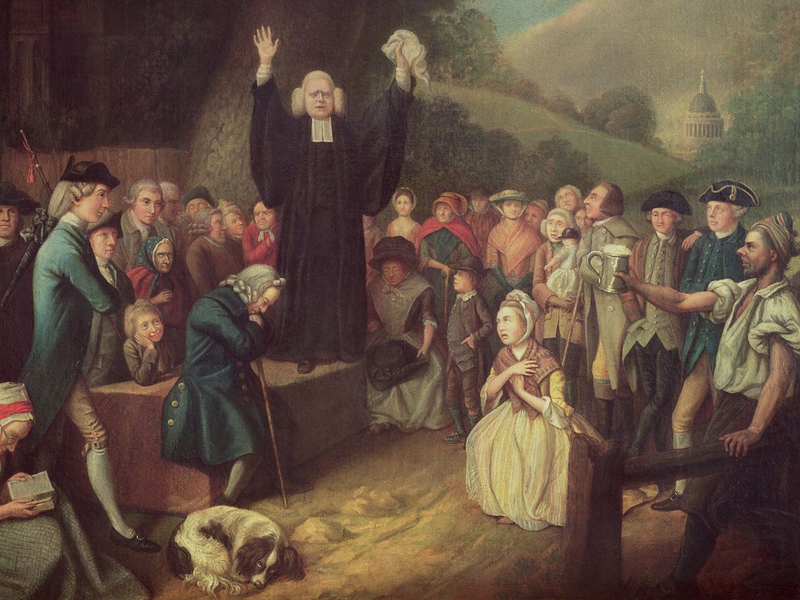
georgewhitefield-71901184-de237affa7764d6e95818a589190adf7
Biblical Horizons

The Great Awakening: A Critique

The following material was published in 1984 in Christianity and Civilization No. 4: The Reconstruction of the Church, pages 6-9, and are reprinted here as grist for the mill of the discussion of “evangelicalism.” Footnotes have not come through, of course. Though this material is offered in connection with a…

by James B. JordanJune 19, 2012

aaron-burden-1ebsmyrau-s-unsplash
Biblical Horizons

Concerning Regeneration

I wrote my beef about “regeneration” a decade ago, and I don’t really see the need to reopen what I think now. (Jordan, Thoughts on Sovereign Grace and Regeneration: Some Tentative Explorations. Biblical Horizons Occasional Paper No. 32) But. My pal Doug Wilson has been writing a series of essays…

by James B. JordanJune 19, 2012

jelleke-vanooteghem-gnxb59lgu1m-unsplash
John

Born From Above: Some Notes on John 3

Nicodemus’s conversation with Jesus in John 3:1-15 is sometimes regarded as an illustration of the tremendous stupidity of the Jews of our Lord’s day. Nicodemus is treated as just some guy who comes to Jesus at night because he doesn’t want to get into trouble by being seen with Him.…

by James B. JordanJune 18, 2012
screen-shot-2020-12-03-at-1-47-33-pm
Biblical Horizons

Is James B. Jordan an “Evangelical”?

During the last couple of weeks, Douglas Wilson has issued several posts over on his Blog and Mablog blog that deal with “evangelicalism” and who is and who is not an “evangelical.” In the course of these postings, Doug has written that while I am a fine Christian who has…

by James B. JordanJune 18, 2012
karsten-wurth-imegmbunara-unsplash
Biblical Horizons

Three Issues in Regard to Eastern Orthodoxy

Here are three issues in regard to the Eastern Church. First, here is the quote from Bavinck’s The Doctrine of God, page 317, Banner of Truth edition (1977) under the heading of Inter-Personal Relations. The Greeks derived the unity of God’s essence and the unity of the persons not from…

by Richard BledsoeJune 14, 2012
screen-shot-2020-12-03-at-1-47-33-pm
Biblical Horizons

Clerical Garb

Elsewhere on the blogosphere men are mocking the wearing of collars and albs to lead in worship. When it is pointed out that historically Reformed ministers have worn daily uniforms and robes in worship, it is replied that that was then and this is now. We ought to conform to…

by James B. JordanJune 9, 2012

Showing page 200 of 309

See all

Showing page 34 of 43

See all

Why Now?

Jesus prayed that the church's unity would reflect the unity of the Father and Son. Paul urged the Ephesians to cultivate the virtues of peace that would express the sevenfold unity of the church (Ephesians 4). That demand is a perennial one. But we've been divided for a long time.…

March 12, 2015

Fragile Fruitfulness

Israel is a vine, transplanted from Egypt (Psalm 80; Isaiah 5). She exists to produce wine that gladdens the hearts of men. Israel is the Dionysian people. Ezekiel brings out another dimension of the vine image: “Son of man, how is the wood of the vine better than any wood…

March 12, 2015

Judgment to the Corners

The oracle of judgment in Ezekiel 14:12-23 is structured as a fourfold judgment: sword, famine, beasts, plague (v. 21). The descriptions of judgment are laid out in four paragraphs that use repetitive, stereotyped language. Throughout, Yahweh says that even the intercession of Noah, Daniel, and Job could not rescue Judah…

March 12, 2015
Fairy Tales

The Political Economy of Fairy Tales

In a TLS review of several recent books on fairy tales, Fracesca Wade points to the political context and economic setting of early folk and fairy tale collections. Inspired by Herder, the Grimms, she observes, intended to recover Germanitas by study of natural German poetry: “Although the brothers drew widely…

March 12, 2015

Remembering the Present

In his Deja Vu and the End of History , Italian philosopher Paolo Virno explores the phenomenology of memory, especially in its relation to philosophies of history. The deja vu of the title isn't a metaphor; following Henri Bergson, Virno argues that it represents “the untrammelled extension of memory's jurisdiction,…

March 11, 2015

Potential, Act, and Violence

Paolo Virno ( Deja Vu and the End of History ) observes that potential and act occur simultaneously. Take language: “The language faculty irrupts into becoming in concomitance with the phrase that I am speaking. It appears precisely now, as I speak, neither before nor afterwards: but, note, right now…

March 11, 2015

Showing page 453 of 2212

Browse by Category

In Medias Res

Your weekly digest for all things Theopolis.

Donate

Theopolis is nearly 100% donor-supported. Consider joining us on our mission.