Theopolis Logo

Writing

Explore our collection of theological essays, biblical studies, and reflections on faith and culture.

See all
aaron-burden-h8s0pf2rcqs-unsplash
Galatians

The Restoration of the Galatians

While controversies over the writings of Paul continue in various corners of the intellectual globe, the word of God given through Paul and his scribe and all of the church’s interpreters and translators over the last two millennia is still readily available to the lofty and the lowly. Paul, as…

by Grace LangnessMarch 25, 2013

kiwihug-l4gw27xzn1i-unsplash
Deuteronomy

Law and History: How to Read the Law of Moses (Part 2)

The second in a series of studies in Deuteronomy. Deuteronomy 22:30: A man shall not take his father’s wife, and shall not uncover his father’s wing (Hebrew: kanaf ). There are a number of unusual features in this law that mark it out from the previous context, indicating that it…

by Ralph Allan SmithMarch 20, 2013
200403-moss-pilate-tease_pncfq5
History

Victimhood and the Gospel

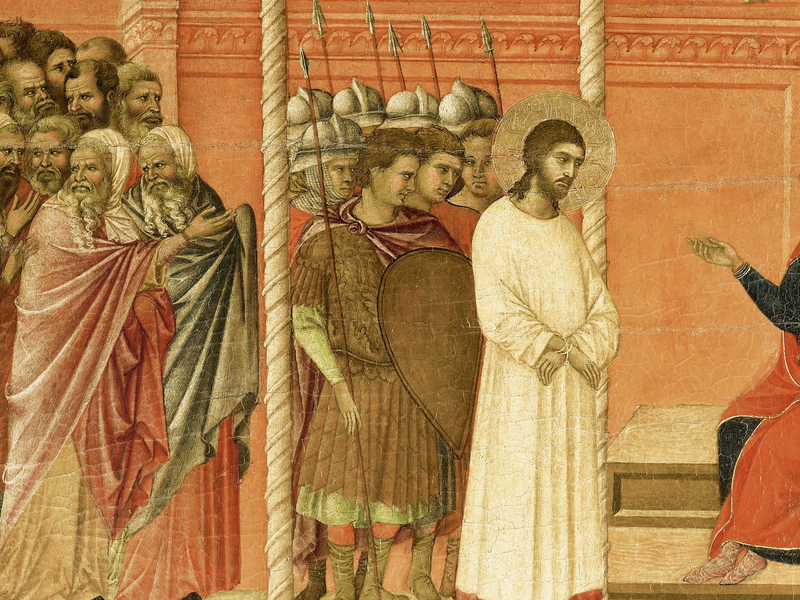
The texts of Christianity have been slowly at work, under the power of the Holy Spirit for 2000 years now. If we could be magically transported back into the world of two millennia ago, modern Americans would be shocked at the cruelty of that world. There was no concern for…

by Richard BledsoeMarch 18, 2013
aaron-burden-1ebsmyrau-s-unsplash
Luke

The Dysfunctional Family of the Gadarene Madman

The Story of the Gadarene Madman is told in all three synoptic Gospels (Matthew 8:28-34, Mark 5:1-20, Luke 8:26-37). Jesus ventures into a Gentile area when He passes over the Sea of Galilee. Upon disembarking from his boat, he is immediately met by a demon-possessed madman. Upon meeting Jesus, he…

by Richard BledsoeMarch 13, 2013
aaron-burden-1ebsmyrau-s-unsplash
Deuteronomy

Law and History: How to Read the Law of Moses

Part 1 of a multi-part series of studies on Deuteronomy 22:30-23:8. Eric Auerbach, in his classic work on Western literature, devotes his first chapter to contrasting Homer with the Bible. Of Homer, he writes of the “need of Homeric style to leave nothing which it mentions half in darkness and…

by Ralph Allan SmithMarch 12, 2013
markus-winkler-aid-xyrtlec-unsplash
Theopolis News

James Jordan in Korea, Japan

Trinity House Fellow James B. Jordan will be a speaker at an International Conference on Biblical Symbolism that will be held in Seoul on Monday, May 27 in 2013. He will address "The Importance of Biblical Symbolism and Symbolic Interpretation of the Bible." The conference will have three other speakers…

by Peter LeithartMarch 9, 2013

Showing page 197 of 309

See all

Showing page 34 of 43

See all

Truth or Tribalism?

One Body Through the Cross , the Princeton Proposal for Christianity Unity, criticizes the ecumenical movement for “liberal indifference” to orthodoxy, which has sometimes provoked a reaction of “divisive sectarianism.” For some, the solution is to stress traditional doctrinal formulations, but this cure is part of the disease. As Margaret…

February 25, 2015

Be What We Are

The Princeton Proposal for Christian Unity ( One Body Through the Cross ) works within two “poles”: On the one hand, there is an already-established unity, “a bond of faith and communion in Christ, established by the action of God.” On the other hand, we are called to “a deeper…

February 25, 2015

Division Breeds Diversion

The Princeton Proposal on Christian Unity ( In One Body Through the Cross ) claims that “division breeds never-ending diversion from authentic mission” (section 35), and offers a shrewd diagnosis of how this occurs. It happens when “the distinct identities of our churches tempt us to relish the special marks…

February 25, 2015

Making Church Visible

In his Unitive Protestantism , John T. McNeill sketches the “communio” ecclesiology of the Reformers: “They interpreted the creedal tenet of ‘the Holy Catholic Church’ in terms of the communio sanctorum , and identified the latter both with the invisible communion of the saved and with the true visible church…

February 25, 2015

Witness of Abstinence

Jeremiah 35 introduces the Rechabites. This is a clan within Israel that had refrained from wine, lived in tents, and refused to sow seed or plant vineyards for generations. The sole basis for this abstinence from normal life was the command of Jonadab the son of Rechab who commanded “You…

February 24, 2015
Modernity

Gullible Rationalists

One of the delights of Philip Ball’s forthcoming Invisible is to see how frequently rationalists and materialists were have been taken in by charlatans. One might have thought that those who came-of-age and were Enlightened by reason would be immune to tricks, beliefs in ghosts, and in fairies and sprites.…

February 24, 2015

Showing page 459 of 2212

Browse by Category

In Medias Res

Your weekly digest for all things Theopolis.

Donate

Theopolis is nearly 100% donor-supported. Consider joining us on our mission.