Theopolis Logo

Writing

Explore our collection of theological essays, biblical studies, and reflections on faith and culture.

See all
screen-shot-2018-02-08-at-9-58-52-am
Epistemology

Seeking Integration in a Fragmented World: Indwelling Polanyian Integration

So far I have claimed that, especially in this era of fragmentation, we seek some way to integrate our lives. I have suggested that the view that modernity holds of what knowledge is has actually been a critical source of the fragmentation we sense in the modern West. Imagining knowledge…

by Esther Lightcap MeekMay 1, 2018

e99a8370-2
Theopolis News

Theopolis Names New Executive Director

The Theopolis Institute has appointed John Crawford as Executive Director. John has been a student in the Junior Fellows Program this year, and proven to be an enthusiastic and articulate advocate of Theopolis's vision. "Theopolis brings a unique, comprehensive paradigm to cultural change - with the Church at the center,"…

by TheopolisApril 30, 2018
screen-shot-2018-02-08-at-9-58-52-am
Art

Artist-Priests in God’s Poetic World

Metaphor is already intrinsic to the Trinity. Jesus is not the Father. And then again, He is indwelt by the Father, and He in turn indwells the Father. “He who has seen Me,” Jesus said, “has seen the Father.” This fundamental is/is not relationship is the relationship of metaphor. A…

by Tim NicholsApril 26, 2018
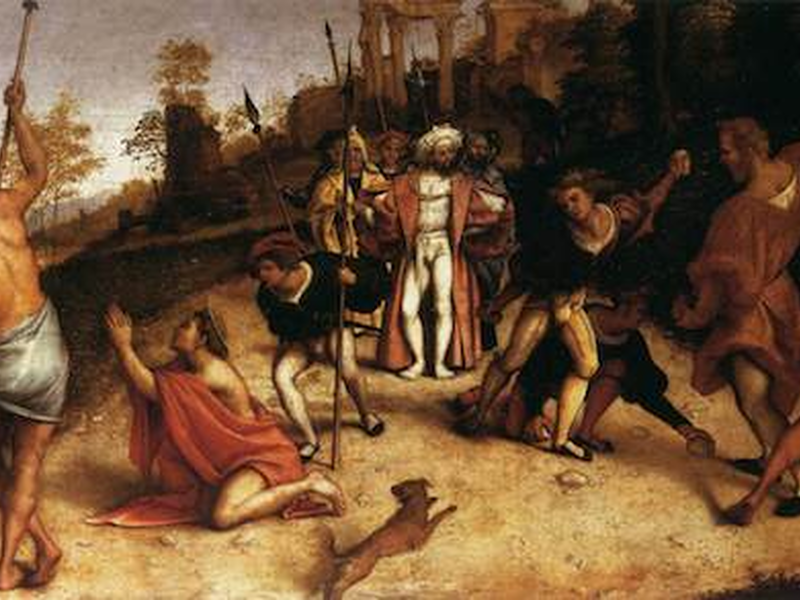
stephen-martyr-lotto
James

Addressees and Author of James

James, a bond-servant of God and of the Lord Jesus Christ, to the twelve tribes in the diaspora, greetings (James 1:1). Though the epistle of James is considered a "general" epistle, the letter originated from particular circumstances that can be discerned from the New Testament. In order to sketch its…

by Peter LeithartApril 24, 2018
sixteen-miles-out-al48tflf4e8-unsplash
Leviticus

Introduction to the Ascensions

Before considering the details of the Leviticus, we must have before us certain matters that have been established in Genesis and Exodus. These are things that we as Israelites already know when we first hear Moses report what God dictated to him in Leviticus. Adam Let us begin with Adam.…

by James B. JordanApril 19, 2018
img_1456
Culture

The Principalities and Powers, (Part 2)

For Part 1 of this series, click HERE . The great question for the emerging East, Asia and other awakening third world areas, for an emerging nation like China is, “what fate awaits them?” They are now emerging from an analogous paganism that the West emerged from centuries ago. Here…

by Richard BledsoeApril 17, 2018

Showing page 95 of 309

See all

Showing page 34 of 43

See all

The argument of Romans

Mark Horne continues his studies in Romans at the Trinity House site.

June 17, 2013
American Religion

Founded on founding

Prior to the founding of America, argues Hannah Arendt in On Revolution , political orders were justified and legitimated by appeal to absolutes: “a divinity, not nature but nature’s God, not reason but a divinely informed reason” gave validity to political order and buttressed political power. Over time, the early…

June 16, 2013
Philosophy

Piety and Nihilism

Theory, Nietzsche argued, arises from the will to “correct existence.” Taking his cues from Nietzsche, Lyotard describes the difference between “pious” and “pagan” theorizing. The former is guilty of Nietzsche’s charge: Since Plato, Lyotard argues, philosophers have attempted to formulate a perfect theory of justice or freedom on the grounds…

June 16, 2013

New Frontiers

In their contribution to American Space/American Place: Geographies of the Contemporary United States , John Agnew and Joanne Sharp describe the context and import of Frederick Jackson Turner’s famed “Frontier Thesis.” Turner wrote in the context of the downturn of the 1890s, and his argument was partly about the future…

June 16, 2013
Economics

Papal economics

Michael Miller’s essay in Christian Theology and Market Economics focuses on “Business as a moral enterprise.” In part, he offers a summary of John Paul II’s teaching on economics and business, especially as expressed in the encyclical Centessimus Annus . As one might expect, John Paul puts business into the…

June 13, 2013

Productive Money

In his contribution to Christian Theology and Market Economics , Stephen Grabill reviews the “pre-Enlightenment” history of economic theory. That is to say, scholastic economics. For many economic historians, the notion of a scholastic economic theory is fallacious, and Exhibit #1 is always the scholastic prohibition of usury, grounded in…

June 13, 2013

Showing page 719 of 2212

Browse by Category

In Medias Res

Your weekly digest for all things Theopolis.

Donate

Theopolis is nearly 100% donor-supported. Consider joining us on our mission.