
Theopolis Logo

Writing

Explore our collection of theological essays, biblical studies, and reflections on faith and culture.

See all
macau-photo-agency-2agj7bq68lk-unsplash
Coronavirus

Does Corona Compassion Kill?

The corona virus hit Western society like a Biblical plague — almost. Biblical plagues were actually much more devastating. Still, as Peter Leithart describes the present situation, it is a judgment from God, because the disease itself together with our political solutions brought about a social situation that fits Deuteronomy’s…

by Ralph Allan SmithMay 26, 2020
dawkins
Theology

Is Theology Useless?

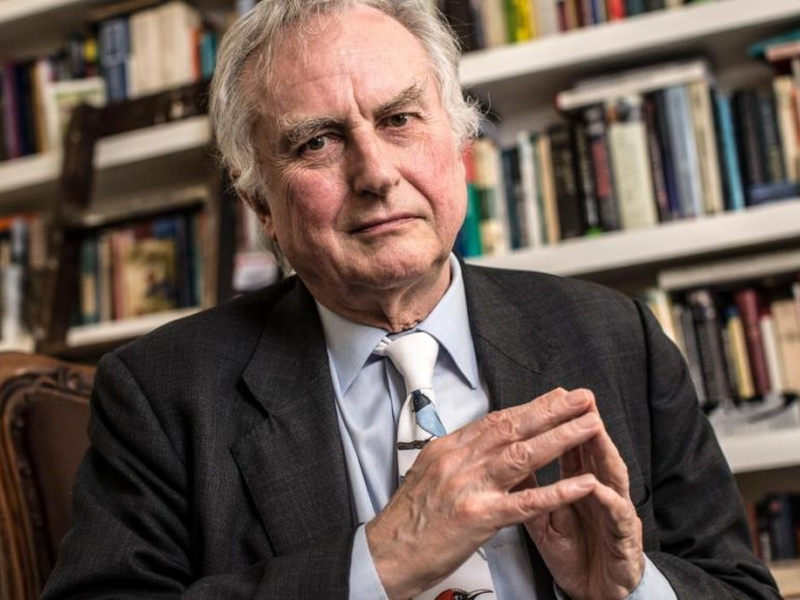
“The achievements of theologians don’t do anything, don’t affect anything, don’t mean anything. What makes anyone think that ‘theology’ is a subject at all?” - Richard Dawkins One cannot be a Christian college president or seminary trustee (your essayist is both) without wondering if Richard Dawkins’s notorious take-down of theology…

by Alexander WhitakerMay 19, 2020
nagesh-badu-nsn5labyy-m-unsplash
How to Worship

How Should Churches Respond to One Another?

Nearly every church that I am aware of has adopted differing practices since the recent virus scare began. Some churches continued to meet during the state lock downs, and other churches left their building empty, meeting online through various video conference technologies. Some churches have gone back to life as…

by Jonah BarnesMay 12, 2020
madhu-shesharam-vbrahouc05w-unsplash
Fear

Fear

Fear is an inseparable companion of human life. We are afraid of illness and death, poverty and cataclysms, rejection and betrayal, failure and shame. We are afraid of the unknown, so in a sense we are afraid of the future and life itself. Unless we live in the illusory belief…

by Bogumil JarmulakMay 5, 2020
stanislav-kondratiev-6po3qfkk7hq-unsplash
Heresy

The Blessing of “Heresies”

In the title above, I put the word “heresies” in quotation marks because I would prefer that the word “heresy” be confined to erroneous beliefs about the Trinity and the Person of Christ, rather than be used broadly to describe any view that might be considered an error. 1 At…

by Ralph Allan SmithApril 30, 2020
olesya-yemets-lyw7pqsp81k-unsplash-2
Fear

On Coping (or not) with a Crisis

I’ve been trying to work out why I’m feeling existentially disconnected from CoV-19-related fears. I’m taking it seriously, but it’s not registering in any deeply personal way. Partly it’s that my routines are largely undisrupted. But as I reflect on people’s reactions I think there’s more, because a lot of…

by Matthew MasonApril 28, 2020

Showing page 67 of 309

See all

Showing page 34 of 43

See all

At the breast

The Torah never mentions breasts as an object of erotic fascination; they are solely nourishment for infants. In the wisdom literature, things are different. Solomon encourages young men to delight in the breasts of their wives - not of another, a strange woman (Proverbs 5) -, and in the Song…

February 14, 2013

Uncontained beauty

Solomon describes the beauty of his beloved in a neat and symmetrical poem in Song of Songs 7:1-6. Framed by “how beautiful you are” (vv. 1, 6), the poem describes ten features of her body. He starts with her feet and his gaze makes its way up. The ten features…

February 14, 2013
Literature

Books and Covers

The old adage applies in spades to the covers of Pride and Prejudice sampled in the NYTBR . Don’t judge the book by any of these covers, especially the Lady Godiva, the Twilight knock-off, and the “smokin’ bad boy Darcy” ones.

February 14, 2013

Concealed technology

Technology promises to accomplish the same things that have always been done more efficiently. Borgmann is skeptical ( Technology and the Character of Contemporary Life: A Philosophical Inquiry ) (45-46), and he summarizes George Sturt’s The Wheelwright’s Shop (Craftsman) to explain the notion of the “concealment” of technology, the fact…

February 14, 2013

Devices and Machinery

In his Technology and the Character of Contemporary Life: A Philosophical Inquiry , Albert Borgmann makes a crucial distinction between a technical device and its machinery. This is “a specific instance of the means-ends distinction” (43), the machinery being the means by which the device becomes useful to its user.…

February 14, 2013
Uncategorized

Literary Names

Claude Rawson’s review of Alastair Fowler’s Literary Names: Personal Names in English Literature focuses on names used to mock and deride. Swift, for instance, “attached enormous importance to naming and not being named (a characteristic Fowler incidentally identifies with Milton’s fallen angels). Swift scrupulously marked with an ‘X; every reference…

February 14, 2013

Showing page 795 of 2212

Browse by Category

In Medias Res

Your weekly digest for all things Theopolis.

Donate

Theopolis is nearly 100% donor-supported. Consider joining us on our mission.