Theopolis Logo

Writing

Explore our collection of theological essays, biblical studies, and reflections on faith and culture.

See all
sodom
Judges

The Levite, the Concubine, and Israel's Story

The story of Judges 19 and the subsequent chapters are some of the most shocking and appalling accounts in all of Scripture. The callousness of the old host and the Levite, and the monstrous brutality of the men of Gibeah, leaves us feebly scrabbling for words by which to surmount…

by Alastair RobertsNovember 1, 2016
david-ark-2
Biblical Theology

Adam Ascended

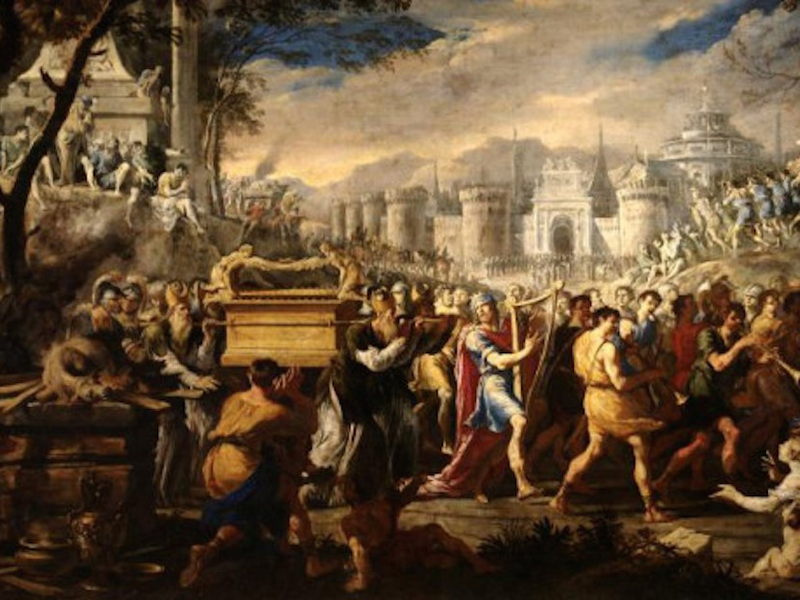
David has become king. He has conquered the capital city of Jerusalem. He has brought the ark of Yahweh into the city and placed it in a tent. He has stationed Levites at the tent to offer sacrifices of praise. An anomaly hits him: He has a cedar-paneled palace, and…

by Peter LeithartOctober 27, 2016
last-supper-2
Eucharist

The Epiclesis in the Reformed Eucharistic Prayer, 3

In Part 2 of this series we traced what we have of the development of the epiclesis in the liturgy of the Church. In this third and final part we’ll look at the theological implications of this and how we may apply what we’ve learned. As we saw in Part…

by Christopher KouOctober 25, 2016
jimpreaching
How to Worship

Reformational Catholicism, A Wish List

In a 2014 piece published in First Things , I offered a "wish list" for Protestant churches, a checklist for a future catholic Protestantism. The wish list doesn't cover everything. It doesn't mention those things that Protestants, especially Evangelicals, already do, often exceedingly well, things like missions and evangelism and…

by Peter LeithartOctober 20, 2016
last-supper-2
Eucharist

The Epiclesis in the Reformed Eucharistic Prayer, (Part 2)

In the first part of this series we examined the meaning of “blessing” in Scripture and its parallels in Jewish liturgical tradition, but did not find anything that we could properly call an epiclesis (an invocation of the Holy Spirit). We did find examples of invocation of Jesus to “come”…

by Christopher KouOctober 18, 2016
moses-gives-aaron-priesthood-39465-wallpaper
Baptism

Renewing Circumcision

When the Aaronic priests were ordained, the blood of the ram of "filling” was placed on the lobe of the right ear, the right thumb, and the right big toe (Lev. 8:22-24). Similarly, the cleansing rite for a leper included smearing the right ear lobe, thumb, and big toe with…

by Peter LeithartOctober 13, 2016

Showing page 123 of 309

See all

Showing page 34 of 43

See all

Between Beast and Babel

There’s an interview regarding by recent book on empire at http://thegospelcoalition.org/blogs/trevinwax/ this morning.

September 6, 2012
Literature

Tragedy of Shylock

Shylock has been played for sympathy frequently in the past century. But the sense that his character fits badly in a comedy is an old one. Already in 1709, Nicholas Rowe wrote, “Tho’ we have seen that Play Receiv’d and Acted as a Comedy, and the Part of the Jew…

September 5, 2012
Literature

Merchant as Allegory

In an old article in the Shakespeare Quarterly , Barbara Lewalski suggests that Merchant of Venice is a moralistic allegory depicting the character of Christian love. In the play, Christian love involves “giving and forgiving: it demands an attitude of carelessness regarding the things of this world founded upon a…

September 5, 2012

Shylock on the Gospels

Mahood again ( The Merchant of Venice (The New Cambridge Shakespeare) ), describing Shakespeare’s and Shylock’s use of the gospels in the play (p. 198-9). “On Shylock’s first meeting with Bassanio, his detestation of the Christians breaks out in the dactylic rhythm and harsh consonants of ’ to eat of…

September 5, 2012

Shylock is Jacob

In an appendix to his edition of The Merchant of Venice (The New Cambridge Shakespeare) (pp. 197-8) , M. M. Mahood explores Shakespeare’s use of the Bible in the play. He notes the extensive echoes of the Jacob narrative, some explicit some not so much. “Shakespeare is unlikely ever to…

September 5, 2012
Theology

Disinterested love

Should we love God disinterestedly, without expectation or desire for return from Him, without any desire for happiness? It’s a common idea, but Milbank rightly argues against it. He asks “what constitutes God’s loveability”? His answer” “every charm, every attractive feature of anything whatsoever, radiates outwards, rendering things apprehensible and…

September 4, 2012

Showing page 875 of 2212

Browse by Category

In Medias Res

Your weekly digest for all things Theopolis.

Donate

Theopolis is nearly 100% donor-supported. Consider joining us on our mission.