Theopolis Logo

Writing

Explore our collection of theological essays, biblical studies, and reflections on faith and culture.

See all
evangelists
Matthew

Dating Matthew, (Part 1)

When might the Gospel according to Matthew have been written? Of course, any answer can only be speculation, but that does not mean we are reduced to groundless opinion. In this series of articles I point the way to an approach different from the general consensus among scholars today which…

by Ralph Allan SmithNovember 22, 2016
hebrew-manuscript-3
Hermeneutics

Synopticity, (Part 2)

In my first essay on “synopticity” I offered a rather rough definition of the phenomenon and important, though not exhaustive examples. In this essay, I want to introduce broader aspects of the phenomenon of “synopticity.” The first example that I have in mind is conventional stories, stories of different historical…

by Ralph Allan SmithNovember 17, 2016
screen-shot-2016-03-31-at-9-32-11-am
Ascension

Brexit and the Binding of Satan, Part 4

Since the judgment of Babel was followed by the initiation of the circumcision, the impending end of the circumcision in AD70 explains the significance of the first century miracle of foreign tongues. Except for a few Aramaic “teasers” in the book of Daniel, the Word of God was monolingual and…

by Mike BullNovember 15, 2016
four-evangelists
Hermeneutics

Synopticity, (Part 1)

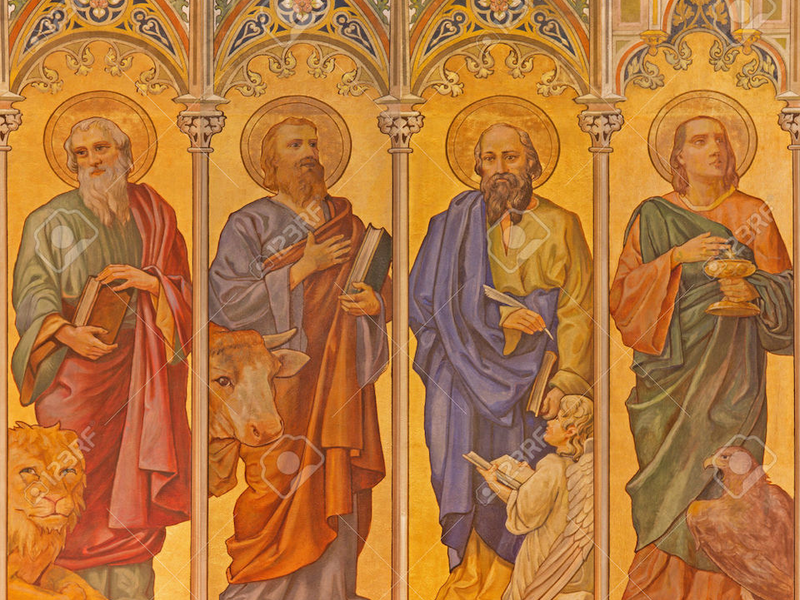
To the best of my knowledge “synopticity” is not a word used in theology or Biblical studies, but it seems an appropriate word to describe the kind of phenomena associated with the Synoptic Gospels, Matthew, Mark, and Luke. These three Gospels tell essentially the same story with significant — sometimes…

by Ralph Allan SmithNovember 10, 2016
laughing_statue_by_xxbobbiie-d5f0meh-2
Humor

Learning to Laugh

Humor is a funny thing. It is altogether familiar yet also mysterious. What makes us laugh? Why do we find things funny? There are academic fields of study dedicated to discovering what makes things humorous. These academicians even have a journal entitled International Journal of Humor Research . No joke.…

by Bill SmithNovember 8, 2016
chaucer
Literature

Flawed Means of Grace: Liturgy in The Pardoner's Tale

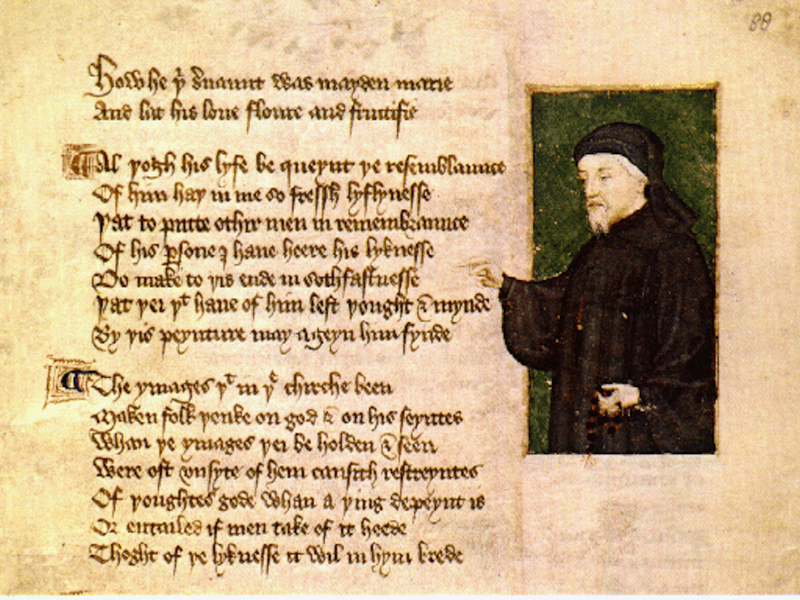
Out of all the characters in Geoffrey Chaucer’s The Canterbury Tales , the Pardoner has been called the “one lost soul.” The pious Parson, who closes out the collection of tales with a sermon on the seven deadly sins and how a sinner can absolve himself of them, connects the…

by Christian LeithartNovember 3, 2016

Showing page 122 of 309

See all

Showing page 35 of 43

See all
Christendom

For and Against Christendom

Someone asked me recently about my views on church and state. I replied that I advocate a "Christendom model" of church-state relations. Then I proceeded to qualify. When I was done qualifying, I suddenly wondered whether what I call "Christendom" corresponds to what other people understand by the word. It…

January 30, 2018

Nation of Kings

Ezra begins where 2 Chronicles ends, with the decree of Cyrus. Some scholars have argued that the repetition indicates that the books were once united. It's said that the doubling is an ancient literary device to knot together two sections of a text. Whether that is the case or not,…

January 29, 2018

Simplifying Space?

James Simpson briefly reviews the career of the 17th-century iconoclast William Dowsing in his history of iconoclasm, Under the Hammer . What motivated Dowsing, he argues, wasn't an effort to prioritize the word over the image, but a quest for "jurisdictional clarity." With the triumph of Parliament, the complex jurisdictional…

January 26, 2018

Freudianism Without Freud

The key question regarding Freud, says Rosenstock-Huessy ( In the Cross of Reality , 266), is "Whom did Freud obey when he began to develop his theory?" The question arises because "in Freud's relational system there is no place for Sigmund Freud's own experience." He shares this distinction of an…

January 26, 2018

Improving to Death

Alexandra Schwartz's New Yorker essay on self-improvement movements ( "Improving Ourselves to Death" ) starts out breezily enough, but it turns grim pretty fast. The "death" in her title isn't metaphorical. She summarizes the experiment of Carl Cederström and André Spicer, who tried to improve one area of their lives…

January 26, 2018

Dostoevsky's Doodles

In a TLS review of Kontantin Barsht's Drawings and Calligraphy of Fyodor Dostoevsky , Robert Bird reminds us that Dostoevsky was a "trained draughtsman" who "thought in images no less than in words: "He wrote frequently about painting, and many of his key terms suggest visual, rather than verbal communication,…

January 26, 2018

Showing page 100 of 2212

Browse by Category

In Medias Res

Your weekly digest for all things Theopolis.

Donate

Theopolis is nearly 100% donor-supported. Consider joining us on our mission.