Theopolis Logo

Writing

Explore our collection of theological essays, biblical studies, and reflections on faith and culture.

See all
screen-shot-2022-08-04-at-9-36-57-am
Matthew

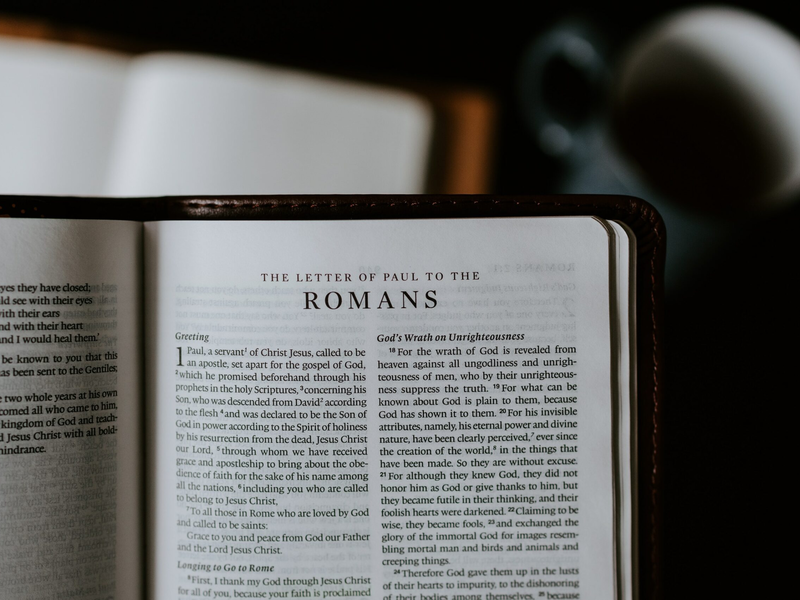
Paul Doesn't Care About Universal Individual Sinfulness or General Revelation

One reason readers assume Paul is trying to prove that all human beings are sinful is that they understand him to be arguing that no one can keep the law. That means, they think, his opponents must believe that human nature is potentially sinless. Taking Paul’s statement that, if you…

by Mark HorneJune 17, 2013

karsten-wurth-imegmbunara-unsplash
Mission

Dreams and Visions

[Note: This post was written prior to our name changing to Theopolis Institute.] What is Trinity House for? Three things: We aim to advance the reformation of the church and, through the church, to promote the renewal of culture; in furthering reformation, we aspire to be a site of fraternal,…

by Peter LeithartJune 12, 2013
sixteen-miles-out-al48tflf4e8-unsplash
Deuteronomy

Sons to Yahweh your God!

This is the third in a series of studies of the Third Word, and especially of Deuteronomy 14. In 1979 Stephen Kaufman penned a groundbreaking essay on Deuteronomy, arguing that it was a meticulously structured and carefully composed book. In his view, chapters 12 to 26 in particular follow the…

by Ralph Allan SmithJune 10, 2013
kelly-sikkema-gpoh17dxqdm-unsplash
Romans

How is Wrath Revealed?

A large mistake is made in understanding Romans if one assumes that Paul is concerned with proving the fact that no one can ever live without sin—or that all attempts at obeying God’s commands are at least tainted with human sinfulness. The first problem with such an assumption is that…

by Mark HorneJune 5, 2013
chris-bair-ndczc5739ck-unsplash
Deuteronomy

The Third Word

This is the second in a series of studies on the Third Word, and especially on the food laws of Deuteronomy 14. In the second part of this series, I argue that Moses’ reworking of the Ten Words in Deuteronomy 5 includes adding nuance to the Third Word. This prepares…

by Ralph Allan SmithJune 3, 2013
yannis-papanastasopoulos-if_29sed7ta-unsplash
Culture

Turning Babel into a Beast

Recent months have brought a lively discussion of Christian participation in the culture war. On the one hand, the pro-life movement appears to be making some slow progress on the abortion issue. The trial of abortionist and serial murderer Kermit Gosnell has the potential to awaken those who are nominally…

by Joe RigneyMay 29, 2013

Showing page 193 of 309

See all

Showing page 35 of 43

See all

Reconciling Reason and Faith

In Truth and Tolerance , Benedict XVI argues that the Western world is in a crisis that can only be solved if "reason and religion . . . come together again, without merging into each other" (144). He insists this isn't a matter of protecting the interests of religion, Rather,…

October 20, 2017

Future and the Christian Era

Dead time, Rosenstock-Huessy says, is entirely a product of the past, a result of a cause. That conception of time works for physics, but it fails to account for the reality of human time, which always involves surprise and a break with the past. Through speech, we initiate new times,…

October 19, 2017
timothy-eberly-djj49s6ud2o-unsplash

God Is Love

According to the doctrine of the Trinity, the ultimate source of all things, the God in whom we live, move and have our being, is both one and plural, one God in three persons. This has enormous implications for how we think of the world. In ancient philosophy, the highest…

October 19, 2017

God, Time, Eternity

Rosenstock-Huessy believes that God has a unique relationship to time that no human being has, but he describes this unique relationship in ways that are unusual for the Christian tradition. Instead of saying that God is “timeless,” he says that God is “pure time.” This suggestion is based on the…

October 18, 2017

Calendars and Cultural Memory

Modernity’s reduction of time to clock-time is not socially or psychically healthy. As Rosenstock-Huessy puts it: "We need the intersecting of many rhythms of time. Our stomach and our consciousness respond to a 24-hour rhythm. Our faith and our hopes respond to centuries. Our noble passions like the love of…

October 17, 2017

Freedom To Unfreedom

Enlightenment secularism is committed to “freedom” as its overarching value. In an address on “Freedom and Truth” (published in The Essential Pope Benedict XVI ), Benedict XVI describes the Enlightenment as a “will to emancipation” (citing Kant’s sapere aude ). Kant’s plea for philosophical freedom has political dimensions. According to…

October 17, 2017

Showing page 132 of 2212

Browse by Category

In Medias Res

Your weekly digest for all things Theopolis.

Donate

Theopolis is nearly 100% donor-supported. Consider joining us on our mission.