Theopolis Logo

Writing

Explore our collection of theological essays, biblical studies, and reflections on faith and culture.

See all
kiwihug-l4gw27xzn1i-unsplash
Hermeneutics

Hermeneutical Polytheism

A couple of decades ago, when I was a young Reconstructionist (instead of a middle-aged post-Reconstructionist), I coined the phrase "political polytheism" to describe how modern evangelical Christians approach matters of social law and politics. Christians want the Bible for Church and family life, but turn to other gods for…

by James B. JordanJanuary 28, 1996

jan-kahanek-g3o5ztrk2e4-unsplash
Biblical Horizons

Concerning Contracts and Covenants

Gary North has from time to time taken note of some of the differences between contracts and covenants. For him, one of the most important is the oath-character of a covenant. Naturally, the English terms "contract" and "covenant" can be used with varying nuances by different writers, and their zone…

by James B. JordanJanuary 5, 1996
hebrew-manuscript-6
Biblical Studies

Rethinking the Order of the Old Testament

The Book of Chronicles is the last book in the Hebrew Canon of the Old Testament. The word "canon" means "authoritative list" when used in connection with the Bible. What we call the Hebrew Canon consists of 24 books arranged in three major divisions: the Law, the Prophets, and the…

by James B. JordanDecember 28, 1995
skyler-gerald-akljfvj5ym4-unsplash
Biblical Studies

At The Center of the Book of Kings

by: Peter Leithart and James Jordan The Book of Kings is structured chiastically, or concentrically. To see this clearly, we start in the middle and work our way outward. 2 Kings 3–7 record the central events of the ministry of Elisha. Elisha makes his first appearance in 1 Kings 19:19-21,…

by Peter LeithartNovember 5, 1995
lili-popper-lu15z1m_kfm-unsplash
Judges

Dynastic Aspirations in the Book of Judges

(The following is a supplement to my book, God’s War Against Humanism , a study of the book of Judges, available from Biblical Horizons for $20.00 – a photocopy of the original book, which is now out of print). The turning point in the book of Judges is 8:22-28. Here…

by James B. JordanNovember 5, 1995
james-coleman-orks2dpueo0-unsplash
Biblical Horizons

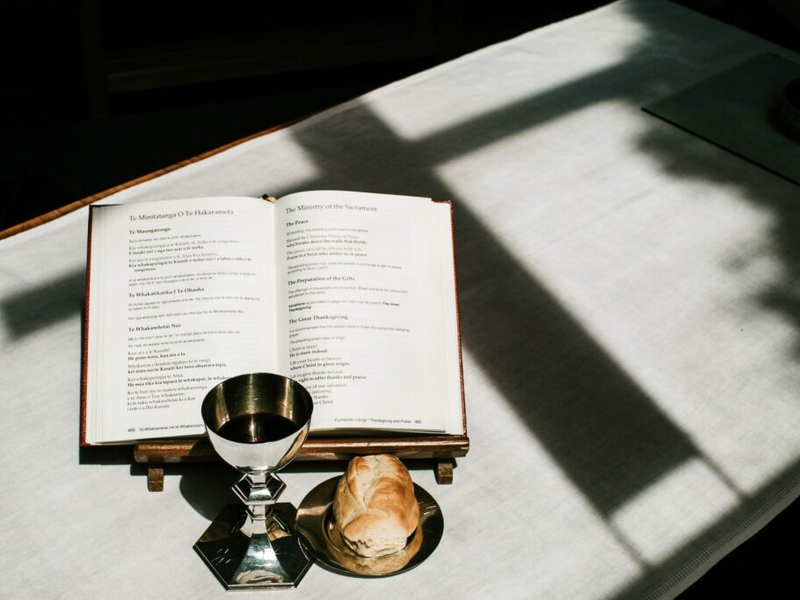
Doing the Lord’s Supper

From time to time I am asked how I think the Lord’s Supper should be done. This essay is my response to that question. To start with, we should agree that the Lord’s Supper is the only ritual we are obligated to do in the New Covenant on a routine…

by James B. JordanNovember 5, 1995

Showing page 268 of 309

See all

Showing page 35 of 43

See all
History

What is “Christianization”?

Peter Brown asks this question in the first essay in Authority and the Sacred: Aspects of the Christianisation of the Roman World (Canto original series) and sensibly, following the lead of RA Markus, tries to let early Christians themselves answer. There isn’t a single answer. Early in the fourth century,…

June 12, 2009
History

Polis and Oikos

Milbank often makes this point, but it’s huge: “Likewise the household, the site of productive provision, was not an arena of ‘politics’ and dialectical disputation, but of unquestioned paternal control. The Christian gothic ‘merging’ of oikos and polis , which as Ruskin in particular grasped, opened the question of virtue…

June 11, 2009
History

Against Mediating Institutions

Mediating institutions - those formations and associations that stand between the individual and the state - are essential for freedom, we’re often told. I agree with the aim, but have questions about whether the notion of mediating institutions gets at it. The main objection is that the theory appears to…

June 11, 2009

Benediction

The Aaronic blessing promises the “face” and “countenance” of Yahweh, and places the name of God on the people of God (Numbers 6:27). Psalm 44 explains these words of blessing. Yahweh’s hand drove out nations and planted Israel in the land (v. 2) because He shone the “light of [His]…

June 9, 2009

Libido dominandi

David Potter confirms Augustine’s claim that the foreign wars of Rome were an extension of a lust for domination and honor: Roman “thinking [about the outside world] involved terms such as gloria , the glory that was won in battle, the ability to compel a foreign people to do something.…

June 9, 2009

Early Archaeology

David Stone Potter again: “Homeric archaeology did not begin with Calvert or Schliemann. It was a feature of life in the second and third centuries AD, when ancient monuments were recognized as such and attached to the world of the poems. There is no reason to doubt that the scepter…

June 9, 2009

Showing page 1371 of 2212

Browse by Category

In Medias Res

Your weekly digest for all things Theopolis.

Donate

Theopolis is nearly 100% donor-supported. Consider joining us on our mission.