Theopolis Logo

Writing

Explore our collection of theological essays, biblical studies, and reflections on faith and culture.

See all
rembrandt-main
Art

The Second Word V: On Images and Art, Part 3

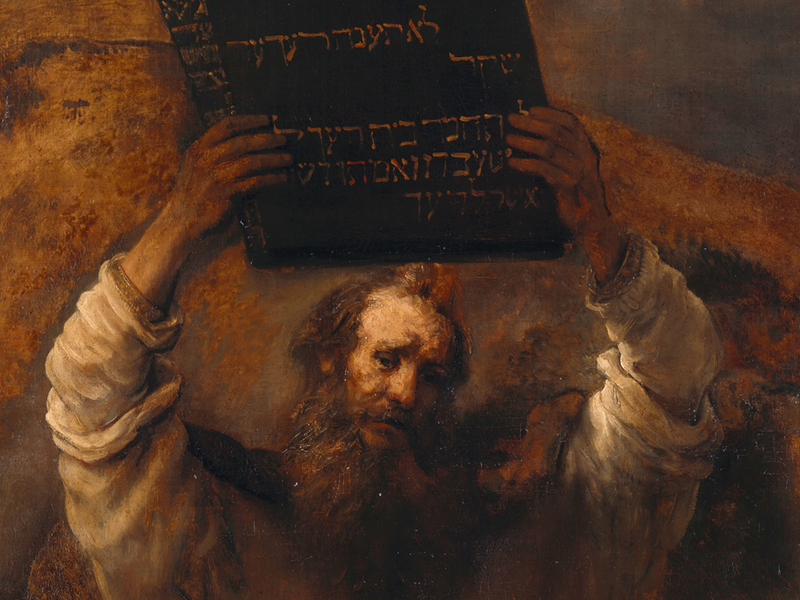
The Failure of the Church Yet a third factor played an important role in this historical development, in addition to the imperial adoption of icons and the rise of the icons of the holy man. Brown writes: "The great Christian basilicas of the previous centuries tended to stand empty, except…

by James B. JordanSeptember 4, 1998

screenshot-2023-09-11-at-11-34-45-am
Biblical Horizons

Patriarchal Dominion

The three large patriarchal narratives of Genesis concern the three aspects of the cosmos: matter, space, and time. Over these three is man given dominion. Lucifer was originally appointed to train man in this dominion, but he chose to lead man into rebellion instead. Thus, the Angel of Yahweh replaced…

by James B. JordanAugust 4, 1998
trnava-university-beeyeib-am8-unsplash
Biblical Horizons

The Case Against Western Civilization, Part 6

Part 6: Living in a Dying World (continued) The "Trivium" (continued) The five stages of education are simply the five stages of the covenant as God administers it in human life and history, and in the liturgy of covenant renewal: First, God announces Himself. "I am Yahweh Your God." He…

by James B. JordanAugust 4, 1998
screen-shot-2022-05-12-at-12-07-23-pm
Biblical Studies

Re-creation in the Ascension Offering

The following essay is tentative and exploratory, offered for your consideration. It seems to me that the ritual of the Ascension Offering (incorrectly translated as Burnt Offering) of Leviticus 1 is a symbolic recapitulation of Genesis 1, which thereby portrays the sacrificial ritual as way of moving from a fallen…

by James B. JordanJuly 4, 1998
Biblical Horizons

The Framework Hypothesis: A Gnostic Heresy

Just as the vast majority of evangelical Christians in America today are Arminian and Baptist, so the vast majority do not believe in a creation around 4000 BC. I don’t expect any of these three situations to change anytime soon. Powerful presuppositions are at work in all three instances, along…

by James B. JordanJuly 4, 1998
picture-mosaic-cathedral-jesus-christ-cefalu-italy-copy
Art

The Second Word V: On Images and Art, Part 2

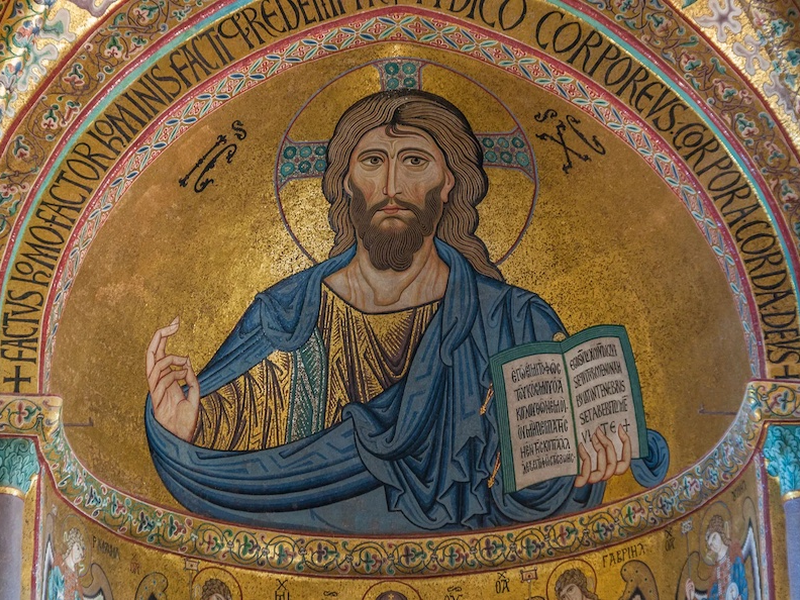
The Iconoclastic Controversy Continuing Pagan Influence How did images creep in? To begin with, there was in the post-Constantinian Church a concerted effort on the part of the semi-pagans to interpret Christianity in essentially pantheistic terms. The heretics put God and man on a continuum of "being," so that God…

by James B. JordanJuly 4, 1998

Showing page 248 of 309

See all

Showing page 35 of 43

See all
Philosophy

Mead again

Mead says clock time and calendar time is time only “in a manner of speaking.” He also argues that clock and calendar time is not “absolute” but relative to one’s frame of reference. True that, as my kids say: “Monday” spells gloom within the framework of a certain organization of…

June 19, 2008
Philosophy

Abstract time?

George Herbert Mead focused his thought on temporality (especially in Philosophy of the Present ), and particularly on “time in” events and roles rather than time as a background of events. Time in the strictest sense is the moment of present emergence that reflects into the past and changes its…

June 19, 2008
Science

Scientific laws

Nobel chemist Ilya Prigogine’s work on dissipative structures, complex systems, and irreversibility, Barbara Adam argues, not only challenged particular scientific laws but the classical notion of a scientific law. In classical physics, to arrive at a law was to arrive at a timeless substructure of natural reality. Adam summarizes the…

June 19, 2008
Philosophy

Clock time

Barbara Adam says that the time of clocks is “an idea in practice,” and elaborates: “as a material expression of a particular understanding of the natural world, in which time is conceptualised through motion without change, as a spatial quantity which is infinitely divisible into units, which can be numerically…

June 19, 2008
History

Monastic time

Since Lewis Mumford and Max Weber, historians and sociologists have recognized the importance of the Benedictine monastery in the development of time-keeping, scheduling, and Western notions of time in general. Zerubavel notes that in developing their regulated common life, the Benedictines deliberately broke with the natural and temporal rhythms of…

June 18, 2008
History

Private and public time

We’re used to thinking of privacy in terms of protected spaces, and often hear comments about how isolated individuals and families are in modern society. A guy opens his garage door remotely so his Lexus can slip into the garage, and the door is closed before he’s out of the…

June 18, 2008

Showing page 1503 of 2212

Browse by Category

In Medias Res

Your weekly digest for all things Theopolis.

Donate

Theopolis is nearly 100% donor-supported. Consider joining us on our mission.