Theopolis Logo

Writing

Explore our collection of theological essays, biblical studies, and reflections on faith and culture.

See all
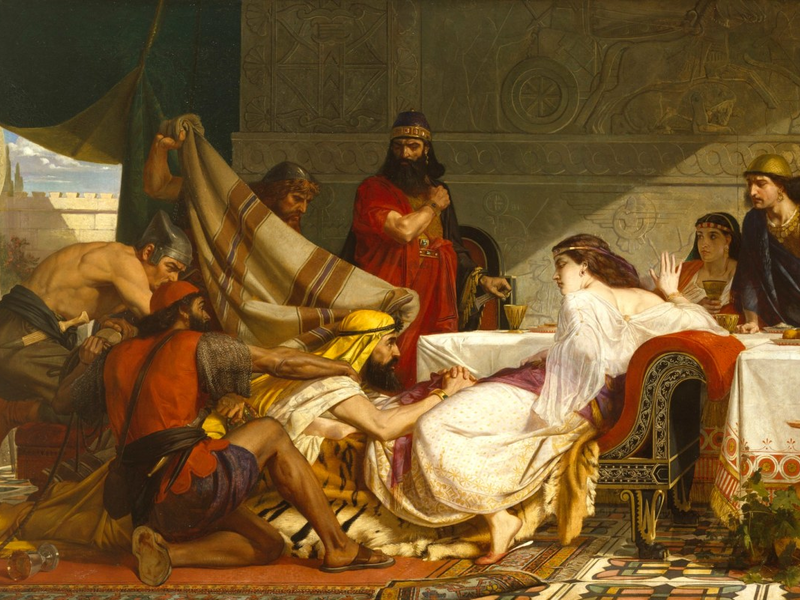
armitage-edward-the-festival-of-esther
Biblical Studies

Esther and Ruth, Grain and Fruit

1 Introduction ESTHER and RUTH are similar stories. Each details the changing fortunes of a young woman. Each begins with the protagonist in a destitute situation. The fortunes of each reverses by story’s end. Intriguing parallels exist: Scenes : The stories transition through a similar set of scenes, see Table…

by Scott FairbanksApril 29, 2021

dariusz-sankowski-abamxzlot8e-unsplash
Biblical Studies

A Hermeneutic of Riddles

Maybe this is not the best venue to reveal that I sometimes wonder about all that deep exegesis: the chiasms, the numerology, vowel modifications, the typological labyrinthes, the innumerable exodus patterns that are so often limned by Peter Leithart or James Jordan or Alastair Roberts. Maybe it’s because I am…

by John AhernApril 27, 2021
fabian-keller-kqjpiatm-om-unsplash
Culture

Building New Watchtowers

In 1923, J. Gresham Machen wrote the book he is perhaps most remembered for, “Christianity and Liberalism”. Machen wrote it to help map out the cultural currents that were impacting the church with the hope that the church could be vigilant against the dangers theological liberalism posed to historic Christianity.…

by Steve GreggApril 22, 2021
download
Matthew

THE ANNUNCIATION TO JOSEPH | (Matthew 1:18-25)

March 25, nine months before Christmas, is the date that is often associated with the Annunciation to Mary, Gabriel’s announcement to Mary that, by the coming of the Spirit upon her, she would conceive and bear the heir to David’s throne, whose kingdom would have no end. The story is…

by John BarachApril 20, 2021
screen-shot-2021-04-14-at-8-50-22-am
Book Review

Book Review: Race and Covenant: Recovering the Religious Roots for American Reconciliation

Race and Covenant: Recovering the Religious Roots for American Reconciliation , edited by Gerald R. McDermott (Grand Rapids, MI: Acton Institute), 278 pp. A group of notable thinkers gathered to discuss biblical resources for addressing racial conflict in America in February 2019 at Samford University in Birmingham. Race and Covenant…

by Ben PetersonApril 15, 2021
beyond-creation-science-illustration
Matthew

Full Preterism’s Fatal Fractal Fracture

“Covenant Creationism,” which might be the most consistent brand of full preterism, is merely dispensationalism turned inside-out. The main cause of disputes over the interpretation of the Scriptures is the practice of interpreting texts in isolation. This applies not only to interpreting a passage without reference to other passages, but…

by Mike BullApril 13, 2021

Showing page 56 of 309

See all

Showing page 35 of 43

See all

Incarnation and Eschatology

Barth insists, rightly, that the incarnation doesn’t express any “need” or lack on God’s part, but is rather His free gracious response to the “radical neediness of the world.” Taking on that neediness also means taking up our cause. He comes to maintain and carry through humanity’s cause to victory.…

April 4, 2008

Self-righteousness

Protestants often claim that our sinfulness is manifest in our efforts to earn God’s favor by our works. That is true, but it doesn’t quite get at the most grievous root of sin. Barth is more penetrating in saying that our sinfulness is manifest in our efforts to usurp God’s…

April 4, 2008
Economics

Markets and people

Charles Morris (in The Trillion Dollar Meltdown ) says that one of the dangerous trends emerging in the 80s and 90s, and lurking behind the current financial crisis, is the “increased dominance of investment decisions by mathematical constructs.” He admits that “Large securities portfolios usually do behave more or less…

April 3, 2008

Translation woes

Jesus spits on the ground, makes clay of the spittle, and “applies” the clay to the eyes of a blind man (John 9; NASB). The verb behind “apply” is epichrio . Its only other usage in the NT is five verses later, where the NASB translates the very same form…

April 3, 2008

John the linguist

John is aware of linguistic diversity, translating unusual Hebrew terms into Greek (e.g., “Messiah” into “Christ,” 1:42). This is perhaps for the convenience of Greek readers, but there is likely also a theological reason: John proclaims the incarnate Word, and describes the work and words of that Word with words…

April 3, 2008

Hebrew Latin Greek

John tells us that the inscription “Jesus the Nazarene, the King of the Jews” was placed above his head on the cross in Hebrew, Latin, and Greek (19:19-20). But this is just the culmination of a text that, though written in Greek, contains a number of cross-linguistic terms. Twice in…

April 3, 2008

Showing page 1540 of 2212

Browse by Category

In Medias Res

Your weekly digest for all things Theopolis.

Donate

Theopolis is nearly 100% donor-supported. Consider joining us on our mission.