
Theopolis Logo

Writing

Explore our collection of theological essays, biblical studies, and reflections on faith and culture.

See all
macau-photo-agency-2agj7bq68lk-unsplash
Coronavirus

Does Corona Compassion Kill?

The corona virus hit Western society like a Biblical plague — almost. Biblical plagues were actually much more devastating. Still, as Peter Leithart describes the present situation, it is a judgment from God, because the disease itself together with our political solutions brought about a social situation that fits Deuteronomy’s…

by Ralph Allan SmithMay 26, 2020
dawkins
Theology

Is Theology Useless?

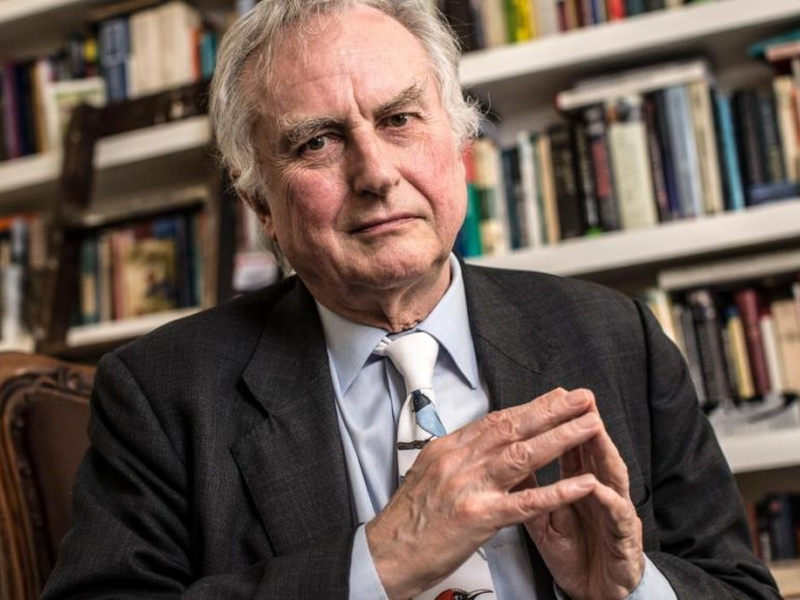
“The achievements of theologians don’t do anything, don’t affect anything, don’t mean anything. What makes anyone think that ‘theology’ is a subject at all?” - Richard Dawkins One cannot be a Christian college president or seminary trustee (your essayist is both) without wondering if Richard Dawkins’s notorious take-down of theology…

by Alexander WhitakerMay 19, 2020
nagesh-badu-nsn5labyy-m-unsplash
How to Worship

How Should Churches Respond to One Another?

Nearly every church that I am aware of has adopted differing practices since the recent virus scare began. Some churches continued to meet during the state lock downs, and other churches left their building empty, meeting online through various video conference technologies. Some churches have gone back to life as…

by Jonah BarnesMay 12, 2020
madhu-shesharam-vbrahouc05w-unsplash
Fear

Fear

Fear is an inseparable companion of human life. We are afraid of illness and death, poverty and cataclysms, rejection and betrayal, failure and shame. We are afraid of the unknown, so in a sense we are afraid of the future and life itself. Unless we live in the illusory belief…

by Bogumil JarmulakMay 5, 2020
stanislav-kondratiev-6po3qfkk7hq-unsplash
Heresy

The Blessing of “Heresies”

In the title above, I put the word “heresies” in quotation marks because I would prefer that the word “heresy” be confined to erroneous beliefs about the Trinity and the Person of Christ, rather than be used broadly to describe any view that might be considered an error. 1 At…

by Ralph Allan SmithApril 30, 2020
olesya-yemets-lyw7pqsp81k-unsplash-2
Fear

On Coping (or not) with a Crisis

I’ve been trying to work out why I’m feeling existentially disconnected from CoV-19-related fears. I’m taking it seriously, but it’s not registering in any deeply personal way. Partly it’s that my routines are largely undisrupted. But as I reflect on people’s reactions I think there’s more, because a lot of…

by Matthew MasonApril 28, 2020

Showing page 67 of 309

See all

Showing page 35 of 43

See all

Tale of Two Women

In Numbers 12, Miriam and Aaron object to Moses’ Cushite wife. Miriam becomes leprous, is excluded from the camp, and restored on the eighth day. That is to say: The Messiah’s Jewish sister objects to the Gentile bride, and is cast out of the camp, but then she is cleansed…

November 9, 2007

Sacrificial sequence

Hicks again: He organizes his discussion of the New Covenant fulfillment of the sacrificial system in the phrases “life surrendered,” “life transformed,” and “life shared.” Reconciliation is made on the basis of life surrendered, blood shed, but that’s not the end point of the reconciling sacrifice. This enables him to…

November 8, 2007

Burning flesh

FCN Hicks writes in his 1946 book on sacrifice that the burning of an animal on the altar was not destructive but transforming: “The offering is not destroyed but transformed, sublimated, etherealised, so that it can ascend in smoke to the heaven above, to the dwelling-place of God.” He cites…

November 8, 2007
Philosophy

Signs and domination

Only God, Augustine argues in his treatise on music, acts on rational souls directly, “per seipsum.” Human beings operate on one another’s souls through intervening bodies, that is, through the words and other signs. God has arranged the world this way, he says, as a check on human ambition and…

November 8, 2007

Signa data

Many translators and interpreters of Augustine’s de doctrina Christiana translate “signa data” as “conventional signs.” But there’s something to be said for taking the phrase literally (as some commentators do). The difference between naturalia and data, Augustine says, is that the latter occur by the will of a sign-user while…

November 7, 2007
History

Sixteenth-century exchanges

Shakespeare recognized that something new was in the offing, but the actual situation of England and Europe in the sixteenth and seventeenth centuries was far more complicated that Timon of Athens suggests. The gift-society to which Timon is attached was not being completely replaced, nor was the market the main…

November 7, 2007

Showing page 1609 of 2212

Browse by Category

In Medias Res

Your weekly digest for all things Theopolis.

Donate

Theopolis is nearly 100% donor-supported. Consider joining us on our mission.