Theopolis Logo

Writing

Explore our collection of theological essays, biblical studies, and reflections on faith and culture.

See all
ross-sneddon-zstkmnvmwsq-unsplash-2
Acts

No One Dared Join Them

And through the hands of the apostles many signs and wonders were done among the people. And they were all with one accord in Solomon's Porch. Yet none of the rest dared join them, but the people esteemed them highly. Acts 5:12-13 When Grandma needed healing, her children knew the…

by Tim NicholsAugust 31, 2021
james-coleman-heksmrnfajk-unsplash
How to Worship

Why Sacraments?

Like certain kinds of music, the unchanging rhythm of Aquinas's Summa gets into your bones. Read a few sections and it begins to run through your head. You start drumming your fingers, humming, swaying gently to the rhythm of Videtur-Sed Contra-Responsio, Videtur-Sed Contra-Responsio, “It seems-On the contrary-I answer.” The only…

by Peter LeithartAugust 26, 2021
alex-guillaume-2k4du3r1giy-unsplash
Biblical Chronology

The Embarrassment of Biblical Chronology

And Arpachshad lived thirty-five years, and became the father of Shelah . . . And Shelah lived thirty years, and became the father of Eber . . . and Eber lived thirty-four years and became the father of Peleg . . . and Peleg lived thirty years, and became the…

by James B. JordanAugust 24, 2021
screen-shot-2021-08-19-at-1-03-26-pm
Hermeneutics

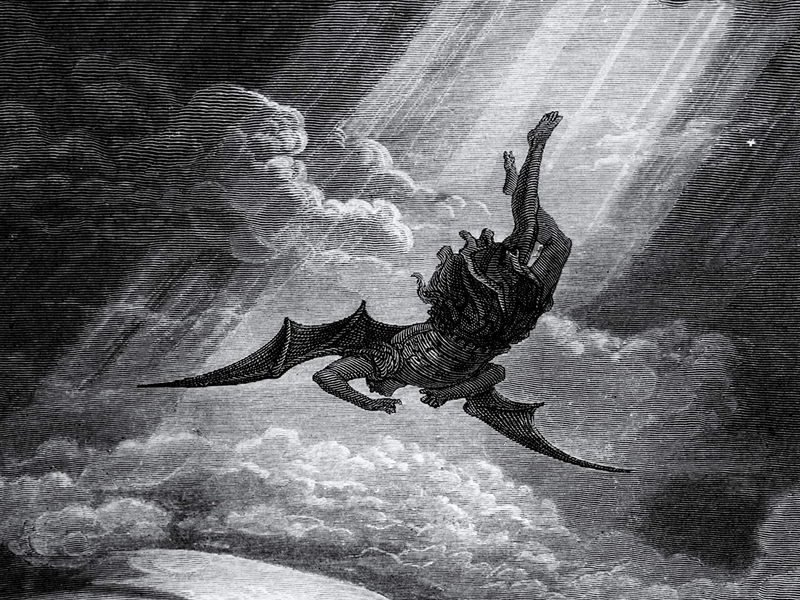
The Fall of Satan

Of course, the title should be something like, “The Fall of the Angel Who Came to be Satan,” but that and other more accurate titles are too cumbersome. The question is: who is Satan, and when and how did he become “Satan” (Adversary, Accuser) and the “devil” (slanderer)? By my…

by Ralph Allan SmithAugust 19, 2021
harshit-sharma-wertrhhtz4s-unsplash
Baptism

Baptismal Rain and the Feast of Booths

In The Oddness of the Feast of Booths , we saw that the Feast of Booths is a commemoration of the first encampment of Israel at Sukkoth (Booths) in Exodus 12:37, almost certainly the first celebration of the week of Unleavened Bread after the first Passover. The Feast of Booths…

by James B. JordanAugust 17, 2021
screen-shot-2021-08-12-at-2-57-54-pm
Proverbs

An Antidote for Yuppie Postmillennialism

This piece was originally published in 1989. 1. The Blessed Hope "Looking for the blessed hope and the appearing of the glory of our great God and Savior, Christ Jesus." Titus 2:13 I was recently asked how I as a postmillennialist would preach on "The Blessed Hope." This is often…

by James B. JordanAugust 12, 2021

Showing page 52 of 309

See all

Showing page 35 of 43

See all
Uncategorized

1 & 2 Kings

Uriah Y Kim reviews my Kings commentary in a recent issue of Reviews in Religion and Theology . He’s got some criticisms, but overall it’s a fair review. A couple of responses on specific points: 1) He thinks my contention that there is a “seventh-king” pattern is suspect; my counting…

October 22, 2007
History

Patronage

Richard Saller defines patronage by three features (summarized by Griffin): “(1) it involves the reciprocal exchange of goods and services; (2) that it is a personal relationship of some duration; (3) that it is asymmetrical, in the sense that the two parties are of unequal status and offer different kinds…

October 22, 2007

Gratitude in ancient thought

Griffin begins her essay: “The exchange of beneficia - gifts and services - was an important feature of Greek and Roman society at all periods. Its prominence was reflected in the number of philosophical works that analyzed the phenomenon. From the fourth century B.C. onwards, euergesia and charis became subjects…

October 22, 2007
History

Seneca and Roman Society

Miriam Griffin has a richly detailed discussion of Seneca’s de Beneficiis in a 2003 issue of The Journal of Roman Studies . The article discusses the appropriateness of “patronage system” as a description of Roman social relations, Seneca’s use of exaggeration for moral effect, the and similarities between Seneca and…

October 22, 2007
History

Pointy Greeks

Seneca found Chrysippus’s treatment of the Three Graces too subtle: He was a great man but “a Greek, whose intellect, too sharply pointed, is often bent and turned back upon itself; even when it seems to be in earnest it only pricks, but does not pierce.” Seneca himself found in…

October 22, 2007
Philosophy

Kant on Ingratitude

In his Lectures on Ethics, Kant says that ingratitude is among the vices that “are the essence of vileness and wickedness.” He adds, “It is inhuman to hate and persecute one from whom we have reaped a benefit, and if such conduct were the rule it would cause untold harm.…

October 22, 2007

Showing page 1617 of 2212

Browse by Category

In Medias Res

Your weekly digest for all things Theopolis.

Donate

Theopolis is nearly 100% donor-supported. Consider joining us on our mission.