Theopolis Logo

Writing

Explore our collection of theological essays, biblical studies, and reflections on faith and culture.

See all
last-supper
American Politics

How To Change the Supreme Court

Appalling as it is, the decision of the United States Supreme Court regarding marriage cannot come as much of a surprise to reformation minded Christians. At the same time, this event is a warning from which we might learn. It is parallel to the attack of AIDS in the homosexual…

by James B. JordanJuly 8, 2015

putin
Europe

Gay West and Straight East?

Should we trust Vladimir Putin, we could come to believe that the West is a gay paradise whereas Russia strongly defends traditional and even Christian morality. Similar conclusion could be drawn from polls, which say that the European Union and America are the parts of the world where the acceptance…

by Bogumil JarmulakJuly 7, 2015
street
City

Jane Jacobs: The Jane Austen of Economics

In 1974, Steven Goldberg published one of the books that radical feminists have since assiduously tried not to remember has ever been published: The Inevitability of Patriarchy . As David Gutmann said in a Commentary review: “Goldberg’s virtues as a scholar and a logician are formidable. . . .[He is]…

by Richard BledsoeJuly 7, 2015
stonewall
American Culture

A Pastoral Letter from Louisville

Since Friday’s SCOTUS decision in Obergefell v. Hodges , social media have been inundated with rainbows, tweets, quips, and essays both celebrating and decrying our new culture that has been officially codified in these United States. With a strong LGBT community in our city, we, no doubt, will see a…

by Bill SmithJuly 6, 2015
moses
Biblical Law

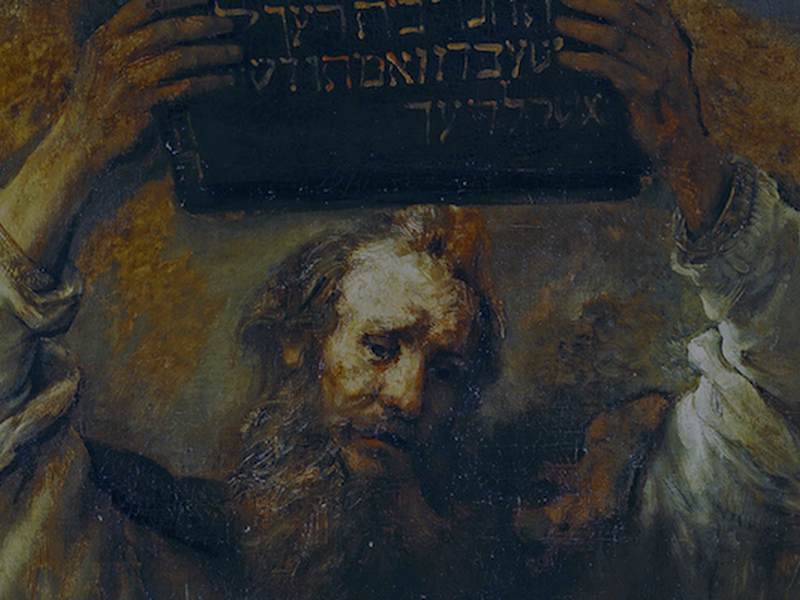
The Death Penalty in the Mosaic Law

During the course of recent debates among Evangelicals concerning same-sex marriage, critics of the traditional Christian position that homosexual acts and desires are sinful and unnatural have often pointed to Leviticus 20:13, where "he who lies with a man as with a woman" is condemned to death. In the following…

by Peter LeithartJuly 3, 2015
david-goliath-2
Homosexuality

When Obergefell Falls

We are being taunted. The giant’s name is Obergefell ; he is a six-fingered descendent of the Anakim. He has come out onto the battlefield arrayed in his impressive armor. He wears the media elites like a helmet of brass, and on his chest, he wears the deep pockets of…

by Toby SumpterJuly 2, 2015

Showing page 149 of 309

See all

Showing page 35 of 43

See all

Exhortation

Most of the Beatitudes in Matthew are stated in third person. “Blessed are the poor in spirit, for theirs is the kingdom of heaven.” ” They shall be comforted,” ” they shall inherit the earth,” ” they shall be called the sons of God.” At the end, Jesus changes the…

September 2, 2007
Theology

Music, Time, and Augustine

One of the best discussions of Augustine’s views on time comes from Jeremy Begbie’s Theology, Music, and Time (ch. 3). Following Ricoeur’s discussion, Begbie claims that Augustine’s distentio “is conceived as the three-fold present, and the threefold present as distentio . The distentio consists in the non-coincidence of the mind’s…

August 30, 2007
Theology

Escaping time

John Rist offers some important insights into Augustine’s view of time. He notes, as many commentators do, that Augustine is not aiming to provide a definition of time but to answer the question of how time can be measured. The dilemma is: If the past no longer is, and the…

August 30, 2007

Distention and eschatology

In a 1957 essay in Man and Time , Gilles Quispel claims that Augustine’s views of time have been extracted from the “great struggle between a cyclical and a historical view of the world, between archaism and Christianity,” and therefore have been misunderstood. Augustine “comes to grips with the Neoplatonists…

August 30, 2007
Philosophy

Augustine’s non-Aristotelian Universe

Augustine argues in Confessions that time is not reducible to the movement of the celestial bodies. Aristotle agreed; but, as Ricoeur points out, the arguments that Augustine used departed radically from Aristotle. First, if the sun and stars stopped moving, and yet a potter’s wheel continued to move, time would…

August 30, 2007

Showing page 1638 of 2212

Browse by Category

In Medias Res

Your weekly digest for all things Theopolis.

Donate

Theopolis is nearly 100% donor-supported. Consider joining us on our mission.