Theopolis Logo

Writing

Explore our collection of theological essays, biblical studies, and reflections on faith and culture.

See all
screen-shot-2019-09-03-at-7-00-44-am-2
Biblical Studies

Genesis 38 from Multiple Angles (Part 2)

Summary : The Bible is a multi-faceted text. As a result, it can fruitfully be analyzed in many ways. Pace, context, flow, imagery: all of these aspects of the Biblical text are significant and instructive. Here, by way of illustration, I analyze Gen. 38 in a range of different ways,…

by James BejonOctober 22, 2019

screen-shot-2019-09-03-at-7-00-44-am-2
Hermeneutics

Genesis 38 from Multiple Angles (Part 1)

Summary: The Bible is a multi-faceted text. As a result, it can fruitfully be analysed in many ways. Pace, context, flow, imagery: all of these aspects of the Biblical text are significant and instructive. Here, by way of illustration, I analyse Gen. 38 in a range of different ways, and…

by James BejonOctober 15, 2019
eco-warrior-princess-tsoeguwwzwo-unsplash
Biblical Theology

Church Planting as Garden Growing

The closing chapters of the Bible bring to fulfillment the mission inaugurated in the opening chapters of the Bible: the dwelling place of God expands to fill the entire new creation. The story of Scripture concludes having achieved God’s original intent for His people in the Garden of Eden, and…

by Drew KnowlesOctober 8, 2019
annie-spratt-rx1ij59jryu-unsplash
Economics

Gift Economies Aren't So Giving

Oddly, the nature of pre -modern economies plays a central role in today’s policy debate over economic globalization and neo-liberalism. Analysts take ancient non-market economies as the standard against which to measure the economic and social effects of the market system. Scholars compare the distribution of economic goods and services…

by James R. RogersOctober 1, 2019
20121120_1642723459__76354-1391444640-1280-1280-1014x487
Luke

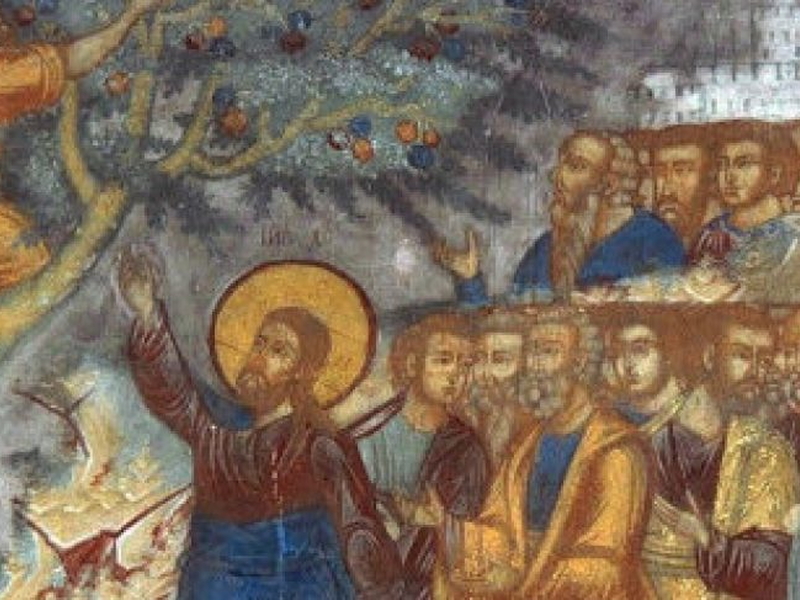
Zacchaeus, (Part 2)

In part one of this essay, I mentioned that the story of Zacchaeus includes not only many details that point to other passages in Luke, but also details that point to the Old Testament, though we might not initially think of them. The first detail I have in mind is…

by Ralph Allan SmithSeptember 24, 2019
20121120_1642723459__76354-1391444640-1280-1280-1014x487
Luke

Zacchaeus (Part 1)

The story of Zacchaeus includes numerous interesting details that link this story with others in the Gospel of Luke. There are also details that tie the story of Zacchaeus to the Old Testament in ways that we might not initially take note of. In the Gospel of Luke, the story…

by Ralph Allan SmithSeptember 17, 2019

Showing page 74 of 309

See all

Showing page 35 of 43

See all

Exhortation

Most of the Beatitudes in Matthew are stated in third person. “Blessed are the poor in spirit, for theirs is the kingdom of heaven.” ” They shall be comforted,” ” they shall inherit the earth,” ” they shall be called the sons of God.” At the end, Jesus changes the…

September 2, 2007
Theology

Music, Time, and Augustine

One of the best discussions of Augustine’s views on time comes from Jeremy Begbie’s Theology, Music, and Time (ch. 3). Following Ricoeur’s discussion, Begbie claims that Augustine’s distentio “is conceived as the three-fold present, and the threefold present as distentio . The distentio consists in the non-coincidence of the mind’s…

August 30, 2007
Theology

Escaping time

John Rist offers some important insights into Augustine’s view of time. He notes, as many commentators do, that Augustine is not aiming to provide a definition of time but to answer the question of how time can be measured. The dilemma is: If the past no longer is, and the…

August 30, 2007

Distention and eschatology

In a 1957 essay in Man and Time , Gilles Quispel claims that Augustine’s views of time have been extracted from the “great struggle between a cyclical and a historical view of the world, between archaism and Christianity,” and therefore have been misunderstood. Augustine “comes to grips with the Neoplatonists…

August 30, 2007
Philosophy

Augustine’s non-Aristotelian Universe

Augustine argues in Confessions that time is not reducible to the movement of the celestial bodies. Aristotle agreed; but, as Ricoeur points out, the arguments that Augustine used departed radically from Aristotle. First, if the sun and stars stopped moving, and yet a potter’s wheel continued to move, time would…

August 30, 2007

Showing page 1638 of 2212

Browse by Category

In Medias Res

Your weekly digest for all things Theopolis.

Donate

Theopolis is nearly 100% donor-supported. Consider joining us on our mission.