Theopolis Logo

Writing

Explore our collection of theological essays, biblical studies, and reflections on faith and culture.

See all
aaron-burden-1ebsmyrau-s-unsplash
John

Moses & Jesus: Friends or Foes?

A Look at John 1.17 For the law was given through Moses, but grace and truth came through Jesus Christ. The above quotation is John 1.17 and comes from the New King James Version of the Bible. It is quite similar to the original translation in the old King James…

by Mark HorneJune 6, 2002

ben-white-w8qqn1pmqh0-unsplash
Christology

Grace Apart From Sin

And the Child continued to grow and become strong, increasing in wisdom; and the grace of God was upon Him. There is nothing faulty in this translation (New American Standard Bible); Jesus was the recipient of the grace of God His Father from whom He is eternally begotten and with…

by Mark HorneJune 6, 2002
ivan-aleksic-16yxcjsoaek-unsplash
Philemon

Flesh and Lord: Philemon 15 & 16

When Paul wrote to Philemon asking him to forgive his runaway slave, Onesimus, he gave Philemon an interesting perspective on how God used Onesimus’ action to bring about his conversion: For perhaps he was for this reason parted from you for a while, that you should have him back forever,…

by Mark HorneJune 6, 2002
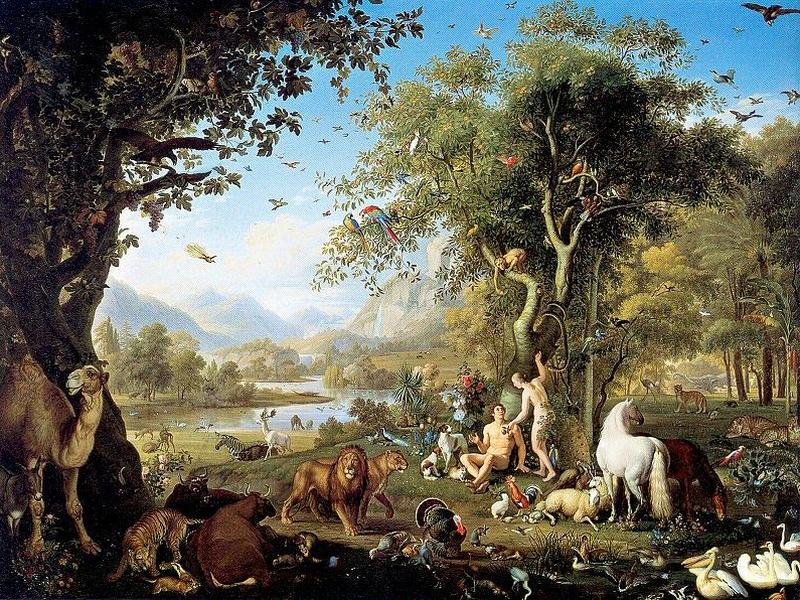
adam-and-eve-in-the-garden-of-eden-wenzel-peter
Covenant

Covenant of Works?

Adam’s good works were acceptable to God. He could do them and God would receive them. Our own “good” works, our very best works, require the forgiveness of God and the continual intercession of Jesus Christ due to their impurity. Thus, it is appropriate to describe God’s covenant with Adam…

by Mark HorneJune 6, 2002
sixteen-miles-out-al48tflf4e8-unsplash
Mark

Blasphemy Against the Holy Spirit?

In Mark’s Gospel we read: “And the scribes who came down from Jerusalem were saying, ‘He is possessed by Beelzebul,’ and ‘He casts out the demons by the ruler of the demons’” (3.22). Jesus replied in part, “Truly I say to you, all sins shall be forgiven the sons of…

by Mark HorneJune 6, 2002
e99a4713
Ecclesiology

A Visionary Ecclesiology

A Primer for Church Members on the Nature and Functions of the Body of Christ Introductory Note: I intend this paper to serve as something of a “user’s guide” for church members, though church leaders may also find it valuable in developing vision statements for their local bodies. I have…

by Rich LuskJune 5, 2002

Showing page 237 of 309

See all

Showing page 35 of 43

See all

Ordination exhortation

1 Timothy 4:13: Do not neglect the spiritual gift within you, which was bestowed upon you through prophetic utterance with the laying on of hands by the presbytery. Prior to the Reformation, the Western church treated ordination as a sacrament. Protestants have never done that. For the seven sacraments of…

January 28, 2007

Exhortation, Fourth Sunday After Epiphany

Many of you received an email this week encouraging you to be at church on time and rebuking those who are habitually tardy. Some got the impression that the elders don’t want you to show up at all if you’re running late. That’s not the point. If you’re unavoidably tardy…

January 28, 2007

Spouse and Kingdom, revisited

In response to my earlier post on “Spouse and Kingdom,” Ken Myers of Mars Hill Audio writes, “it strikes me that the WCF’s dualism in describing the Church reflects the typical Western dualism that was congealing during the 17th century. Invisible and spiritual matters can be described in poetic, imaginative,…

January 26, 2007
Philosophy

Typology and postmodernism

Zizioulas locates the central difference between patristic and postmodern views of “otherness” in the way each conceives the relation of old and new. For postmodernism, “alterity involves negation, rupture, ‘leaving behind’, for patristic thought the ‘new’ relates to the ‘old’ in a positive way.” He demonstrates this by appealing to…

January 26, 2007
Philosophy

Fallen Philosophy

In his 2006 volume, Communion and Otherness , John Zizioulas pretty directly connects Western philosophy with the fall of Adam. Adam claimed to be God and thus “rejected the Other as constitutive of his being.” As a result, Self took “ontological priority over the Other,” with the result that “otherness…

January 26, 2007
Theology

Jews and Gentiles

The extension of rights to the Jews was one of the great achievements of the French Revolution, and Rosenstock-Huessy moves from a discussion of the resulting Jewish enthusiasm for liberalism to a digression dealing with the relation of Jews and Gentiles in history. It is titled “Alpha and Omega,” and…

January 25, 2007

Showing page 1728 of 2212

Browse by Category

In Medias Res

Your weekly digest for all things Theopolis.

Donate

Theopolis is nearly 100% donor-supported. Consider joining us on our mission.