Theopolis Logo

Writing

Explore our collection of theological essays, biblical studies, and reflections on faith and culture.

See all
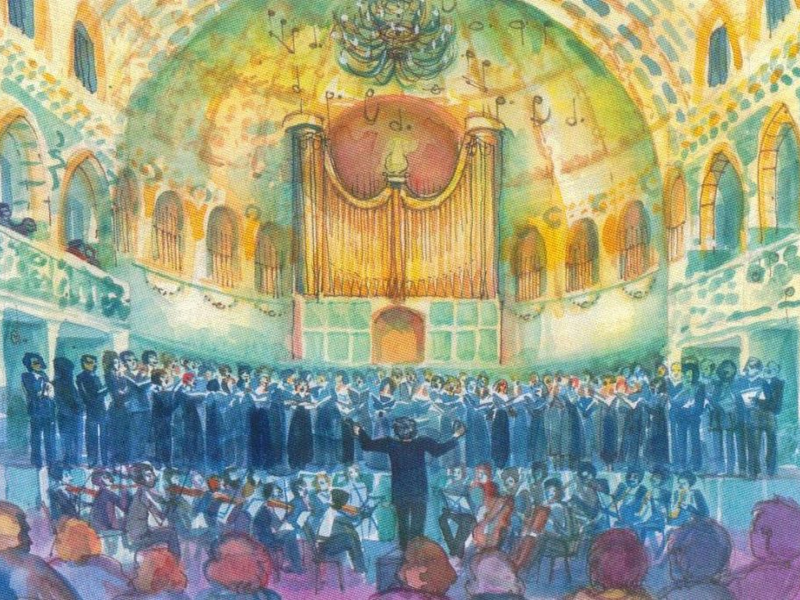
ohs-painting-concert-in-oxford-town-hall
Ephesians

Music and Drunkenness, Part 2

For Part 1, click HERE . How did Paul’s earliest commentators view his juxtaposition of music and drunkenness, and did they connect it to the ancient Greek ideas of musical ethos described in Part I? Origen, one of the earliest commentators on Paul, writes about Ephesians 5:18-19: One, however, who…

by John AhernMay 17, 2018
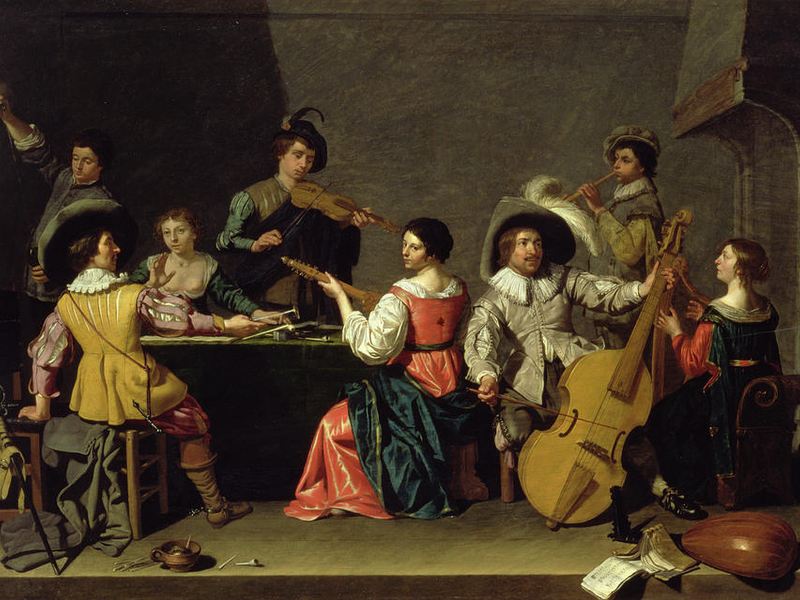
group-of-musicians-jan-van-bijlert-or-bylert
Ephesians

Music and Drunkenness, Part 1

Perhaps it is because I am a musician that I have always found Ephesians 5:18-19 so arbitrary. But isn’t it a little odd to contrast music and drunkenness? Perhaps it is not obvious that that is what Paul is doing; I know, for myself, that it is remarkably easy to…

by John AhernMay 15, 2018
infant-baptism
Baptism

Unequal Holiness

In 1 Corinthians 7:12-16 Paul deals with how the Corinthian Christians are supposed to be relating to unbelieving spouses. He essentially tells them, “Look, if your unbelieving spouse is willing to stay with you as a faithful Christian, don’t initiate a divorce. If he/she wants to leave you, let him/her…

by Bill SmithMay 10, 2018
starwarspt2
Violence

The Sword of Adam: Preterism vs. Pacifism, (Part 2)

For Part 1, click HERE . Those who focus on the supposed “pacifism” of Jesus and condemn the violence of God’s judgments throughout the Old Testament overlook the ministry of sacrificial bloodshed as an alternative to human bloodshed. The sword bearing of the sacrificial system was introduced to avoid the…

by Mike BullMay 8, 2018
obi-wan-death-edit
Violence

The Sword of Adam: Preterism vs. Pacifism, Part 1

How should a Christian respond to the objection that the Bible, like the Koran, is a book of violence and bloodshed? Numerous answers have been offered by well-meaning exegetes, but none of them gets to the heart of the matter: God desires to place a sword in the hands of…

by Mike BullMay 3, 2018
screen-shot-2018-05-02-at-12-55-14-pm
Theopolis News

Alastair Roberts Appointed As Adjunct Senior Fellow

Beginning this summer, Dr. Alastair Roberts will join the Theopolis Institute as an adjunct Senior Fellow, the Institute has announced. Dr. Roberts will be a regular on the Theopolis podcast, teach intensive courses and in the Fellows Program, and help develop new programs and outlets. Roberts earned his PhD from…

by TheopolisMay 2, 2018

Showing page 94 of 309

See all

Showing page 35 of 43

See all
Philosophy

Heidegger in his woods

Latour is tired of being accused of having forgotten Being, and offers this clever brush-off of Heidegger: “If, scorning empiricism, you opt out of the exact sciences, then the human sciences,, then traditional philosophy, then the sciences of language, and you hunker down in your forest - then you will…

November 15, 2006
History

Semi-modernism

Postmoderns, Latour suggests, think they are still modern, but in fact they have greatly oversimplified the modern Constitution. Postmoderns might emphasize the separation of subject and world, and stretch that opposition to a breaking point (Latour vividly describes them as doing the splits to keep subject and world apart); but…

November 15, 2006
History

Modern temporality

In his very good section on modern temporality, Latour argues that modernity assumes that everything in the present, modern moment, is purely modern, novel. Anything that appears that is not up-to-date is a “archaism,” and moderns worry constantly that this or that event or trend might “turn back the clock.”…

November 15, 2006
History

Representation

One of the key moves made since the 17th century, Latour argues, is a distinction between modes of “representation.” In the laboratory Boyle is representing things before selected witnesses through scientific experiments, giving mute nature a voice through the scientist, while in politics Hobbes suggests that the Sovereign speaks for…

November 15, 2006
History

We Have Never Been Modern

Bruno Latour’s We Have Never Been Modern (Harvard 1993) is a rich study. He describes modernity in terms of a dual process of “purification” and “hybridization.” Purification involves the clean construction of a nature (and science) separated off from society and the self, while hybridization involves mixtures of nature and…

November 15, 2006

Tears of things

And/Or: Virgil is aware that the furor of civil war can be curbed only by an opposing, and more intense, furor. That, as Milbank says, is the way of paganism - peace established only by superior violence against violence. But in those tears Virgil expresses the the painful recognition -…

November 13, 2006

Showing page 1763 of 2212

Browse by Category

In Medias Res

Your weekly digest for all things Theopolis.

Donate

Theopolis is nearly 100% donor-supported. Consider joining us on our mission.