Theopolis Logo

Writing

Explore our collection of theological essays, biblical studies, and reflections on faith and culture.

See all
screen-shot-2022-08-04-at-9-36-57-am
Matthew

Paul Doesn't Care About Universal Individual Sinfulness or General Revelation

One reason readers assume Paul is trying to prove that all human beings are sinful is that they understand him to be arguing that no one can keep the law. That means, they think, his opponents must believe that human nature is potentially sinless. Taking Paul’s statement that, if you…

by Mark HorneJune 17, 2013

karsten-wurth-imegmbunara-unsplash
Mission

Dreams and Visions

[Note: This post was written prior to our name changing to Theopolis Institute.] What is Trinity House for? Three things: We aim to advance the reformation of the church and, through the church, to promote the renewal of culture; in furthering reformation, we aspire to be a site of fraternal,…

by Peter LeithartJune 12, 2013
sixteen-miles-out-al48tflf4e8-unsplash
Deuteronomy

Sons to Yahweh your God!

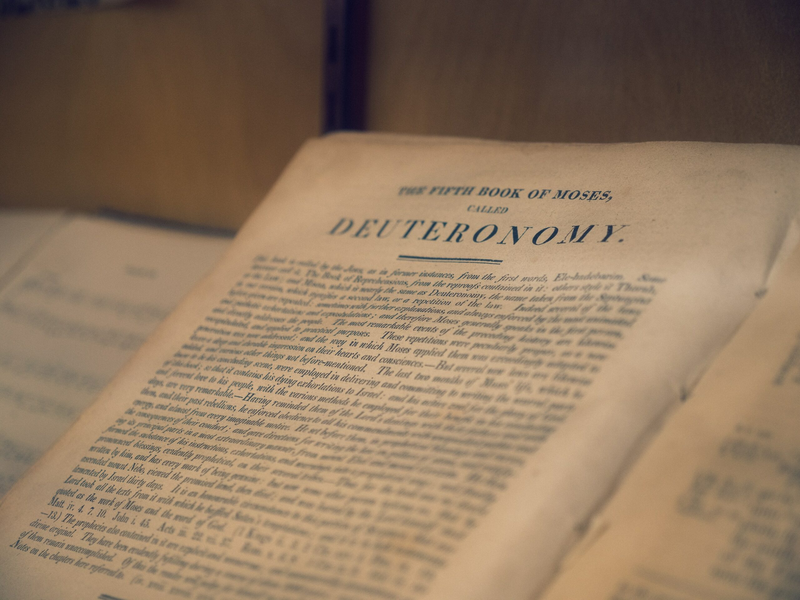
This is the third in a series of studies of the Third Word, and especially of Deuteronomy 14. In 1979 Stephen Kaufman penned a groundbreaking essay on Deuteronomy, arguing that it was a meticulously structured and carefully composed book. In his view, chapters 12 to 26 in particular follow the…

by Ralph Allan SmithJune 10, 2013
kelly-sikkema-gpoh17dxqdm-unsplash
Romans

How is Wrath Revealed?

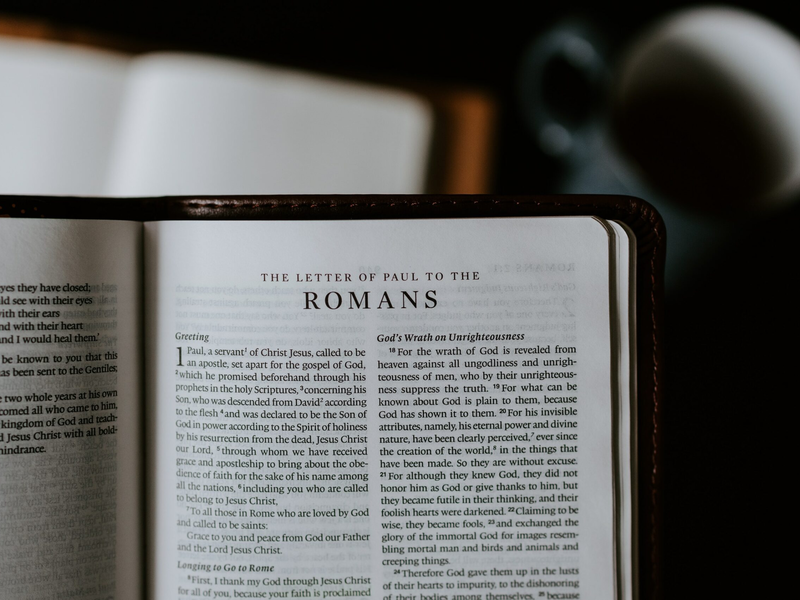
A large mistake is made in understanding Romans if one assumes that Paul is concerned with proving the fact that no one can ever live without sin—or that all attempts at obeying God’s commands are at least tainted with human sinfulness. The first problem with such an assumption is that…

by Mark HorneJune 5, 2013
chris-bair-ndczc5739ck-unsplash
Deuteronomy

The Third Word

This is the second in a series of studies on the Third Word, and especially on the food laws of Deuteronomy 14. In the second part of this series, I argue that Moses’ reworking of the Ten Words in Deuteronomy 5 includes adding nuance to the Third Word. This prepares…

by Ralph Allan SmithJune 3, 2013
yannis-papanastasopoulos-if_29sed7ta-unsplash
Culture

Turning Babel into a Beast

Recent months have brought a lively discussion of Christian participation in the culture war. On the one hand, the pro-life movement appears to be making some slow progress on the abortion issue. The trial of abortionist and serial murderer Kermit Gosnell has the potential to awaken those who are nominally…

by Joe RigneyMay 29, 2013

Showing page 193 of 309

See all

Showing page 35 of 43

See all
History

Universal exile

Ancient politics had to do with governing a people set in a particular location; so did the modern politics of the nation-state. With the large-scale population movements of the last half-century, the ethnic homogeneity of the nation-state (never entirely homogenous to begin with) has dissolved further. Nationality is no longer…

November 8, 2006
History

World Citizens

Political scientist David Jacobson notes the connection between immigration and shifts in understandings of rights: “Transnational migration is steadily eroding the traditional basis of nation-state membership, namely citizenship. As rights have come to be predicated on residency, not citizen state, the distiction between ‘citizen’ and ‘alian’ has eroded. The devaluation…

November 8, 2006
Economics

Iconomics

The reviewer of Ernest Sterberg’s 1999 Economy of Icons in the American Journal of Economics and Sociology summarizes some main points from this latter-day Thorstein Veblen: “The thesis of this controversial book is that ‘enterprises make their way in the capitalist economy by transforming commodities into icons.’ An icon is…

November 8, 2006
History

Artificial selves

Discussions of the postmodern self often trace a genealogy from Descartes to Locke to Kant to Nietzsche to Heidegger to Foucault. But though philosophers no doubt have some influence on the daily experiences of normal humans, this sort of treatment doesn’t quite get to the ground level. In 1991, Paul…

November 7, 2006
History

End of history

Evidence that Fukuyama may have had it right: Walter Truett Anderson writes that “the International Commission on Peace and Food (in its 1994 report) pointed to the urgent need to create employment for hundreds of millions of poor people, and at the same time dismissed the notion that most of…

November 7, 2006
History

We’re All Communitarians now

Psychologist Brewster Smith decries the solvents of postmodern life - cynicism, shallowness, sensationalism, warfare between fundamentalisms and relativisms, uncertainty about all standards, the “fin de siecle sense of drift and doom” (even after the fin). What’s his solution? Find yourself a community that can give you values, standards, a heritage,…

November 7, 2006

Showing page 1768 of 2212

Browse by Category

In Medias Res

Your weekly digest for all things Theopolis.

Donate

Theopolis is nearly 100% donor-supported. Consider joining us on our mission.