Theopolis Logo

Writing

Explore our collection of theological essays, biblical studies, and reflections on faith and culture.

See all
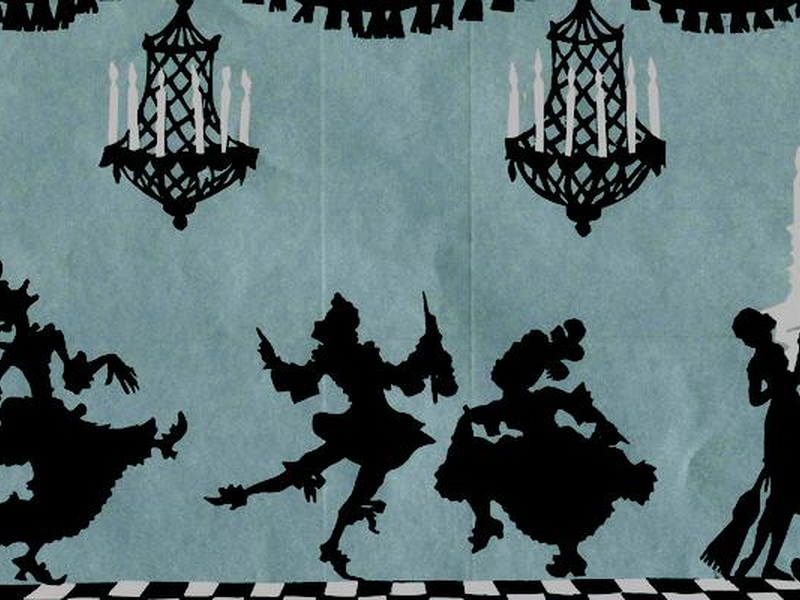
cinderella
C. S. Lewis

On Reading Fairy Tales

One of the main characters of That Hideous Strength by C. S. Lewis is Mark Studdock, who was a sociologist but his true passion was being a part of the so called “inner circle.” He wanted to belong to the elite that would bestow glory and power. On the other…

by Bogumil JarmulakMay 26, 2015

ceilingfromtheimmaculateconceptionchapel
Acts

By the Spirit

The first Pentecost meant many things, fulfilling many types, shadows, and prophecies from the Old Testament. Pentecost marked the beginning of a new creation, and a new humanity. Just as the Spirit hovered over the waters of the original formless and void creation to shape and fill it, so the…

by Peter LeithartMay 21, 2015
tim-marshall-k2u71wv2ei4-unsplash
Interview

Student Profile - Clint Hail

Clint Hail has had an exciting, varied life. A West Point graduate and a former infantry officer, he now serves as Community Transformation Director in Costa Rica for e3 Partners Ministries. Clint has also attended two Theopolis Institute courses. Clint recently told Theopolis about his experiences in the military, his…

by TheopolisMay 20, 2015
skyler-gerald-oygna91tfis-unsplash
Homosexuality

Music in Wartime

Before the summer is out, the US Supreme Court will hand down a decision in Obergefell v. Hodges , the same-sex marriage case. Every other week, ISIS releases a new video of masked fighters beheading Christians, and the rest of the Middle East is in chaos. Boko Haram terrorizes parts…

by Peter LeithartMay 19, 2015
banner
Theopolis News

New Theopolis Board Members

The Theopolis Institute Board added three new Board members at its semi-annual Board meeting on May 16: Dr. Roy Atwood, Pastor Uri Brito, and Rod Olps, Jr. Formerly President of New Saint Andrews College in Moscow, Idaho, Atwood was recently appointed Abraham Kuyper Distinguished Professor of Classics at Morthland College…

by TheopolisMay 18, 2015
peter-and-paul
Galatians

Galatian Temptations

The kingdom of God has come upon us, Jesus said. The justice of God is revealed in the gospel, Paul said. Whoever is in Christ, there is new creation. Isaiah's visions of lions and lambs and a peaceable kingdom are visions about the effect of the Messiah's first advent. If…

by Peter LeithartMay 14, 2015

Showing page 153 of 309

See all

Showing page 35 of 43

See all
History

Modernity and antiquity

Kumar suggests that “some of the principal hall-marks of modernity” are already evident in the Christian notions of time and history. Both Christianity and modernity separate time from nature, and humanize time; time is seen by both as “linear and irreversible”; both see history as an Aristotelian drama with beginning,…

February 24, 2006
History

First Modernity

The Latin modernus was coined in the late fifth century, as an antonym to antiquus , and variations of modernus became particularly common after the 10th century. Thus, Krishan Kumar writes, “Modernity is . . . an invention of the Christian Middle Ages,” and was used to emphasize the radical…

February 24, 2006
Philosophy

Computer Communications and the Self

Poster lists four effects that computer communications (email, chat groups, etc) have on the self: “1 they introduce new possibilities for playing with identities; 2 they degender communications by removing gender cues; 3 they destabilize existing hierarchies in relationships and re-hierarchize communications according to criterio that were previously irrelevant; and…

February 24, 2006
Philosophy

Computers, subjects and objects

Descartes famously contrasted the mind (res cogitans) with the external world (res extensa), but Mark Poster suggests that computer writing fudges that distinction: “the computer dematerializes the written trace. As inputs are made to the computer through the keyboard, pixels of phosphor are illuminated on the screen, pixels that are…

February 24, 2006
Media

Community and New Communications

Mark Poster points to a tension between the modern institutions of production and the postmodern technologies of communication, particularly as they impact the formation of the self: “If modernity or the mode of production signifies patterned practices that elicit identities as autonomous and (instrumentally) rational, postmodernity or the mode of…

February 24, 2006
Media

Telephone

Prior to World War I, Telefon Hirmondo, the telephone system of Budapest, was used as a broadcast system, with a published schedule of programs that were restricted to certain classes of people in Hungary. Only later did it develop into a communications system in which everyone could pass information to…

February 24, 2006

Showing page 1878 of 2212

Browse by Category

In Medias Res

Your weekly digest for all things Theopolis.

Donate

Theopolis is nearly 100% donor-supported. Consider joining us on our mission.