Theopolis Logo

Writing

Explore our collection of theological essays, biblical studies, and reflections on faith and culture.

See all
screen-shot-2023-02-24-at-1-48-41-pm
Biblical Chronology

Chronologies and Kings: Part 3

The chronology of the Kings of Judah and Israel can be divided into three periods with clearly defined boundaries. The first period begins with the death of Solomon and the accessions of Rehoboam in the south (Judah) and Jeroboam in the north (Israel). It ends with the deaths of Ahaziah…

by James B. JordanSeptember 22, 1991

johann-walter-bantz-clv9dfjlwac-unsplash-1-5
Art

Arts & Play, Part 1

Most modern people regard the arts as essentially decorative. They are hardly very important, as compared to business, politics, or religion. Yet, from a Biblical point of view, the arts lie close to the heart of human life. The universe that God created is itself an artistic masterpiece by the…

by James B. JordanSeptember 22, 1991
6273e95e0f5ac766258d8cf3_joshuasconquestoftheland-2
Exodus

Chronologies and Kings, Part 2

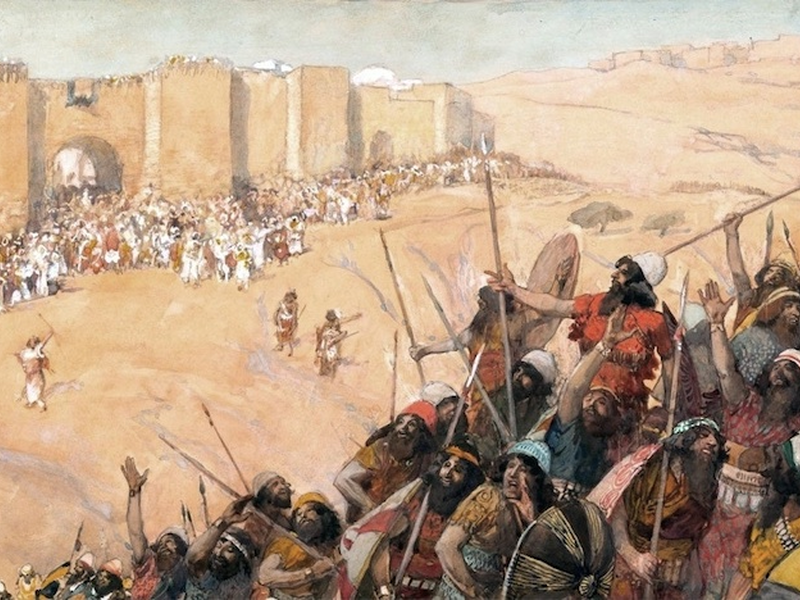
Before we move into a detailed survey of the history and chronology of the kings of Israel and Judah, let us review the chronological information that leads from creation to the kingdom. This will be helpful both to new readers of these essays, and a reminder for those who have…

by James B. JordanAugust 22, 1991
screen-shot-2023-02-24-at-1-48-41-pm
Biblical Chronology

Chronologies and Kings, Part 1

We have completed our overall survey of Biblical chronology, and now turn to a detailed examination of the Biblical information regarding the chronology of Israel’s kings. The first piece of chronological information we have regarding Israel’s kings is very cryptic, and it serves as an guide to the interpretation of…

by James B. JordanJuly 22, 1991
screenshot-2023-08-09-at-2-13-32-pm
Biblical Horizons

Book Review - To Take Place: Toward Theory in Ritual

Jonathan Z. Smith, To Take Place: Toward Theory in Ritual (Chicago: University of Chicago Press, 1987). Reviewed by Peter J. Leithart. The philosophes of the 18th century often attacked Christendom using the tools of anthropology and comparative religion. Rousseau contrasted the idyllic equality of primitive, natural peoples with the bondage…

by Peter LeithartJuly 6, 1991
screenshot-2023-08-09-at-1-47-41-pm
Biblical Horizons

Book Review: The Rise of Magic in Early Medieval Europe

Valerie I. J. Flint, The Rise of Magic in Early Medieval Europe (Princeton University Press, 1991). Reviewed by Peter J. Leithart. Valerie I. J. Flint, Professor of History at the University of Auckland, New Zealand, is refreshingly candid about her reasons for undertaking a study of The Rise of Magic…

by Peter LeithartJuly 6, 1991

Showing page 295 of 309

See all

Showing page 35 of 43

See all
Literature

Christianization of Germanic Lit

B eowulf reflects the tensions between the Christian culture spreading throughout Northern Europe and the pagan cultures into which it came into conflict. The poem has its place within this clash of civilizations in the first 500 years AD. It is a product of the history of missions. The Germanic…

February 15, 2006
Literature

Still more on Hamlet

SERPENT KING Among other things, Hamlet is a dramatic reflection on philosophical anthropology: What is a man? and What are the conditions of human experience and existence? This is related to the theme we explored a few weeks ago under the heading of “action”: What are the rules and guidelines…

February 14, 2006

Mark’s Meta-Irony

Mark is known for the understated irony of his gospel, but there is a large-scale irony overarching the book that is worthy of Sophocles. Readers know from the first verse of the gospel that Jesus is Son of God, and that title is used periodically through the gospel by the…

February 14, 2006

Mark’s Meta-Irony

Mark is known for the understated irony of his gospel, but there is a large-scale irony overarching the book that is worthy of Sophocles. Readers know from the first verse of the gospel that Jesus is Son of God, and that title is used periodically through the gospel by the…

February 14, 2006
Literature

Renaissance Self-Criticism

What characterizes the Renaissance sensibility of the self? Two things, perhaps: First: not the playing of roles, but the consciousness of playing roles, the consciousness that creates an ironic distance between role and role-player. Richard II is entirely expressed in his assigned role; Henry V seems conscious that he is…

February 14, 2006

Primer on Litcrit

New Critics, Feminists Phenomenology; Reader-Response critics Need no apology. There are Formalists of Russia, Structuralists of France. Give Archetypal Critics More than a glance. Marxists are strange birds, Like Speech-Act Theorists. And yet there’s no doubt Which theory is Queerest. Diaologic critics And Deconstruction Both in their own way Love…

February 13, 2006

Showing page 1885 of 2212

Browse by Category

In Medias Res

Your weekly digest for all things Theopolis.

Donate

Theopolis is nearly 100% donor-supported. Consider joining us on our mission.