Theopolis Logo

Writing

Explore our collection of theological essays, biblical studies, and reflections on faith and culture.

See all
tanner-mardis-xuxghzhibn4-unsplash-1-2
Biblical Studies

Tweets-turned-Notes on the Bible’s Chronology

Summary In what follows, I will consider the “year-stamps” employed in Scripture, i.e., statements of the form, “Such-and-such an event took place in the Xth year of Y.” In the process, I will suggest some ways in which the Biblical narrative might relate to events in the extra-Biblical world, though…

by James BejonJuly 16, 2019
durer-prodigal-son-2
Luke

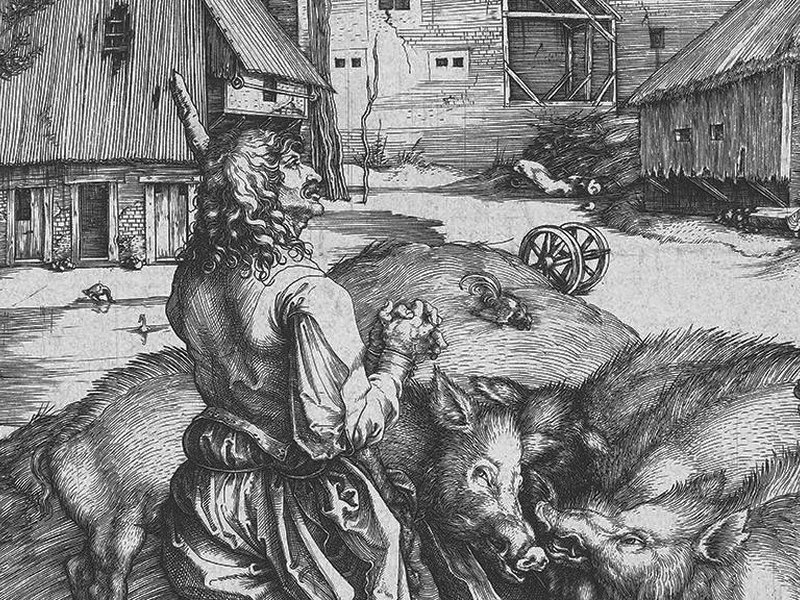
Perspectives on the Prodigal, (Part 2)

In the first essay on the parable of the Prodigal Son, I suggested that the problems commentators and others encounter in interpreting Jesus three-part parable are not accidental. These are not just problems in our ignorance of cultural background. They are intentional features of the stories —stories designed to poke…

by Ralph Allan SmithJuly 11, 2019
durer-prodigal-son-2
Luke

Perspectives on the Prodigal, (Part 1)

The story of the Prodigal Son is perhaps the most well-known story in the Bible. As others have observed, it may also be one of the most misunderstood. In two short essays, I will point out features of this story that are commonly neglected, aspects of Jesus’ parable that might…

by Ralph Allan SmithJuly 9, 2019
de-rijke-man-en-de-arme-lazarus-by-jacopo-da-ponte-16th-century
Luke

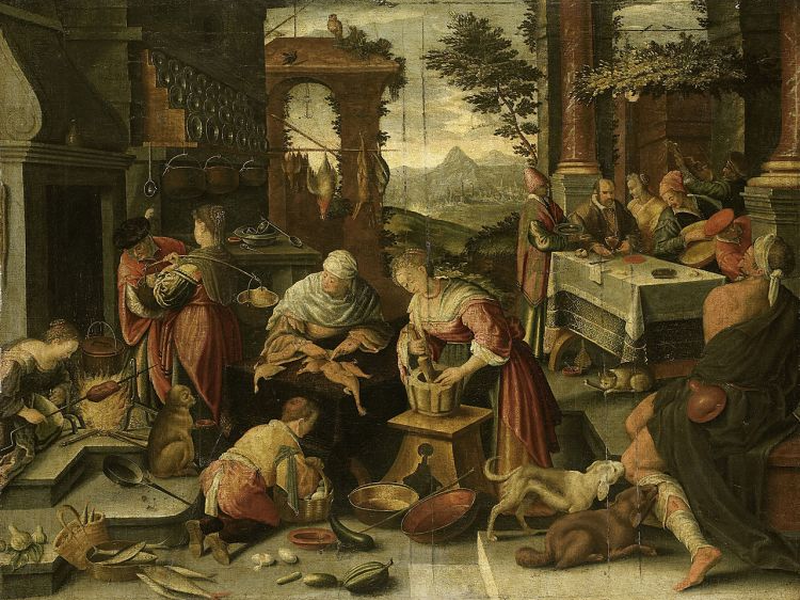
Lazarus and the Rich Man

The parable of Lazarus and the nameless rich man is not an independent story. It is part of a long context that begins in Luke 15:1, where Jesus is eating with tax collectors and sinners and the scribes and Pharisees grumble. In response to their hardheartedness, Jesus tells a three-part…

by Ralph Allan SmithJuly 4, 2019
aaron-burden-uynrnfdkjwg-unsplash
Luke

Everybody has Dropsy - Luke 14:1-24

The Bible is written so that even when a reader cannot pick up on what might be deeper or more detailed aspects of a text, there is virtually always a message to be heard. In the ancient world, where the “reader” of Scripture would likely be a church official facing…

by Ralph Allan SmithJuly 2, 2019
communion
Biblical Theology

Fruit Trees and Grain Plants

The distinction between garden (or vineyard) and field begins in Genesis 2. This relates to the ordering of the formless world. Plants of the field are contrasted with the garden planted by God in Genesis 2:5&8. Later on, under the Old Covenant the Israelites will be required to keep their…

by James B. JordanJune 27, 2019

Showing page 77 of 309

See all

Showing page 35 of 43

See all

Defoe and the news

In Richard West’s fascinating biography of Defoe, he claims that he was “the first master, if not the inventor, of almost every feature of modern newspapers, including the leading article, investigative reporting, the foreign news analysis, the agony aunt, the gossip column, the candid obituary, and even the kind of…

November 6, 2005

Defoe on liturgical posture

In one of his works, Daniel Defoe, a well-known non-Conformist, posed as an Anglican who was asked to defend kneeling at the communion by a Dissenter. Spying an altar piece of the Last Supper, the Dissenter asks, “how can your people prosecute us for refusing to kneel at the Sacrament?…

November 6, 2005
Literature

Bunyan, Defoe, and the Novel

I want to examine Bunyan’s Pilgrim’s Progress and Daniel Defoe in the context of the rise of the Western European novel. Some scholars suggest that novel-like writing is evident in the ancient world, in medieval Japan, and medieval Europe. But the novel-writing that began to take over Europe in the…

November 5, 2005

True and False Union

There are a number of “ecumenical” movements in 1-2 Kings. The first is pursued by Rehoboam, who attempts to reunite the 12 tribes by force and is warned off by a prophet. The second, more successful and elaborate example is the Omride dynasty, which rules Israel for several generations and…

November 5, 2005

Renewal and the Death of the Mainline

Elisha’s ministry of life was, according to 1 Kings 19, a ministry of judgment. Elisha, after all, was a force of destabilization. By giving life and freedom to the faithful poor, the loyal sons of the prophets, he upset the “natural” hierarchy of the Northern Kingdom. By engaging in a…

November 5, 2005

The smooth way

The NASB translation of Proverbs 11:5 says that the righteous and blameless will walk on a “smooth” way, while the wicked will fall into the potholes that dot his path. The way of righteousness looks easy; the way of wickedness is the difficult way. Yet, Jesus says that the wide…

November 5, 2005

Showing page 1928 of 2212

Browse by Category

In Medias Res

Your weekly digest for all things Theopolis.

Donate

Theopolis is nearly 100% donor-supported. Consider joining us on our mission.