Theopolis Logo

Writing

Explore our collection of theological essays, biblical studies, and reflections on faith and culture.

See all
screen-shot-2022-08-04-at-9-36-57-am
Matthew

Paul Doesn't Care About Universal Individual Sinfulness or General Revelation

One reason readers assume Paul is trying to prove that all human beings are sinful is that they understand him to be arguing that no one can keep the law. That means, they think, his opponents must believe that human nature is potentially sinless. Taking Paul’s statement that, if you…

by Mark HorneJune 17, 2013

karsten-wurth-imegmbunara-unsplash
Mission

Dreams and Visions

[Note: This post was written prior to our name changing to Theopolis Institute.] What is Trinity House for? Three things: We aim to advance the reformation of the church and, through the church, to promote the renewal of culture; in furthering reformation, we aspire to be a site of fraternal,…

by Peter LeithartJune 12, 2013
sixteen-miles-out-al48tflf4e8-unsplash
Deuteronomy

Sons to Yahweh your God!

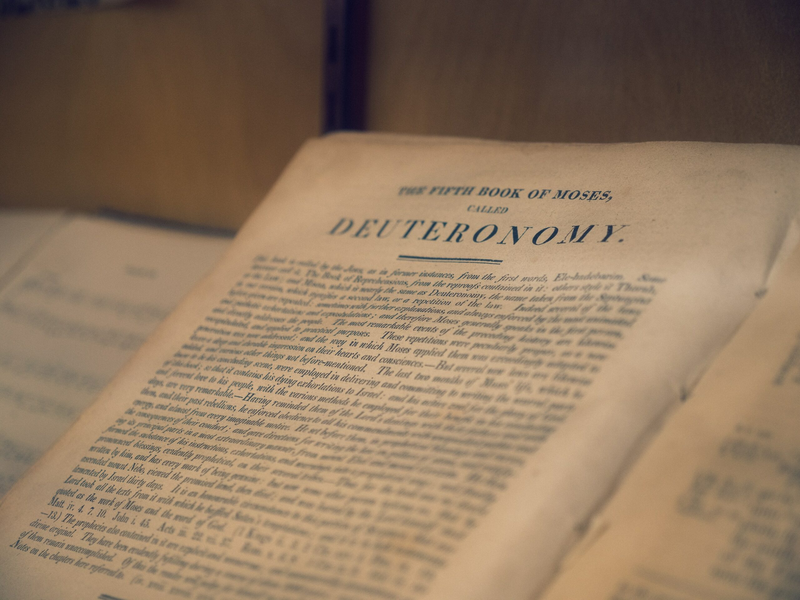
This is the third in a series of studies of the Third Word, and especially of Deuteronomy 14. In 1979 Stephen Kaufman penned a groundbreaking essay on Deuteronomy, arguing that it was a meticulously structured and carefully composed book. In his view, chapters 12 to 26 in particular follow the…

by Ralph Allan SmithJune 10, 2013
kelly-sikkema-gpoh17dxqdm-unsplash
Romans

How is Wrath Revealed?

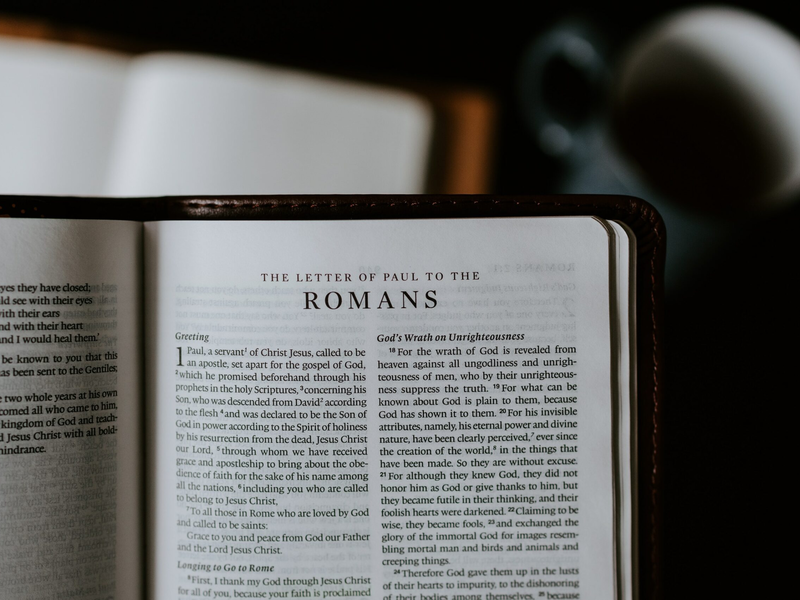
A large mistake is made in understanding Romans if one assumes that Paul is concerned with proving the fact that no one can ever live without sin—or that all attempts at obeying God’s commands are at least tainted with human sinfulness. The first problem with such an assumption is that…

by Mark HorneJune 5, 2013
chris-bair-ndczc5739ck-unsplash
Deuteronomy

The Third Word

This is the second in a series of studies on the Third Word, and especially on the food laws of Deuteronomy 14. In the second part of this series, I argue that Moses’ reworking of the Ten Words in Deuteronomy 5 includes adding nuance to the Third Word. This prepares…

by Ralph Allan SmithJune 3, 2013
yannis-papanastasopoulos-if_29sed7ta-unsplash
Culture

Turning Babel into a Beast

Recent months have brought a lively discussion of Christian participation in the culture war. On the one hand, the pro-life movement appears to be making some slow progress on the abortion issue. The trial of abortionist and serial murderer Kermit Gosnell has the potential to awaken those who are nominally…

by Joe RigneyMay 29, 2013

Showing page 193 of 309

See all

Showing page 35 of 43

See all

Kolb on Luther and Chemnitz, Revisited

A perceptive Lutheran reader asked whether I was endorsing an antinomian position in my favorable summary of Kolb’s article on Luther and Chemnitz. He pointed out that Kolb’s position relies on an illegitimate separation of God and His Law, and argued that instead the Law should be seen as an…

February 14, 2005

Eucharistic Meditation, First of Lent

?And the ravens brought him bread and meat in the morning, and bread and meat in the evening, and he would drink from the brook.?E In this morning sermon, we saw how the writer of Kings highlights the authority of Elijah and His power. He speaks, and the heavens become…

February 13, 2005

Exhortation, First of Lent

So what? So what if Jeroboam made golden calves and worshiped them at Dan and Bethel? So what if the house of Jeroboam was destroyed by Baasha, and the house of Baasha destroyed by Zimri, and Zimri destroyed by Omri, and the house of Omri destroyed by Jehu? What does…

February 13, 2005

Philosophy and Self-Justification

Alain de Botton notes in his book Status Anxiety that many societies see a direct relationship between reputation and self-image. If others hold me in contempt, then I must either defend myself against their contempt or accept their contemptuous assessment. Philosophy introduces a mediator, reason, which assesses and judges reputation…

February 11, 2005

The Village

I finally watched The Village . Much of it was perfectly silly. The initial explanation of the dead animals littering the village is that a coyote is on the loose, and this theory is put to rest only when it’s decided that coyotes are not big enough to leave big…

February 11, 2005

Chemnitz and Luther

Robert Kolb offers this helpful analysis of the differences between Luther and Chemnitz on justification: “Luther understood justification as the execution of the wages of sin . . . upon sinners and their simultaneous resurrectionto new life in Jesus Christ . . . . Chemnitz did not pursue this aspect…

February 10, 2005

Showing page 2007 of 2212

Browse by Category

In Medias Res

Your weekly digest for all things Theopolis.

Donate

Theopolis is nearly 100% donor-supported. Consider joining us on our mission.