Theopolis Logo

Writing

Explore our collection of theological essays, biblical studies, and reflections on faith and culture.

See all
giammarco-zeh-ljawhtg-unsplash
Biblical Horizons

OPEN BOOK: Views and Reviews

Isaac E. Mozeson, The Word: The Dictionary that Reveals the Hebrew Sources of English (Northvale, NJ: Jacob Aaronson Inc., 1995), 310 pp. Reviewed by James B. Jordan. Once there was only one language in the world, the language God spoke to Adam. At the Tower of Babel, there came to…

by James B. JordanJune 28, 1996
tim-wildsmith-j6jv-mkdzqs-unsplash
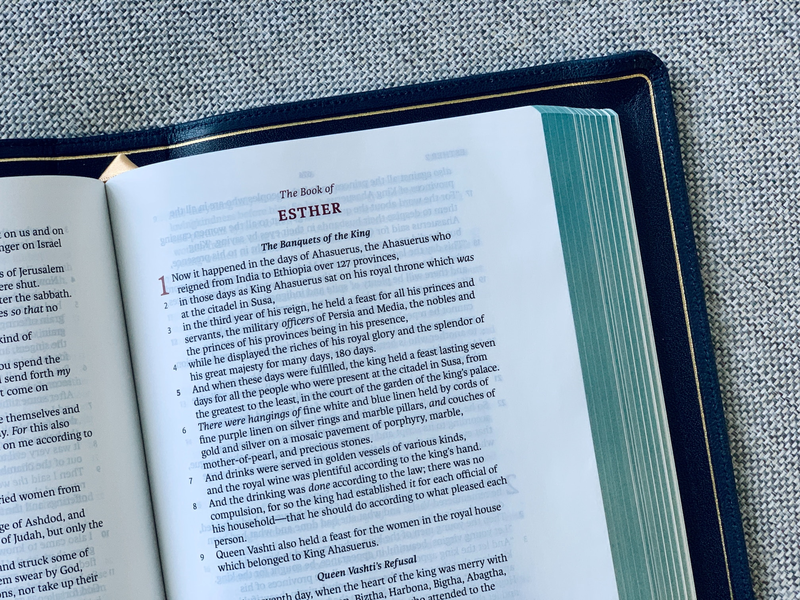
Esther

Esther: Historical & Chronological Comments (IV)

2. The Setting of the Book of Esther A. Xerxes (continued from previous issue) Ezra 6:14 says that the Jews finished building "according to the command of the God of Israel and the decree of Cyrus and Darius and Artaxerxes king of Persia." The problem with this verse is that…

by James B. JordanJune 28, 1996
ales-krivec-4mibe6zg5r0-unsplash
Acts

Jesus and Amalek

This essay goes with our previous study of the Amalek pattern back in Biblical Horizons No. 2. Since many do not have this essay, entitled "The Battle of Gog and Magog," let me cite the relevant paragraphs: Note in Genesis 12-15 that Abram moves into the land after escaping Pharaoh…

by James B. JordanJune 28, 1996
aaron-burden-1ebsmyrau-s-unsplash
Proverbs

The Strange Woman

Proverbs 7:6-23 is one of several passages early in the Proverbs in which Solomon warns his son about the wiles and dangers of the "strange woman." It is certainly quite proper to take these as straightforward warnings against sexual sins, and these are certainly warnings that need to be impressed…

by Peter LeithartJune 27, 1996
jan-kahanek-g3o5ztrk2e4-unsplash
Biblical Studies

Some Observations

1. In Luke 4:20 we read that after Jesus finished reading from Isaiah, "the eyes of all in the synagogue were fixed upon Him." This is usually taken in a psychological sense: They were amazed at Jesus somehow. I suggest that, as always, a merely psychological reading is a modern…

by James B. JordanMay 28, 1996
tim-wildsmith-j6jv-mkdzqs-unsplash
Esther

Esther: Historical & Chronological Comments (III)

2. The Setting of the Book of Esther Up to now we have assumed what we must prove, that the king in Esther is Darius the Great. While Biblical chronologists have usually taken this position, commentators on the book of Esther have often taken others as the king. One view,…

by James B. JordanMay 28, 1996

Showing page 265 of 309

See all

Showing page 35 of 43

See all

Sexual Laws of Leviticus 18

The sexual laws of Leviticus 18 have long been puzzling on a couple of levels. The logic of the arrangement of the laws is difficult to discern; the gaps in the laws seems inexplicable (no prohibition, for instance, of father-daughter incest); and the question of how obedience to these laws…

November 2, 2004

Righteousness in Romans 1

The phrase “righteousness of God” in Romans 1:17 has been the subject of considerable dispute in recent years, with many abandoning a standard Protestant interpretation of the passage (i.e., that the righteousness of God refers to the righteousness that God gives) in favor of a more redemptive-historical understanding (righteousness as…

November 2, 2004

Matthew 8 and Sodomy

Theodore Jennings and Tat-Siong Benny Liew have a curious article in the Fall 2004 issue of JBL . They offer an alternative interpretation of the story of the centurion of Matthew 8, an interpretation that hangs on taking “PAIS” not as “slave” or “son” but as “boy-lover.” They find plenty…

November 2, 2004
Literature

Romanticism and Spain

In a review of Joseph von Eichendorff’s collected works ( TLS , October 1, 2004), Carol Tully points out the fascination of German Romantics for Spain: “For the poets and theoreticians of the Romantic age in German, Spain was somewhere very special indeed. The nation and its culture were eulogized…

November 2, 2004

Two Kinds of Righteousness

Some intriguing quotations from Luther’s treatise on Two Kinds of Righteousness . 1) The first sort is “alien righteousness”: “The first is alien righteousness, that is the righteousness of another, instilled from without. This is the righteousness of Christ by which he justifies though faith, as it is written in…

October 27, 2004

Eucharist Lecture #3

INTRODUCTION Because of the imperfections of the reformation of the Eucharist in the sixteenth century, and because of the alien influences that have affected the practice of the Eucharist in the centuries since, there is much left to do in order to renew the Table. The Reformation must at this…

October 27, 2004

Showing page 2042 of 2212

Browse by Category

In Medias Res

Your weekly digest for all things Theopolis.

Donate

Theopolis is nearly 100% donor-supported. Consider joining us on our mission.