Theopolis Logo

Writing

Explore our collection of theological essays, biblical studies, and reflections on faith and culture.

See all
sinitta-leunen-dvibhmzsy8e-unsplash
Epistemology

A Cheer for the Mystics

Mystical theologians are often unguarded, extreme, un-nuanced, pressing to the edges of heresy, sometimes beyond. Still, the mystics are worthy of study. Why? Many reasons. Unlike some late medieval and post-Reformation dogmaticians, mystical theologians are often instinctively and richly Trinitarian. Historical-critical approaches to Scripture left mystical theologians virtually untouched; mystics…

by Peter LeithartSeptember 2, 2013
portrait-of-william-shakespeare-1564-1616-ca-1865
Literature

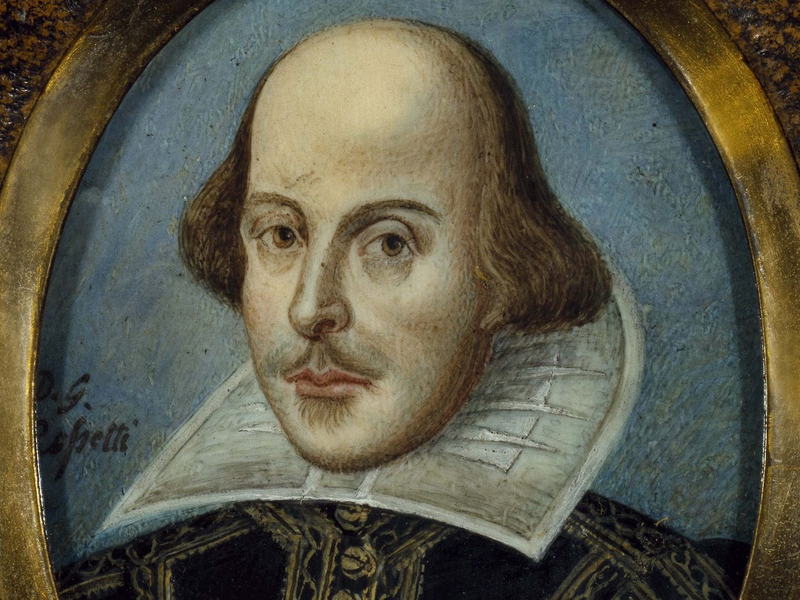
Shadow and Substance in Shakespeare's Venice

Portia of Belmont is a “lady richly left,” as Bassanio says of her in the first Act of The Merchant of Venice . Plus, she’s beautiful and wise. Suitors clamber to Belmont in hope. Her father knew it would be so, and in his will set up a fairy-tale test…

by Peter LeithartAugust 28, 2013
carlo-alberto-burato-smdx3gleu_m-unsplash
Liturgy

Liturgy Traps

[fve]http://vimeo.com/72195198[/fve]

by James B. JordanAugust 26, 2013
screen-shot-2022-05-12-at-12-07-23-pm
Deuteronomy

Victory Food

In the nature of the case, “the” Christian meditation on Deuteronomy 14:1-21 cannot be written. Meditation offers too many possibilities, opens too many doors. There is not one and only one correct set of associations for a Christian to consider when thinking of Deuteronomy 14:1-21. We could, for example, consider…

by Ralph Allan SmithAugust 21, 2013
aaron-burden-1ebsmyrau-s-unsplash
Romans

David's Sin and Israel's Salvation, Part I

Having retold the story of the cumulative sin of Israel leading to the great atonement on the cross, Paul then reemphasizes that, just as both Jew and Gentiles were locked into sin and judgment, now they are both justified by faith: Then what becomes of our boasting? It is excluded.…

by Mark HorneAugust 20, 2013
ben-white-w8qqn1pmqh0-unsplash
Deuteronomy

You are what you eat

Deuteronomy 14 is full of allusions to events of Israel’s history and other portions of Scripture. What would an Israelite learn by mediation on these allusions? The answer, I believe, is at least fourfold. Faith, Worship, War For the ancient Israelite first hearing Moses’ sermon, or perhaps hearing it read…

by Ralph Allan SmithAugust 15, 2013

Showing page 189 of 309

See all

Showing page 35 of 43

See all

The Passion, Again

I’ve read some surprising things in The New Republic : Andrew Sullivan ‘s analysis of the Roman Catholic Church several years ago was very insightful, and Eugene Genovese , reviewing a book on Southern slavery, encouraged TNR ‘s readers to check out the works of James Henley Thornwell. But I’ve…

March 6, 2004

Air Travel

Air travel requires a reversion to infantile behavior, or at best to behavior characteristic of elementary school kids. You’ve got to stay in the seat, you can’t go to the bathroom without permission from the captain or the flight attendant, you’re served packaged food (if at all) in pouches. How…

March 6, 2004
Literature

Merchant of Veniceas Allegory

Watching the closing courtroom scene of The Merchant of Venice , I was struck by how allegorical it is. First, there’s Antonio, threatened with death for a debt that really was incurred by Bassanio. Second, he’s threatened by a Jew. Third, Shylock says something like “his blood be on my…

March 6, 2004

Foolishness of God

Does the “foolishness of God” carry the connotation of “God playing the fool”? As in, God the jester? Is Paul saying that God the jester is wiser than the sages?

March 4, 2004
Literature

Walter Scott, Again

Further reflection on Scott: His anti-romanticism, as I suggested, is a common theme in early novel-writing. Defoe furnishes another example. Robinson Crusoe is warned by his father against running off to sea and seeking adventure, but Robin is unwilling to settle down to a boring middle-class life. Of course, when…

March 4, 2004
Theology

The Antiquity of Moses

The church fathers went to great lengths to prove that Moses was both more antique than Greek sages, and also to show that the Greek sages were dependent on Moses. While historically plausible, these efforts a form of Christian apologetics done within the confines of pagan thought. The assumption is…

March 4, 2004

Showing page 2114 of 2212

Browse by Category

In Medias Res

Your weekly digest for all things Theopolis.

Donate

Theopolis is nearly 100% donor-supported. Consider joining us on our mission.