Theopolis Logo

Writing

Explore our collection of theological essays, biblical studies, and reflections on faith and culture.

See all
aaron-burden-h8s0pf2rcqs-unsplash
Galatians

The Restoration of the Galatians

While controversies over the writings of Paul continue in various corners of the intellectual globe, the word of God given through Paul and his scribe and all of the church’s interpreters and translators over the last two millennia is still readily available to the lofty and the lowly. Paul, as…

by Grace LangnessMarch 25, 2013

kiwihug-l4gw27xzn1i-unsplash
Deuteronomy

Law and History: How to Read the Law of Moses (Part 2)

The second in a series of studies in Deuteronomy. Deuteronomy 22:30: A man shall not take his father’s wife, and shall not uncover his father’s wing (Hebrew: kanaf ). There are a number of unusual features in this law that mark it out from the previous context, indicating that it…

by Ralph Allan SmithMarch 20, 2013
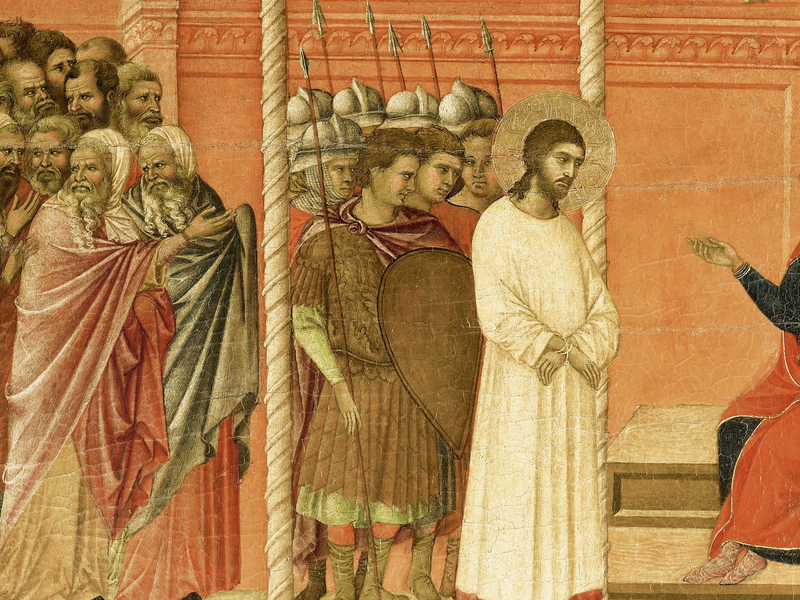
200403-moss-pilate-tease_pncfq5
History

Victimhood and the Gospel

The texts of Christianity have been slowly at work, under the power of the Holy Spirit for 2000 years now. If we could be magically transported back into the world of two millennia ago, modern Americans would be shocked at the cruelty of that world. There was no concern for…

by Richard BledsoeMarch 18, 2013
aaron-burden-1ebsmyrau-s-unsplash
Luke

The Dysfunctional Family of the Gadarene Madman

The Story of the Gadarene Madman is told in all three synoptic Gospels (Matthew 8:28-34, Mark 5:1-20, Luke 8:26-37). Jesus ventures into a Gentile area when He passes over the Sea of Galilee. Upon disembarking from his boat, he is immediately met by a demon-possessed madman. Upon meeting Jesus, he…

by Richard BledsoeMarch 13, 2013
aaron-burden-1ebsmyrau-s-unsplash
Deuteronomy

Law and History: How to Read the Law of Moses

Part 1 of a multi-part series of studies on Deuteronomy 22:30-23:8. Eric Auerbach, in his classic work on Western literature, devotes his first chapter to contrasting Homer with the Bible. Of Homer, he writes of the “need of Homeric style to leave nothing which it mentions half in darkness and…

by Ralph Allan SmithMarch 12, 2013
markus-winkler-aid-xyrtlec-unsplash
Theopolis News

James Jordan in Korea, Japan

Trinity House Fellow James B. Jordan will be a speaker at an International Conference on Biblical Symbolism that will be held in Seoul on Monday, May 27 in 2013. He will address "The Importance of Biblical Symbolism and Symbolic Interpretation of the Bible." The conference will have three other speakers…

by Peter LeithartMarch 9, 2013

Showing page 197 of 309

See all

Showing page 35 of 43

See all

Overlapping Structures in Revelation 21-22

James Jordan has suggested that the vision of new Jerusalem (Revelation 21:9-22:5) is arranged as a chiastic recasting of the creation week: A. Day 1: Light in the city, 21:10-11 B. Day 2: Boundaries and measurements of the city, 21:12-17 C. Day 3: Materials of the city, 21:18-21 D. Day…

July 30, 2015

Show & Tell

The verb “show” ( deiknuo ) occurs eight times in Revelation, and the eight uses fall into a neat pattern. Twice at the beginning (1:1; 4:1) and twice at the end (22:6, 8), the verb is used with a generic object. God shows “things which must shortly take place” (1:1;…

July 30, 2015

Musical Bridges

In an essay on “barriers and bridges” in American religion, Stephen Warner emphasizes the role of music in building bridges, forging solidarity without requiring assent to a common set of propositions. He offers a florilegium of quotations from various scholars: “At an emotional level, there is something ‘deeper' about hearing…

July 30, 2015

Keeping Time, Keeping Together

William H. McNeill's Keeping Together in Time explores the role of “emotional bonding through rhythmic muscular movement” in history (52). The significance of the phenomenon occurred to him during military training in 1941: “A sense of pervasive movement in unison is what I recall; more specifically, strange sense of personal…

July 30, 2015

End of the End

The final chapter of the Bible (Revelation 22:6-21) is a rapid series of speeches and dialogues, structured in fourfold parallelism. Each new section introduces a new speaker or speech with some form of “he said.” The speakers move from an angel to Jesus to the Spirit and bride. The chapter…

July 29, 2015

Seven Heads

In a 2007 Bibliotheca Sacra article, Mark Hitchcock examines various theories about the identity of the seven heads of the beast in Revelation 17:9-11. It's been proposed that the number seven is purely symbolic of fulness, and that the heads are not to be identified with any historical characters. Hitchcock's…

July 29, 2015

Showing page 396 of 2212

Browse by Category

In Medias Res

Your weekly digest for all things Theopolis.

Donate

Theopolis is nearly 100% donor-supported. Consider joining us on our mission.