Theopolis Logo

Writing

Explore our collection of theological essays, biblical studies, and reflections on faith and culture.

See all
e99a9334
Advent

Stretching Christmas

For many people Christmas comes on December 25 and is over December 26. The tree is taken down along with the lights and the other decorations, and everyone begins setting the house in order for the new year. No more Christmas hymns. No more celebrations (well, until New Year’s Eve).…

by Steve WilkinsDecember 24, 2016
ascension
Advent

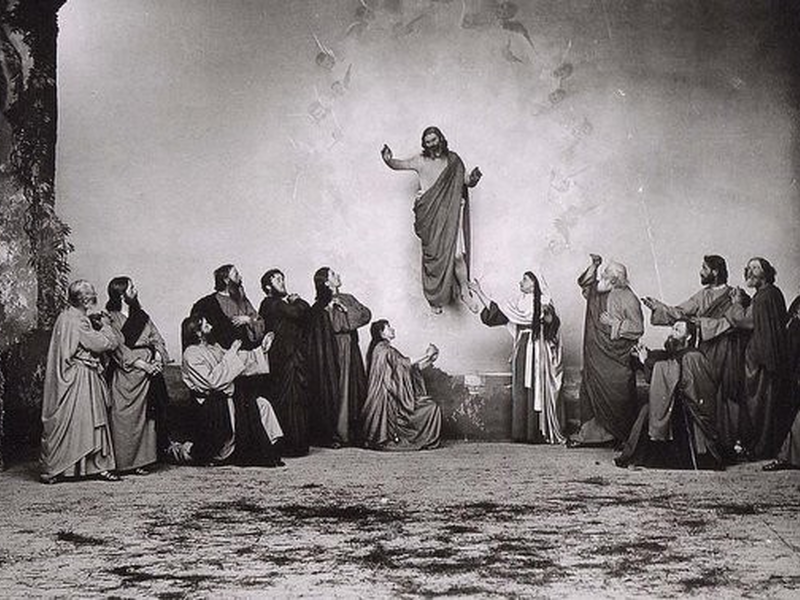
Ascension and Incarnation

The Ascension and the Incarnation should not be disconnected in our Christmas thinking or celebrations. As N.T. Wright notes, the ascension is "a central and vital feature without which all sorts of other things start to go demonstrably wrong. . . . where the ascension has been ignored or misunderstood,…

by Roy AtwoodDecember 23, 2016
nativity-rembrandt
Advent

Christmas Light

“In the Word was life, and the life was the light of men. And the light shines in the darkness.” Thus John describes the incarnation of the Son. He comes as the living and life-giving light of the world. That’s good news. In the beginning, God spoke and light shone…

by Peter LeithartDecember 23, 2016
nativity-chagall
Advent

The Spirit of Christmas

Christmas is all about Jesus. The angels announce Jesus’ birth, shepherds and wise men come to see Jesus, Herod wants to kill Jesus. We occasionally think of the Father who sent the Son, but we keep returning to the Son made flesh in Bethlehem’s manger. Meanwhile, as always, the Spirit…

by Peter LeithartDecember 22, 2016
nativity
Advent

The Humility of God

Christmas is about many things, but one of the chief things revealed in the gospel of Christmas is the humility of God. We don't often think of humility as an attribute of God. If God is glorious and exalted, we think, He must be haughty and proud and self-centered. We…

by Peter LeithartDecember 21, 2016
screenshot-2025-12-15-at-8-35-45-am
Advent

Advent of Unity

John famously begins his Gospel with a piece of theology: “In the beginning was the Word, and the Word was with God, and the Word was God.” Matthew starts with a genealogy. John celebrates Advent with a hymn, Matthew with a list. For John, Jesus is the Word of creation…

by Peter LeithartDecember 20, 2016

Showing page 120 of 309

See all

Showing page 35 of 43

See all

Purity, Pauline Style

In his study of The Concept of Purity at Qumran and in the Letters of Paul , Michael Newton argues that Paul transfers the logic and patterns of purity and cult from the temple to the new temple-community, the church. Relying mainly on Corinthians, Newton writes: “By describing the Christian…

May 12, 2015

Sodom v. Circumcision

A hermeneutical rule of thumb I share with students: Chapter 2 comes after chapter 1. It has many applications, as in “Chapter 18 comes after chapter 17.” Make the observation, then ask, Why? Why is that story there , after this one and before that one? The story of Sodom…

May 11, 2015

Is David Among the Prophets?

After describing the heroes of faith from creation to Jericho with some leisure, Hebrews 11 closes with a rapid-fire survey of everything from the judges on (vv. 32-38). It's a nicely constructed passage. First, six individuals are named, followed by a general reference to “prophets”: Gideon, Barak, Samson, Jephthah, David,…

May 11, 2015

Mark of the Beast

In a 1991 article in the Tyndale Bulletin , Edwin Judge reviews the symbolic resonances of the phrase “mark of the beast,” but notes, rightly that “the visions of Revelation keep disconcertingly coming down to earth” (158). So he looks for historical evidence of a mark imposed by Roman authorities…

May 11, 2015

Anthropology and the Bible

In an essay on atonement in the Jewish Studies Quarterly from the early 1990s, Mary Douglas explains “the social origins of ideas about defilement in general”: Living in a community, people find themselves wanting to keep apart from some dissimilar others and to be included within sets of similars. To…

May 11, 2015

The Imperialism of Liberal Reason

“The ambition of the liberal political philosopher,” writes Paul Kahn ( Putting Liberalism in its Place , 120), is to find that set of arguments that is so compelling that every individual, not corrupted by the illogic of interest, would necessarily affirm those reasons as his own.” Because it assumes…

May 8, 2015

Showing page 428 of 2212

Browse by Category

In Medias Res

Your weekly digest for all things Theopolis.

Donate

Theopolis is nearly 100% donor-supported. Consider joining us on our mission.