Theopolis Logo

Writing

Explore our collection of theological essays, biblical studies, and reflections on faith and culture.

See all
trnava-university-beeyeib-am8-unsplash
Biblical Horizons

Puritans v. Reformed Worship: (Part Two of a Book Chapter Review)

Continuing through The Worship of the English Puritans by Horton Davies: The author gives some of his own appraisals rather than immediately quoting Durel, even though that is how he began his chapter. In Davies’ opinion, while the Puritans would invoke their own interpretation of Scripture in order to condemn,…

by Mark HorneFebruary 9, 2008
kelly-sikkema-gpoh17dxqdm-unsplash
Ephesians

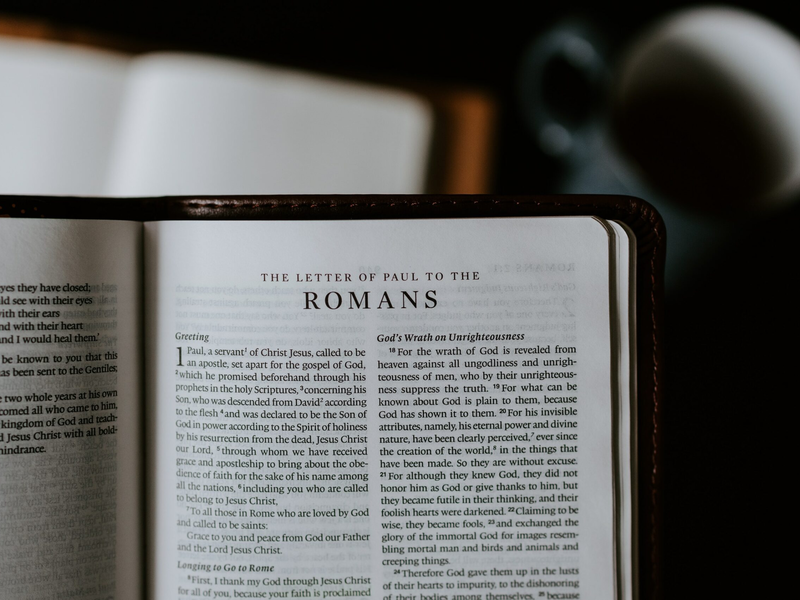
Luther Should Have Inserted “Alone” a Second Time in Romans

What follows are from a couple of posts on my blog. I hoped to do a series. If I do follow up, I will probably want to do it here on the BH blog rather than my own. Feedback welcome: It is no secret that some have been scathingly critical…

by Mark HorneFebruary 9, 2008
jim-jordan-teaching-2
Baptism

Jesus’ Baptism and ours

Jeremy Sexton wrote this in an earlier line of discussion: “Along those lines, I think what we most often miss in our theology of baptism (though Calvin didn’t miss this) is that Christian baptism — if it “is” anything that came before — is Jesus’ water baptism. In our baptism,…

by James B. JordanFebruary 8, 2008
sixteen-miles-out-d40gdcd_-he-unsplash
Numbers

Israel was not (all of) the Church

Jeff pointed out that baptism is not Christian circumcision . Looking at the comments, I think it might be helpful to point out that Israel was not the Church . In the new creation, the idea of an “unbaptized Christian” is either very temporary or an anomaly. Those who came…

by Mark HorneFebruary 6, 2008
aaron-burden-h8s0pf2rcqs-unsplash
Parables

Parables, Part I

Once a upon a time, one Sunday morning, a pastor mounted his pulpit for the sermon and said the following: A troubled young man walked into a downtown high-rise building. As he approached the directory on the wall, he took out a small booklet and looked back and forth from…

by Jeff MeyersFebruary 5, 2008
sixteen-miles-out-al48tflf4e8-unsplash
Exodus

What is a Prophet? (Friendship and Justification)

If you are, say, leading a Bible study in Genesis, you might notice that right after the covenant is renewed and circumcision is established (ch 17) that we see Abraham eating and drinking with God (ch 18). After that meal, God makes a point of saying the he should share…

by Mark HorneFebruary 3, 2008

Showing page 216 of 309

See all

Showing page 35 of 43

See all

Derived Aseity

Aseity is the property that describes a being’s self-causation. In theology, to speak of divine aseity is to say that God exists in and of Himself. He is not derived from or dependent upon anything else. He is fully Himself in Himself and of Himself. He is a se .…

January 13, 2015

Pure and Holy

Naomi Koltun-Fromm argues ( Hermeneutics of Holiness ) that the concepts of purity and holiness, while normally distinct in the Hebrew Bible, are blurred in some passages where qadash is used in contexts that speak of purity and purification rather than of consecration. In 1 Samuel 21:6, David says that…

January 12, 2015

Holy Seed

Explaining Ezra’s concern about the mixed marriages in the restoration community, Naomi Koltun-Fromm ( Hermeneutics of Holiness ) writes, “Ezra presents Israel not only as holy but as a qodesh in its own right—a freestanding holy thing, a holy seed, a sanctum. As such, it must be protected (or in…

January 12, 2015

Catholic Historiography

In his contribution to Seeing Things Their Way , Richard Muller discusses and commends the recent effort to free church history from denominational apologetics. When the Reformers are viewed in the light of late medieval theology (as in the work of Heiko Oberman), unexpected commonalities appear: “Common ground can be…

January 12, 2015
Death

Die Alone, Live Alone

At the end of Albert Camus’s The Stranger , the narrator is on death row for killing an Arab. Death is familiar to him. It is the “black wind” that has blown through his entire life. For Camus’s Stranger, the inevitability of death makes life indifferent. It does not matter…

January 12, 2015

War of Indefinites

In his recent Zero to One , Peter Thiel sets out a neat typology of philosophy, politics, and cultural attitudes based on differing stances toward the future. He distinguishes optimists and pessimists, and subdivides each into “definite” and “indefinite.” Optimists and pessimists are obvious: One is bullish about the future,…

January 9, 2015

Showing page 478 of 2212

Browse by Category

In Medias Res

Your weekly digest for all things Theopolis.

Donate

Theopolis is nearly 100% donor-supported. Consider joining us on our mission.