Theopolis Logo

Writing

Explore our collection of theological essays, biblical studies, and reflections on faith and culture.

See all
aaron-burden-h8s0pf2rcqs-unsplash
Galatians

The Restoration of the Galatians

While controversies over the writings of Paul continue in various corners of the intellectual globe, the word of God given through Paul and his scribe and all of the church’s interpreters and translators over the last two millennia is still readily available to the lofty and the lowly. Paul, as…

by Grace LangnessMarch 25, 2013

kiwihug-l4gw27xzn1i-unsplash
Deuteronomy

Law and History: How to Read the Law of Moses (Part 2)

The second in a series of studies in Deuteronomy. Deuteronomy 22:30: A man shall not take his father’s wife, and shall not uncover his father’s wing (Hebrew: kanaf ). There are a number of unusual features in this law that mark it out from the previous context, indicating that it…

by Ralph Allan SmithMarch 20, 2013
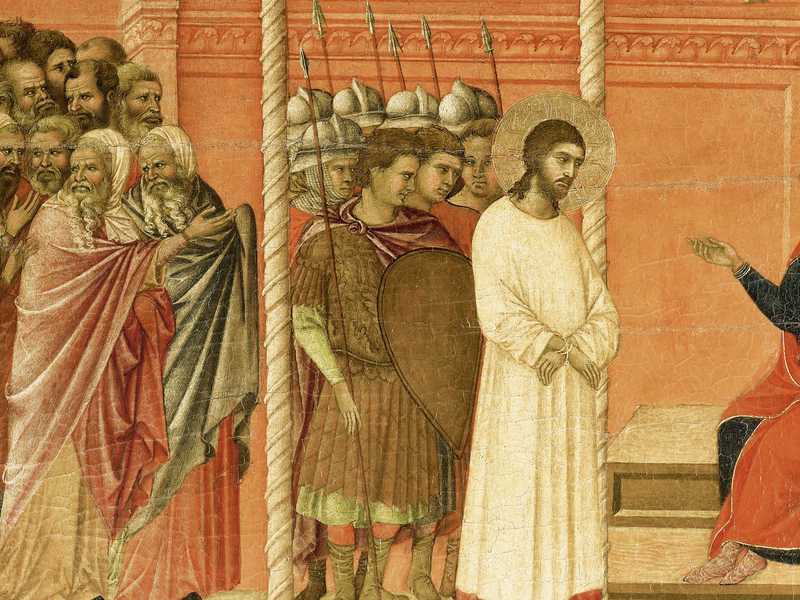
200403-moss-pilate-tease_pncfq5
History

Victimhood and the Gospel

The texts of Christianity have been slowly at work, under the power of the Holy Spirit for 2000 years now. If we could be magically transported back into the world of two millennia ago, modern Americans would be shocked at the cruelty of that world. There was no concern for…

by Richard BledsoeMarch 18, 2013
aaron-burden-1ebsmyrau-s-unsplash
Luke

The Dysfunctional Family of the Gadarene Madman

The Story of the Gadarene Madman is told in all three synoptic Gospels (Matthew 8:28-34, Mark 5:1-20, Luke 8:26-37). Jesus ventures into a Gentile area when He passes over the Sea of Galilee. Upon disembarking from his boat, he is immediately met by a demon-possessed madman. Upon meeting Jesus, he…

by Richard BledsoeMarch 13, 2013
aaron-burden-1ebsmyrau-s-unsplash
Deuteronomy

Law and History: How to Read the Law of Moses

Part 1 of a multi-part series of studies on Deuteronomy 22:30-23:8. Eric Auerbach, in his classic work on Western literature, devotes his first chapter to contrasting Homer with the Bible. Of Homer, he writes of the “need of Homeric style to leave nothing which it mentions half in darkness and…

by Ralph Allan SmithMarch 12, 2013
markus-winkler-aid-xyrtlec-unsplash
Theopolis News

James Jordan in Korea, Japan

Trinity House Fellow James B. Jordan will be a speaker at an International Conference on Biblical Symbolism that will be held in Seoul on Monday, May 27 in 2013. He will address "The Importance of Biblical Symbolism and Symbolic Interpretation of the Bible." The conference will have three other speakers…

by Peter LeithartMarch 9, 2013

Showing page 197 of 309

See all

Showing page 35 of 43

See all

Sculpting light

Traci Slatton, novelist wife of sculptor Sabin Howard, is ecstatic about sculpture. Her 2011 Art of Life is a passionate, occasionally overwrought, defense of sculpture as the master art, filled with photos of her husband’s stunning classical figures. She points out the complexity of sculpting. While a painting presents a…

July 14, 2014

Pray, Sing, Call

James ends his epistle with instructions to believers in various conditions of need. The suffering are instructed to pray, the joyful to sing, and the sick to call for the elders who will anoint the sick and raise him up. The three instructions match the three offices of Christ and…

July 12, 2014

A Place for Joy

Joy is the keynote of the new heavens and new earth that Yahweh will create, as Isaiah announces in the chiastically structured prophecy in 65:18: A. Be glad ( sus ) B. and rejoice ( giyl ) forever C. in what I myself create C’. for behold I create Jerusalem…

July 12, 2014

Potted Hope

Things are not as they should be, and Judah calls for Yahweh to descend to help. Rip the heavens, shake the earth, boil the sea; tear the three-story house of the universe apart brick by brick, but come down to help! (Isaiah 64). Judah has come to acknowledge that she’s…

July 12, 2014

End of Judeophobia

Shlomo Sand’s forthcoming How I Stopped Being A Jew is a sharp slap to the brain. He challenges many of today’s tropes of Jewishness - the notion that there is a “Jewish culture,” the exclusive attention to Jewish suffering at the hands of Nazis, the contempt of Yiddish language and…

July 11, 2014

Christian Unity

It’s one of the most dramatic illustrations of the unsurpassability of the Christian era: During the Enlightenment, secular thinkers and Deists turned against the established churches. Their reason was that the churches interfered with their hope for the unity of the human race. As Guy Stroumsa puts it ( A…

July 11, 2014

Showing page 575 of 2212

Browse by Category

In Medias Res

Your weekly digest for all things Theopolis.

Donate

Theopolis is nearly 100% donor-supported. Consider joining us on our mission.