Theopolis Logo

Writing

Explore our collection of theological essays, biblical studies, and reflections on faith and culture.

See all
rembrandt-main
Art

The Second Word V: On Images and Art, Part 3

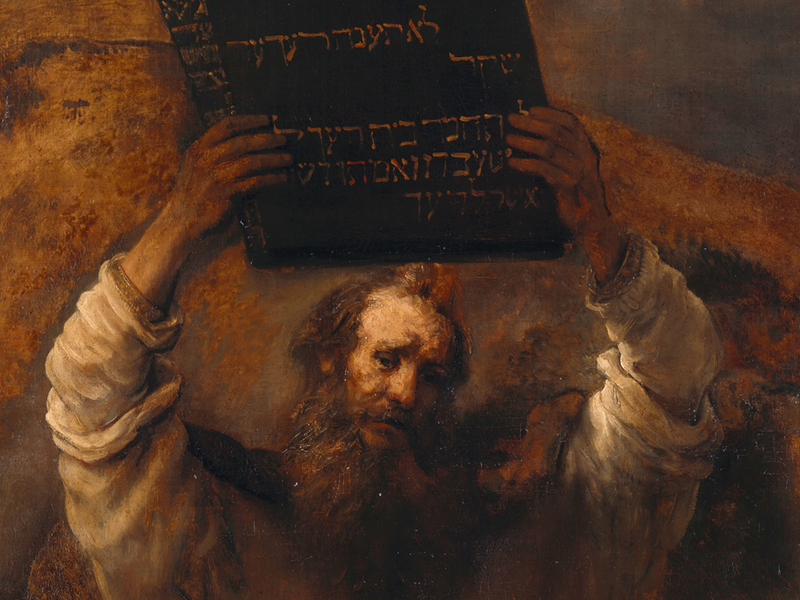
The Failure of the Church Yet a third factor played an important role in this historical development, in addition to the imperial adoption of icons and the rise of the icons of the holy man. Brown writes: "The great Christian basilicas of the previous centuries tended to stand empty, except…

by James B. JordanSeptember 4, 1998

screenshot-2023-09-11-at-11-34-45-am
Biblical Horizons

Patriarchal Dominion

The three large patriarchal narratives of Genesis concern the three aspects of the cosmos: matter, space, and time. Over these three is man given dominion. Lucifer was originally appointed to train man in this dominion, but he chose to lead man into rebellion instead. Thus, the Angel of Yahweh replaced…

by James B. JordanAugust 4, 1998
trnava-university-beeyeib-am8-unsplash
Biblical Horizons

The Case Against Western Civilization, Part 6

Part 6: Living in a Dying World (continued) The "Trivium" (continued) The five stages of education are simply the five stages of the covenant as God administers it in human life and history, and in the liturgy of covenant renewal: First, God announces Himself. "I am Yahweh Your God." He…

by James B. JordanAugust 4, 1998
screen-shot-2022-05-12-at-12-07-23-pm
Biblical Studies

Re-creation in the Ascension Offering

The following essay is tentative and exploratory, offered for your consideration. It seems to me that the ritual of the Ascension Offering (incorrectly translated as Burnt Offering) of Leviticus 1 is a symbolic recapitulation of Genesis 1, which thereby portrays the sacrificial ritual as way of moving from a fallen…

by James B. JordanJuly 4, 1998
Biblical Horizons

The Framework Hypothesis: A Gnostic Heresy

Just as the vast majority of evangelical Christians in America today are Arminian and Baptist, so the vast majority do not believe in a creation around 4000 BC. I don’t expect any of these three situations to change anytime soon. Powerful presuppositions are at work in all three instances, along…

by James B. JordanJuly 4, 1998
picture-mosaic-cathedral-jesus-christ-cefalu-italy-copy
Art

The Second Word V: On Images and Art, Part 2

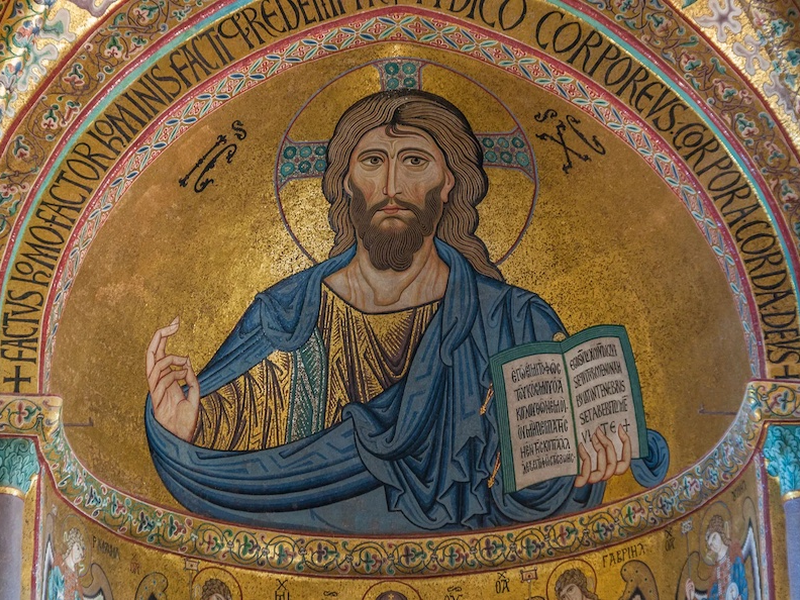
The Iconoclastic Controversy Continuing Pagan Influence How did images creep in? To begin with, there was in the post-Constantinian Church a concerted effort on the part of the semi-pagans to interpret Christianity in essentially pantheistic terms. The heretics put God and man on a continuum of "being," so that God…

by James B. JordanJuly 4, 1998

Showing page 248 of 309

See all

Showing page 35 of 43

See all

Abraham the Rock

Abraham is a rock (Isaiah 51). What does that mean? He’s a chip off the Rock of Israel, Yahweh himself. No matter how much you water them, rocks don’t grow into rock gardens, but Abraham becomes a garden because He is blessed by the Lord. Abraham the rock grows to…

March 7, 2013

Full of fury

At the end of Isaiah 51, the prophet uses the image of the cup of wrath (cf. Psalm 75; Jeremiah 25; Revelation 18). Jerusalem has drunk so much that she has been asleep; she stumbles around without anyone to help her (v. 18). No one can help because all her…

March 7, 2013

Four by Four Equals Six

Isaiah 3 promises “comfort” for barren, bereft mother Zion. Comfort isn’t just soothing pain, but a change of condition. Yahweh brings comfort because He brings justice, establishing righteousness. The comfort is spelled out in a lovely list: From her wilderness as Eden From the Arabah as the garden of God…

March 7, 2013

Hewn from the Rock

Isaiah tells the people of Judah to look to the “rock from which you were hewn, and to the cistern from which you were dug” (Isaiah 51:1). The next verse makes it clear that he is talking about Abraham and Sarah. Abraham the father is the rock; mother Sarah is…

March 7, 2013

Uti and Frui

In his recent Theology of Augustine: An Introductory Guide to His Most Important Works (6-7), Matthew Levering offers this summary of Augustine’s distinction between use and enjoyment, uti and frui : “In loving our neighbors and ourselves, we should do nothing that is not also fully and truly love of…

March 7, 2013

Shared Glory

When he turned proud and boasted in the “power and glory of my majesty” (Daniel 4:30), Nebuchadnezzar was “driven away from mankind and began eating grass like cattle” (v. 33). Boasting in glory diminished his glory. He later came to his senses, and coming to his senses meant confessing that…

March 7, 2013

Showing page 781 of 2212

Browse by Category

In Medias Res

Your weekly digest for all things Theopolis.

Donate

Theopolis is nearly 100% donor-supported. Consider joining us on our mission.