Theopolis Logo

Writing

Explore our collection of theological essays, biblical studies, and reflections on faith and culture.

See all
max-kukurudziak-qbc3zmxw0g8-unsplash
History

Report from Ukraine

We lost Crimea. That is very clear. Putin proved he was not lying when he said he would place women and children ahead of his soldiers to storm Ukrainian military bases. Russian soldiers did exactly that with women (some who volunteered and some who were forced). Russia now occupies all…

by San SanychMarch 28, 2014

screenshot-2023-09-21-at-3-59-23-pm
Church Calendar

God Gone Silent

Sound is an indicator of life and energy. “Sound signals the present use of power, since sound must be in active production to exist at all.” Things don’t have to be alive to make themselves visible, and “a primitive hunter can see, feel, smell, and taste an elephant when the…

by Peter LeithartMarch 26, 2014
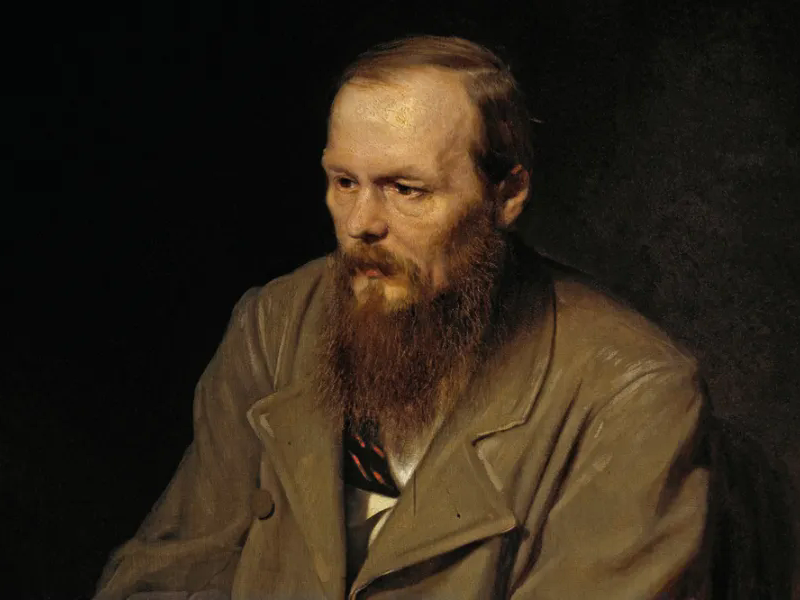
web-lead-image_final_dostoevsky
Books

Dostoevsky the Liberal

In the most famous section of his best-known novel, Dostoevsky’s Ivan Karamazov brings forward his case against God. He opens with a horrific litany of outrages against children. Turkish soldiers make a baby laugh and then shoot a pistol into his face. A little girl is beaten, thrashed, kicked by…

by Peter LeithartMarch 24, 2014
kelly-sikkema-ggs0_g6wi-i-unsplash
Epistemology

Subsidiary-Focal Integration and Liturgy

​At the heart of Esther Lightcap Meek's splendid ​Little Manual for Knowing is a concept she picked up from Michael Polanyi, "subsidiary-focal integration." The concept begins from the insight that all our knowing, all our experience, is double. We focus on something, but we are capable of "indwelling" that focal…

by Peter LeithartMarch 19, 2014
engin-akyurt-uz9qpvbol0e-unsplash
Revelation

White Stone

Jesus promises the overcomers of Pergamum "hidden manna" and a "white stone." The hidden manna is often linked with the manna stashed away in the ark of the covenant. The white stone has proved more elusive. Exodus tells us that manna was white (Exodus 16:31) and like bdellium (Numbers 11:7),…

by Peter LeithartMarch 17, 2014
226961fgsdl
Leviticus

A Theology of Festivity

Leviticus 23 begins with a reference to “Yahweh’s appointed times” ( mo’ade-YHWH ). Mo’ed is the common term for the feasts of Israel. A few dimensions to this term. First, it means “appointed time” or “designated time.” It is a time set by Yahweh. Yahweh has claimed certain times as…

by Peter LeithartMarch 12, 2014

Showing page 177 of 309

See all

Showing page 35 of 43

See all

At the breast

The Torah never mentions breasts as an object of erotic fascination; they are solely nourishment for infants. In the wisdom literature, things are different. Solomon encourages young men to delight in the breasts of their wives - not of another, a strange woman (Proverbs 5) -, and in the Song…

February 14, 2013

Uncontained beauty

Solomon describes the beauty of his beloved in a neat and symmetrical poem in Song of Songs 7:1-6. Framed by “how beautiful you are” (vv. 1, 6), the poem describes ten features of her body. He starts with her feet and his gaze makes its way up. The ten features…

February 14, 2013
Literature

Books and Covers

The old adage applies in spades to the covers of Pride and Prejudice sampled in the NYTBR . Don’t judge the book by any of these covers, especially the Lady Godiva, the Twilight knock-off, and the “smokin’ bad boy Darcy” ones.

February 14, 2013

Concealed technology

Technology promises to accomplish the same things that have always been done more efficiently. Borgmann is skeptical ( Technology and the Character of Contemporary Life: A Philosophical Inquiry ) (45-46), and he summarizes George Sturt’s The Wheelwright’s Shop (Craftsman) to explain the notion of the “concealment” of technology, the fact…

February 14, 2013

Devices and Machinery

In his Technology and the Character of Contemporary Life: A Philosophical Inquiry , Albert Borgmann makes a crucial distinction between a technical device and its machinery. This is “a specific instance of the means-ends distinction” (43), the machinery being the means by which the device becomes useful to its user.…

February 14, 2013
Uncategorized

Literary Names

Claude Rawson’s review of Alastair Fowler’s Literary Names: Personal Names in English Literature focuses on names used to mock and deride. Swift, for instance, “attached enormous importance to naming and not being named (a characteristic Fowler incidentally identifies with Milton’s fallen angels). Swift scrupulously marked with an ‘X; every reference…

February 14, 2013

Showing page 795 of 2212

Browse by Category

In Medias Res

Your weekly digest for all things Theopolis.

Donate

Theopolis is nearly 100% donor-supported. Consider joining us on our mission.