Theopolis Logo

Writing

Explore our collection of theological essays, biblical studies, and reflections on faith and culture.

See all
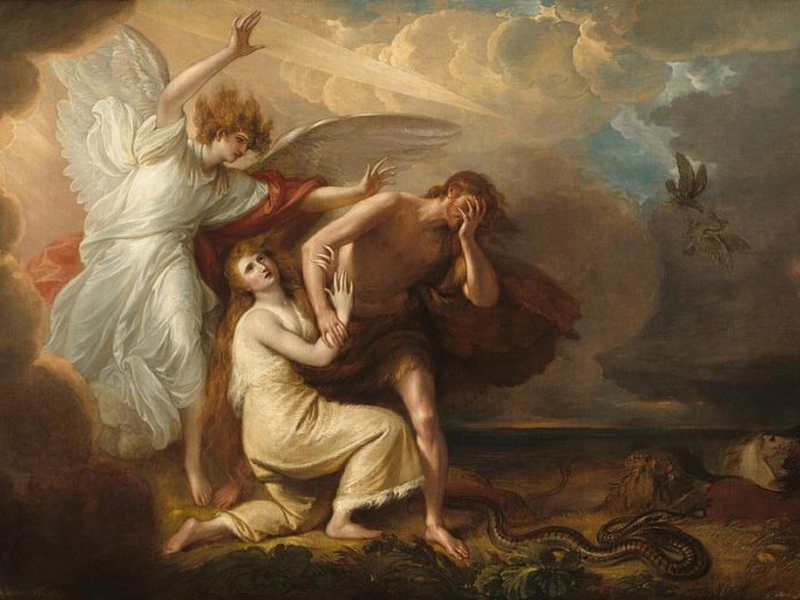
adam-and-eve-garden-768x512
Biblical Horizons

The Dominion Trap

In Genesis One, God told Adam and Eve to "be fruitful and multiply, and fill the earth, and subdue it; and rule over the fish of the sea and over the birds of the heavens, and over every living thing that moves on the earth" (Gen. 1:28). In Christian worldview…

by James B. JordanJuly 2, 1990

ivan-aleksic-16yxcjsoaek-unsplash
Biblical Studies

Building the Church

"And I also way to you that you are Peter, and upon this rock I will build My church; and the gates of Hades shall not overpower it" (Matthew 16:18). Matthew 16:13ff. has historically been one of the most oft-cited passages of Scripture. Throughout the Middle Ages, it was used…

by Peter LeithartJune 19, 1990
timothy-eberly-djj49s6ud2o-unsplash
Matthew

Ephraim in Redemptive History

One of the important themes of the synoptic gospels is Jesus’ rejection of Israel and the transfer of God’s favor to the New Israel, the Church. A clear statement of this theme is found in the parable of the vineyard owner in Matthew 21:33-46. Jesus explained the meaning of the…

by Peter LeithartJune 19, 1990
original
Biblical Horizons

Advice From a Sojourner, Part 7

11. There is a type of person [a generation] who curses his father, And does not bless his mother. 12. There is a type who is pure in his own eyes, Yet not washed from his filthiness [manure]. 13. There is a type — oh how lofty are his eyes!…

by James B. JordanJune 2, 1990
mick-haupt-eq2z9ay9wws-unsplash
Leviticus

A Male Without Defect

Under the Levitical law, whole-burnt offerings from the herd and flock had to be male. No such specification is made with respect to birds (cf. Lev. 5:7-10). Why did the Lord demand that only males be offered as whole-burnt offerings? The easy answer is that the whole-burnt offering typified Christ,…

by Peter LeithartMay 19, 1990
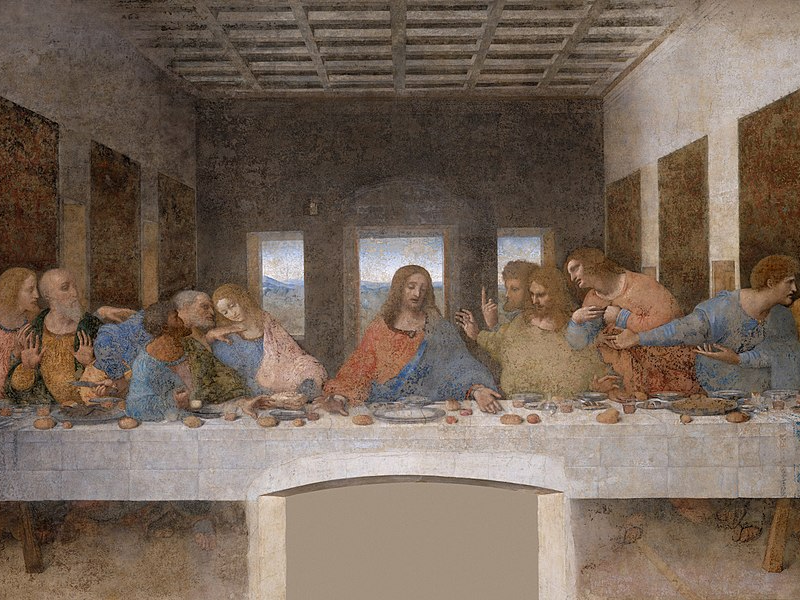
the_last_supper_-_leonardo_da_vinci_-_high_resolution_32x16
Matthew

He Shall Be Called A Nazarene

Matthew 2:13-23 has a tripartite structure, reporting briefly three events of the early years of Jesus’ life. Matthew ends his narrative of each event with a "fulfillment formula." Jesus’ flight to Egypt and His Exodus back into Israel was a fulfillment of Hosea’s words, "Out of Egypt I call my…

by Peter LeithartMay 19, 1990

Showing page 303 of 309

See all

Showing page 35 of 43

See all

At the breast

The Torah never mentions breasts as an object of erotic fascination; they are solely nourishment for infants. In the wisdom literature, things are different. Solomon encourages young men to delight in the breasts of their wives - not of another, a strange woman (Proverbs 5) -, and in the Song…

February 14, 2013

Uncontained beauty

Solomon describes the beauty of his beloved in a neat and symmetrical poem in Song of Songs 7:1-6. Framed by “how beautiful you are” (vv. 1, 6), the poem describes ten features of her body. He starts with her feet and his gaze makes its way up. The ten features…

February 14, 2013
Literature

Books and Covers

The old adage applies in spades to the covers of Pride and Prejudice sampled in the NYTBR . Don’t judge the book by any of these covers, especially the Lady Godiva, the Twilight knock-off, and the “smokin’ bad boy Darcy” ones.

February 14, 2013

Concealed technology

Technology promises to accomplish the same things that have always been done more efficiently. Borgmann is skeptical ( Technology and the Character of Contemporary Life: A Philosophical Inquiry ) (45-46), and he summarizes George Sturt’s The Wheelwright’s Shop (Craftsman) to explain the notion of the “concealment” of technology, the fact…

February 14, 2013

Devices and Machinery

In his Technology and the Character of Contemporary Life: A Philosophical Inquiry , Albert Borgmann makes a crucial distinction between a technical device and its machinery. This is “a specific instance of the means-ends distinction” (43), the machinery being the means by which the device becomes useful to its user.…

February 14, 2013
Uncategorized

Literary Names

Claude Rawson’s review of Alastair Fowler’s Literary Names: Personal Names in English Literature focuses on names used to mock and deride. Swift, for instance, “attached enormous importance to naming and not being named (a characteristic Fowler incidentally identifies with Milton’s fallen angels). Swift scrupulously marked with an ‘X; every reference…

February 14, 2013

Showing page 795 of 2212

Browse by Category

In Medias Res

Your weekly digest for all things Theopolis.

Donate

Theopolis is nearly 100% donor-supported. Consider joining us on our mission.