Theopolis Logo

Writing

Explore our collection of theological essays, biblical studies, and reflections on faith and culture.

See all
last-supper
Eucharist

The Epiclesis in Reformed Eucharistic Prayer, (Part 1)

What happens at the Table of the Lord? If Christ is really present, then how is this so? The witness of the Church throughout history has been that Christ is present in the Eucharist through the operation of the Holy Spirit, and in the practice of the Church, prayers at…

by Christopher KouOctober 11, 2016

sixteen-miles-out-al48tflf4e8-unsplash
Spiritual Warfare

Enemies and Victims

In the power of the Spirit, the gospel forms a society in which there is neither Jew nor Greek, slave nor free, a society that is characterized by unity, long-suffering, patience; love. The gospel forms a culture whose participants do not steal but labor and give, who are not angry…

by Peter LeithartOctober 6, 2016
sixteen-miles-out-d40gdcd_-he-unsplash
Mark

Sovereignty and Self-Gift

At the 1997 Biblical Horizons Summer Conference, the Rev. Jeffrey Meyers presented a series of remarkable lectures on the gospel of Mark. Among his many insightful comments, he suggested that the second gospel continues where the first gospel ends; Matthew ends with Jesus saying "Go" (Matthew 28:19), and Mark’s shows…

by Peter LeithartOctober 4, 2016
e99a2338
Art

Birmingham Life and Culture Series: Joseph Bottum

On October 25 at Avondale Brewery , Theopolis will be co-sponsoring the 2nd Annual Birmingham Life and Culture Series. This year's event will feature author Joseph Bottum. Joseph is known for his writings on literary criticism, religion, and his short stories. Essayist and reviewer Mary Eberstadt has said that "his…

by Brian MoatsSeptember 29, 2016
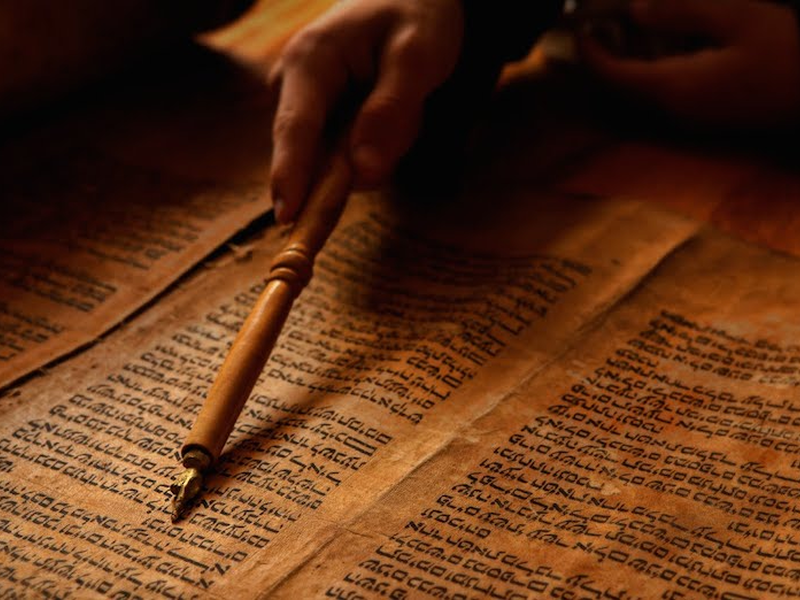
hebrew-manuscript
Biblical Studies

Are Not All These Galileans?

One of the curiosities of the New Testament revelation is its focus on Galilee. The region of Galilee was given to Asher, Zebulun, Naphtali, and Issachar, and the events of Judges 4-8 occurred there, so it had some importance in Israelite history. But when the tribe of Ephraim led the…

by James B. JordanSeptember 29, 2016
screen-shot-2016-03-31-at-9-32-11-am
Hermeneutics

Hero's Theme

In a recent post , Ian Paul discusses the practice of allegorical interpretation, reflecting in particular upon a conversation he had with someone concerning the reading of the story of Rahab. Paul’s interlocutor argued strongly for an allegorical reading of the Rahab story, writing: “Joshua is a type of Christ…

by Alastair RobertsSeptember 27, 2016

Showing page 124 of 309

See all

Showing page 35 of 43

See all
Philosophy

Pure gift

In his Reveries of the Solitary Walker (Oxford World’s Classics) , Rousseau muses on the “complete and utterly disinterested benevolence” that he would show if he could avoid “forming an attachment to anyone in particular” and “taking on the burden of any responsibilities.” If only he could be entirely anonymous,…

September 19, 2012

Trinity Institute - What They’re Saying

It was Jodocus van Lodenstein, the Dutch reformer, who first coined epigram, ‘Ecclesia reformata semper reformanda est secundum Verbum Dei: the church is reformed and always being reformed according to the Word of God.’ Central to that ongoing reforming work in our day is the recovery of richly Biblical worship.…

September 19, 2012

Sermon notes

INTRODUCTION As He has done before (Isaiah 41:1), Yahweh again summons the peoples to court to present their cases against Him (43:8-9). In the courtroom of history, Israel is a witness in Yahweh’s favor (43:10, 12; 44:8), proving that Yahweh alone is God (43:10). At the center of His defense…

September 17, 2012

Un-Angry God

Patrick Coleman notes in his Anger, Gratitude, and the Enlightenment Writer (pp. 9-10) that early Enlightenment writers didn’t necessarily dismiss God. They merely defanged him: “Enlightenment writers were acutely conscious of the ways in which secular as well as ecclesiastical authorities could brandish the image of an angry God to…

September 15, 2012
Politics

Limited government

Locke ( Two Treatises of Government ) argues that political authority, because it exists only by the consent of free people, cannot exercise power beyond the purposes for which it was constituted. Because it exists for the protection of property, it cannot have power to take property without consent. He…

September 15, 2012
Biblical Studies

Father and mother

At the beginning of the first of his Two Treatises of Government , John Locke refutes the Scriptural arguments of Robert Filmer’s Patriarcha ( Filmer: ‘Patriarcha’ and Other Writings (Cambridge Texts in the History of Political Thought) ). Filmer claims that political authority is grounded in paternal authority, and characterizes…

September 15, 2012

Showing page 871 of 2212

Browse by Category

In Medias Res

Your weekly digest for all things Theopolis.

Donate

Theopolis is nearly 100% donor-supported. Consider joining us on our mission.