Theopolis Logo

Writing

Explore our collection of theological essays, biblical studies, and reflections on faith and culture.

See all
screen-shot-2023-05-02-at-1-14-25-pm
Poetry

Seed-bearing Fruit

Ten-thousand ‘yeses’ and a single ‘no.’ From bough it dangles, beauty to the eyes, For belly, food, a fruit to make one wise. Too soon, they eat; they know; the leaves they sew, But, oh! the Love who asks, “Where did you go?” Confessions flow from under leaf’s disguise; A…

by Marc HaysAugust 16, 2023
screenshot-2023-08-15-at-8-22-28-am
Augustine

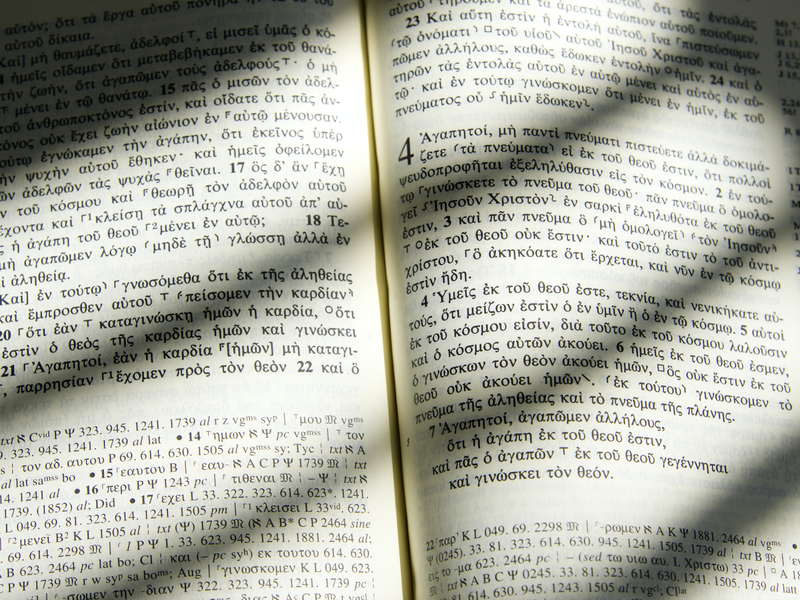
Eternal Life Chiasm in John's Gospel

In his masterful work, De Doctrina Christiana , Augustine of Hippo writes: I would have learned men to know that the authors of our Scriptures use all those forms of expression which grammarians call by the Greek name tropes, and use them more freely and in greater variety than people…

by Doug PonderAugust 15, 2023
screenshot-2023-08-08-at-11-13-28-am
Ruth

Lot, Ruth, and the Work of New Creation

“In accordance with the creation pattern, God sovereignly took hold of Adam and put him to sleep. Then God divided Adam by removing flesh and bone from his side, and restructured humanity into male and female. When Adam awoke, God distributed the woman to him. Adam gazed upon her and…

by Josh JensenAugust 8, 2023
rev-1-barbie-tp-0002-high-res-jpeg-647e152f50df6-2
Culture

The Barbie Movie

Greta Gerwig’s new film, Barbie, has been criticized, probably rightly, for having too many ideas and layers to properly bring in any for a landing. Gerwig herself thought the script was so “ wild and anarchic ” that she was surprised WB agreed to make it. Many see it as…

by Robin HarrisAugust 1, 2023
mariam-soliman-ht5xmeulydg-unsplash-2
Matthew

Why Does John the Baptizer Look Like a Camel?

“Now John wore a garment of camel’s hair and a leather belt around his waist, and his food was locusts and wild honey” (Matt. 3:4). Why is John the Baptizer clothed with camel’s hair? Why does he want to look like a camel? Or at least: what does he expect…

by Jeff MeyersJuly 26, 2023
darwin
Literature

Stinking, Rotten Ministers of the Gospel

In the second greatest story ever told, The Brothers Karamazov , Fyodor Dostoyevsky tells the story of a family plagued by the lasting legacy of sin’s destructive power and the all-surpassing truth that God is Light and in Him is no darkness. The young protagonist, Alyosha, is a monk committed…

by Garrett SoucyJuly 18, 2023

Showing page 29 of 309

See all

Showing page 35 of 43

See all

Monasticism

In a 2002 article, Lester Little notes the biblical inspiration for Carolingian Benedictine monasticism: “In inspiration, thought patterns, and rhetoric, this liturgical monasticism shared in a culture that was deeply indebted to the Old Testament. Models for the duties and prerogatives of the religious were found in the instructions given…

August 28, 2012
Uncategorized

Mammon

Charles Eisenstein offers this arresting description of the divine attributes of money in modern culture ( Sacred Economics: Money, Gift, and Society in the Age of Transition , xiii-xv): “The one thing on the planet most closely resembling the . . . conception of the divine is money. It is…

August 23, 2012

On Divine Tensions

In his Forsaken: The Trinity and the Cross, and Why It Matters , Thomas H. McCall cites some alarming statements about the logic of atonement from evangelical theologians, who claim that there is a “strife of attributes” in God: “Gregory Boyd and Paul Eddy describe this position as one that…

August 23, 2012
Uncategorized

Timeless violence

According to most ancient myths, the origin of the creation is violent violent. It must be so. Reality as we know it is in constant motion, a realm of constant change. But antique religions are quests for a place of stability. To get to that “rock of ages,” change has…

August 21, 2012
Theology

Normal gods

In his outline of theology proper in Christian Dogmatics, Volume 1 , Jenson describes the “usual god” of ancient religion: “The usual God, whose eternity is persistence of the beginning, has as his very honor among us that in him we are secure against the threats of the future. Ancient…

August 21, 2012

Meal and social order

In their classic study of The Cuisine of Sacrifice Among the Greeks (13), Detienne and Vernant describe how the distribution of meat from a sacrificed animal traces the boundaries and ranks of a social order: “The commensal meal begins with division. Two systems seem to compete, both in the carving…

August 21, 2012

Showing page 879 of 2212

Browse by Category

In Medias Res

Your weekly digest for all things Theopolis.

Donate

Theopolis is nearly 100% donor-supported. Consider joining us on our mission.