Theopolis Logo

Writing

Explore our collection of theological essays, biblical studies, and reflections on faith and culture.

See all
emmanuel-phaeton-1bwmfmvybi8-unsplash
Federal Vision

The Righteous Judge

God is a righteous judge, And a God who has indignation every day. If a man does not repent, He will sharpen His sword; He has bent His bow and made it ready (Psalm 7.11, 12). David’s inspired lyrics do not sound very encouraging to modern ears–especially to modern Christian…

by Mark HorneJune 7, 2003
screenshot-2024-06-07-at-11-46-17-am
Luke

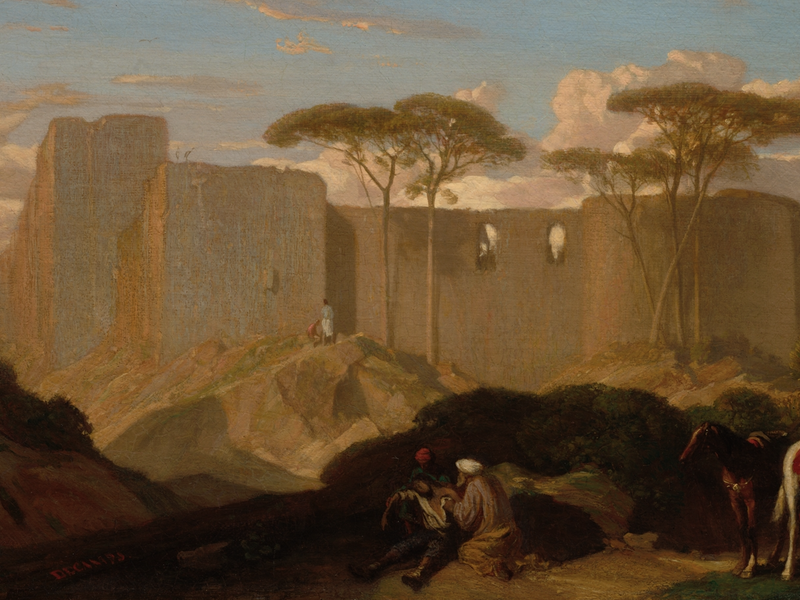
The Justification of the Good Samaritan

The story of the Good Samaritan (Lk. 10:25-37) is one of the best known and most loved of Jesus’ parables. I am not going to attempt to exegete the passage, as that has been done admirably and ably by others. Rather, I want to briefly examine what bearing the passage…

by Rich LuskJune 7, 2003
kelly-sikkema-gpoh17dxqdm-unsplash
1 Corinthians

The Grace of Judgment According to Works

In Romans 2.6-16, Paul writes, He will render to each one according to his works: to those who by patience in well-doing seek for glory and honor and immortality, he will give eternal life; but for those who are self-seeking and do not obey the truth, but obey unrighteousness, there…

by Mark HorneJune 7, 2003
karsten-wurth-imegmbunara-unsplash
Matthew

The Extra Mile: Matthew 5:38-42

It was still dark as David approached the crest of the little ridge. The eastern horizon was not even gray. It was early. But he knew this trail well. Every morning before dawn and every evening before dark, he would walk down to the well and carry water back to…

by Jeff MeyersJune 7, 2003
briana-tozour-mrfapsuyy8a-unsplash
Romans

Romans and God's Covenant Loyalty

The theme of Romans is the righteousness of God (Rom. 1:16-17). That is to say, Romans is something of a theodicy. Paul is defending God’s covenant faithfulness, particularly in light of Jewish unfaithfulness. How does it work? Without getting into exegetical details, we can still sketch out the big picture.…

by Rich LuskJune 6, 2003
jan-kahanek-g3o5ztrk2e4-unsplash
Federal Vision

Putting the New Perspective into Perspective: Some Thoughts on Second Temple Judaism

The New Perspective on Paul (NPP) is a loosely defined movement held together primarily by a common understanding of Second Temple Judaism. All NPP theologians basically adhere, with varying degrees of intensity and consistency, to Ed Sanders’ claims with regard to the nature of pre-70 A.D. Judaism. Sanders has sought…

by Rich LuskJune 6, 2003

Showing page 229 of 309

See all

Showing page 36 of 43

See all

Suffer the Children

Judith Gundry's contribution to The Child in the Bible examines the place of children in Mark's gospel, with particular focus on the episode of Jesus blessing the children. It's an illuminating essay. Mark includes no infancy narratives, but regularly shows Jesus exerting the power of the kingdom to rescue and…

November 14, 2017

Justification in the Age of Emancipation

In his Happiness Paradox , Ziyad Marar explores the sources of "justification." Humiliation is a uniquely human form of suffering. How do we deal with it? Our strategies for staving off humiliation are strategies of "justification." Freud offers some possibilities, He "enumerates a range of ways we avoid this kind…

November 13, 2017

Mystical Atheism

Virginia Woolf, atheist though she was, couldn't avoid religious language when she spoke about her writing. Writing began from "a revelation of some order; it is a token of some real thing behind appearances; and I make it real by putting it into words." It was her "shock-receiving capacity is…

November 10, 2017

Tales of Reason

Robert Brandom ( Tales of the Mighty Dead , 13-14) observes a continuity between Hegel and Kant: Both take concepts as "norms for judgment. They determine proprieties of application to particulars of terms that, because of the normative role they play in such judgments, express universals." But then Hegel adds…

November 10, 2017

Tridentine Utraquism

Did the Council of Trent allow communion in both kinds, in bread and wine? The answer is complicated. Nathan Mitchell ( Oxford History of Christian Worship , 338-9) writes that "After intense behind-the-scenes negotiations, Pope Pius IV authorized communion in both species for German (16 April 1564). In effect, the…

November 10, 2017
Reformation

Misreading the Reformation

Reviewing Carlos Eire's Reformations at First Things , Eamon Duffy claims that "Protestantism 'desacralized' the world by accepting an essentially binary division of reality into spirit and matter. That division was expressed in Reformation iconoclasm and the rejection of the notion that material objects—the bread and wine of the Mass,…

November 10, 2017

Showing page 123 of 2212

Browse by Category

In Medias Res

Your weekly digest for all things Theopolis.

Donate

Theopolis is nearly 100% donor-supported. Consider joining us on our mission.