Theopolis Logo

Writing

Explore our collection of theological essays, biblical studies, and reflections on faith and culture.

See all
ivan-aleksic-16yxcjsoaek-unsplash
Biblical Chronology

Jubilee (Part 2)

The Building of the Temple Solomon began work on the Temple in the second month of his fourth year. This was the year 2993, a sabbath year. He finished in the eighth month of his eleventh year, the year 3000, also a sabbath. (1 Ki. 6:1, 38). This is said…

by James B. JordanMarch 4, 1993

whichbooksbelongintheot
Biblical Chronology

Jubilee (Part 1)

The Bible expresses its chronology not only in sequences of years, but also in sequences of sabbath years and jubilees. This enables us to make a cross-check of our chronology, and when we find apparent problems, to refine it. If our chronology is right, we should find some significant correlations…

by James B. JordanFebruary 4, 1993
alfons-morales-ylswjsy7stw-unsplash-1
Biblical Studies

Adele Berlin, Poetics and Interpretation of Biblical Narrative

Adele Berlin, Poetics and Interpretation of Biblical Narrative Sheffield, England: Almond Press, 1983. This volume is the ninth in the "Bible and Literature Series" under the general editorship of David M. Gunn. According to its author, who teaches Hebrew at the University of Maryland, the book is an effort to…

by Peter LeithartJanuary 17, 1993
screenshot-2023-08-08-at-11-13-28-am
Ruth

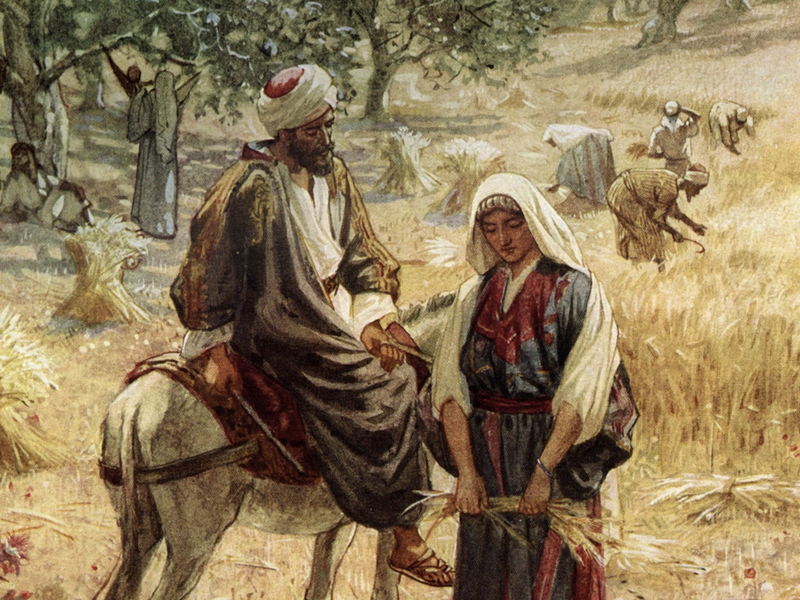
The Structures of Ruth

V. Propp’s classic work Morphology of the Folktale (University of Texas, 1968) argues that one of the basic structures of folk literature is "lack, lack liquidated." A king sets out to look for a wife, and the tale ends with a wedding. Often, the hero sets out on some business…

by Peter LeithartJanuary 17, 1993
painting-of-saint-luke
Luke

Second Samuel

Luke’s gospel begins and ends in the temple. It opens with Gabriel’s annunciation to the priest Zacharias (whose name, appropriately, means "Yahweh remembers") of the coming of a forerunner. Zacharias is performing priestly service at the time. The book ends with the joyful worship of a new priesthood in the…

by Peter LeithartJanuary 17, 1993
screen-shot-2023-01-26-at-3-44-00-pm
Biblical Chronology

Problems With New Testament History

Last time we arrived at the year A.M. 3960 as the date for the inauguration of the New Creation through the death, resurrection, ascension, and session of Christ, and the sending of the Holy Spirit. We also saw that this is most likely the year of Paul’s conversion. Fourteen years…

by James B. JordanJanuary 4, 1993

Showing page 286 of 309

See all

Showing page 36 of 43

See all
History

Hermeticism and gnosticism

In his book on the hermeticist Hegel, Magee gives this helpful sketch of the differences between gnosticism and hermeticism: “Gnosticism and Hermeticism both believe that a divine ‘spark’ is implanted in man, and that man can come to know God. However, Gnosticism involves an absolutely negative account of creation. It…

August 16, 2006
Philosophy

Hegel and Hermes

In a 2001 book (Cornell), Glenn Magee argues that Hegel must be understood as a hermetic thinker. Hegel claims to have moved beyond the ancient notion of philosophy as “pursuit of wisdom” to an absolute knowledge that is simply identical with wisdom. As Magee says, “Hegel’s claim to have attained…

August 16, 2006

MacIntyre on Heroic virtue

In After Virtue , Alasdair MacIntyre provides a neat discussion of the virtue and selfhood in Greek antiquity. The unity of ARETE, virtue, “resides . . . in the concept of that which enables a man to discharge his role,” and refers to “excellence of any kind,” whether in a…

August 16, 2006
Philosophy

Logos: Harmony and Recipe

One Marc Cohen of the University of Washington, offers this account of the “logos” of Heraclitus in an online lecture outline: First, “There is an orderly, law-governed process of change in the universe. (Compare fragment 80 with Anaximander, who equates strife with injustice; for Heraclitus, strife is justice, and is…

August 16, 2006

Life of Heraclitus

Some selections from Diogenes Laertius’ “Life of Heraclitus, from his “Lives and Opinions of Eminent Philosophers: “He was above all men of a lofty and arrogant spirit, as is plain from his writings, in which he says, ‘Abundant learning does not form the mind; for if it did, it would…

August 16, 2006
History

Asocial sociability

Seigel devotes a fascinating section of his book ( Idea of the Self ) to a summary of Mandeville’s Fable of the Bees , in which Mandeville describes what Kant characterized as the “asocial sociability” of human nature. Social in the sense that even in a natural state, prior to…

August 15, 2006

Showing page 1809 of 2212

Browse by Category

In Medias Res

Your weekly digest for all things Theopolis.

Donate

Theopolis is nearly 100% donor-supported. Consider joining us on our mission.