Theopolis Logo

Writing

Explore our collection of theological essays, biblical studies, and reflections on faith and culture.

See all
31-03-0213
Hermeneutics

Apocalyptic Eyes

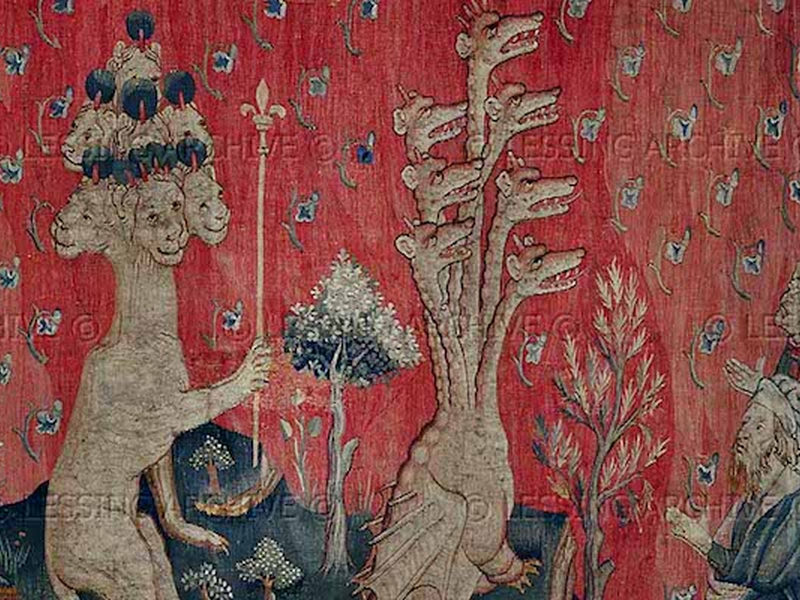
Flying scrolls. Red horses. Beasts coming out of the sea. Winged women. The list goes on. Apocalyptic literature in the Bible is like a cross between science fiction and Marvel comics. And the Bible has a fair bit of this sort of thing. Daniel sees visions in Babylon, Zechariah sees…

by Toby SumpterNovember 4, 2014

bhm-skyline-2
Theopolis News

New Name, New Look

Trinity House Institute has taken a new name, the Theopolis Institute. This striking new name expresses our unique vision and mission and captures the unified purpose behind all our specific programs and activities. We still have Bible, liturgy, and culture in our tagline. We still offer the same courses on…

by TheopolisNovember 4, 2014
istock_000012860926small
Atonement

Not Fearing the Devil

Adam Kotsko offers a socio-political variation on the Christus Victor atonement theory in his 2010 study, The Politics of Redemption: The Social Logic of Salvation . He does this by explaining "the devil" in terms of the Hegelian concept of "objective spirit," Geist . As Kotsko puts it, Geist "refers…

by Peter LeithartOctober 13, 2014
jez-timms-8muutamcwu4-unsplash
Leviticus

The Meaning of Sacrifice

Two factors keep Nahtali Meshel from discussing the meaning of sacrifice until late in his The "Grammar" of Sacrifice . The first has to do with the texts he draws from: "P says little about the meaning of its rituals" (174). The other has to do with the grammatical theory…

by Peter LeithartOctober 8, 2014
jez-timms-8muutamcwu4-unsplash
Leviticus

Praxemics

Chapter 5 of Naphtali Meshel's The "Grammar" of Sacrifice focuses on "praxemics," the physical actions of sacrificial ritual. Praxemes are constituted by six elements: an "atomact," an elementary physical act or gesture; an actor; an object that is acted up; a target for the action and often for the object…

by Peter LeithartOctober 6, 2014
markus-winkler-aid-xyrtlec-unsplash
Leviticus

Jugation and Hierarchy

Two chapters of Naphtali Meshel’s The “Grammar” of Sacrifice cover what he calls “jugation” and “hierarchies.” The first involves the addition of other materials to an animal offering. Jugates include wine, cereal, and oil that are added to the animals (zoemes) that are offered in sacrifice. Some jugates are coordinated…

by Peter LeithartOctober 1, 2014

Showing page 167 of 309

See all

Showing page 36 of 43

See all

Shepherd of Israel

1 Chronicles 11–12 form a unit, framed by references to David’s coronation ceremony at Hebron: A. Gathering at Hebron, conquest of Jerusalem, 11:1–10 B. David’s followers while a fugitive, 11:11–47 B'. David’s host at Ziklag, 12:1–22 A’. Coronation festival at Hebron, 12:23–40 11:1-10 is itself framed by references to “all…

October 25, 2016
Reformational Catholicism

Reformational Catholicism, A Wish-List

I n a 2014 piece published in First Things , I offered a “wish list” for Protestant churches, a checklist for a future catholic Protestantism. The wish list doesn't cover everything. It doesn't mention those things that Protestants, especially Evangelicals, already do, often exceedingly well, things like missions and evangelism…

October 24, 2016

Lust Made Law

D ante is moving through the circle of the lustful (Comedy, Canto 5) and sees a host of classical lovers. Among them is Semiramis, less famous than Dido or Cleopatra, but an exceedingly important illustration of how lust misshapes language and law. Rodney Payton explains ( A Modern Reader’s Guide…

October 21, 2016

Incontinence, Malice, Bestiality

E xplaining the moral structure of hell in Canto 11 of Dante’s Comedy , Virgil lays out three general categories of sin: incontinence, malice, and mad bestiality (lines 83-4). That’s not quite what we expect, or what most commentators see. It seems more like incontinence, violence, and fraud. Incontinent sins…

October 21, 2016

Infernal Baptism

R odney Payton ( Modern Reader’s Guide to Dante’s Inferno , 88–89) observes that “Dante’s vocabulary is rich in words denoting water,” including “the Italian words for water, river, little river, bog, marsh, stream, pond, slough, fount, and waves, at lest. In many cases the nouns are modified by adjectives…

October 21, 2016
Shakespeare

Antidote to Sadness

A ntonio of Venice is inexplicable sad. So is Portia of Belmont, her “little body . . . aweary of this great world” ( Merchant of Venice 2.1). Antonio and Portia have all that they could want. They aren’t anxious about money; neither is pining for love. Why so sad?…

October 21, 2016

Showing page 240 of 2212

Browse by Category

In Medias Res

Your weekly digest for all things Theopolis.

Donate

Theopolis is nearly 100% donor-supported. Consider joining us on our mission.