Theopolis Logo

Writing

Explore our collection of theological essays, biblical studies, and reflections on faith and culture.

See all
little-girl
Children

Honor God With Your Body

I am making a new rule in our house! We are actually kind of skimpy on the house rules. I try very hard to keep things simple: love God, love others, be joyful. It’s not complicated to avoid discipline here. But I have found myself repeating this new rule over…

by Lindsey TollefsonApril 9, 2015
giotto-noli-me-3
John

The Gardener and the Beloved, (Part 3)

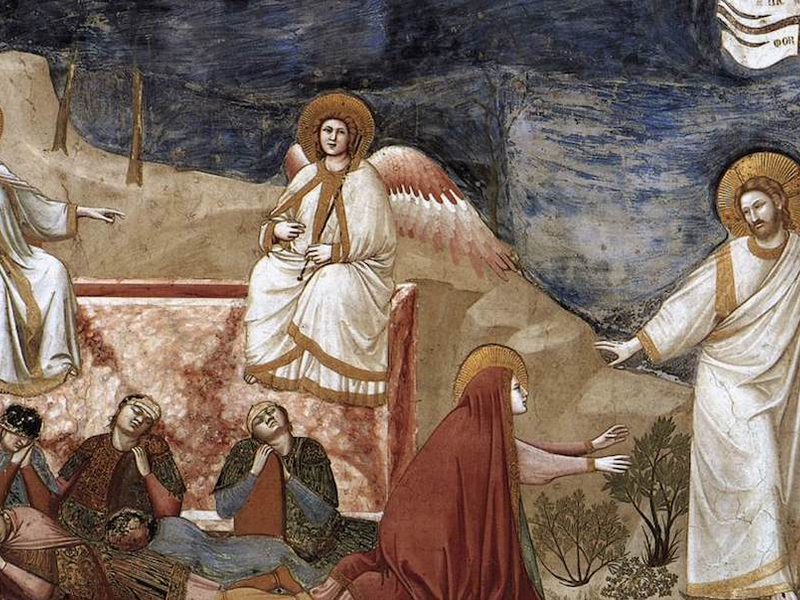
Click HERE for Part 2 The voice of Jesus transforms and changes Mary when she hears him speak her name. This is her last “turning.” So also the woman in the Song of Songs longs to hear the voice of her beloved. Let me see your face, let me hear…

by Jeff MeyersApril 6, 2015
giotto-noli-me-2
John

The Gardener and the Beloved, (Part 2)

Click HERE for Part 1. The details of this story call the attentive reader back to the drama of Solomon’s Song of Songs. And the Song of Song’s alludes to, ties us into the story of Adam and Eve in the Garden and the promise of a coming Messiah that…

by Jeff MeyersApril 4, 2015
easter-term-2015-2
Theopolis News

Easter Term, 2015

“The course was a paradigm shift for me,” said Jonathan Sedlak, a Milwaukee electrical contractor who attended Theopolis’s course on Revelation. “I am left with a book that is far more practical than it has ever seemed before.” Jonathan Anderson of Louisville, Kentucky found the course “refreshing.” “I finished with…

by TheopolisApril 2, 2015
psalm-singing
Genesis

Worship as Response: Liturgical Logic, (Part 1)

“It is only by participation in a rational, practice-based community that one becomes rational.” – Alasdair MacIntyre It may be perfectly clear to a chef why adding unsifted powdered sugar to a hot frosting is a bad idea. But for an amateur cook, this may be the kind of rule…

by Jonathan BarlowApril 2, 2015
giotto-noli-me
John

The Gardener and the Beloved, (Part 1)

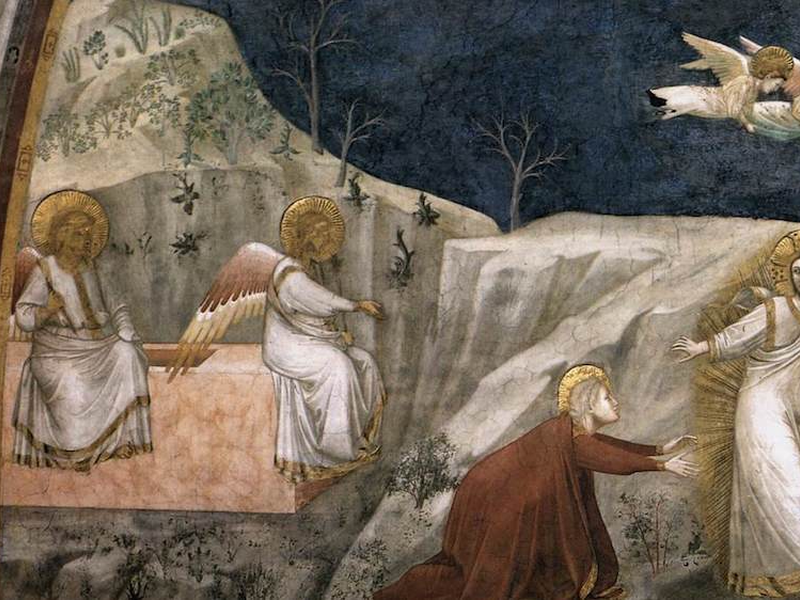
On a fresco in a chapel in Padua, Italy, there is a famous painting depicting the dramatic post-resurrection scene in John 20 with Mary and Jesus outside of the garden tomb. Giotto di Bondone painted it in the early 14th century. Jesus is striding from the tomb with a victor’s…

by Jeff MeyersApril 1, 2015

Showing page 156 of 309

See all

Showing page 36 of 43

See all

Logic of Impurity

It's an inventive solution. In an essay on the Logic of Impurity , David Kraemer argues, counterintuitively, that impurity marks something as God's possession. He argues from the strange anomalies associated with corpse defilement and its cleansing: “The human corpse is, according to the Torah, the most powerful source of…

March 23, 2016
Easter

Through the Darkness

Holy Week is a passage through darkness, as we commemorate the betrayal, arrest, trial, and crucifixion of Jesus. But Holy Week doesn't end on the cross. Easter dispels the darkness. Good Friday followed by Easter means that darkness and death no longer mark an end, but mark a beginning. It…

March 22, 2016

Erotic Politics

Paul Ludwig ( Eros and Polis ) observes that “A recurrent feature of ancient Greek political discourse was the assertion that erotic passion was a causal factor in the emergence and maintenance, as well as the decline, of the Greek polis.” But this didn't make the Greek proto-Foucauldians: “the term…

March 22, 2016

Dreamworks

Kelley Bulkeley's Big Dreams is about the big subject of religion, examined from the perspective of our dreaming. He begins with the simple, well-known observation that most of our dreams are quickly forgotten, while “a few are highly memorable.” Any account of dreaming should try to account for this. Taking…

March 22, 2016

Paul Provoked

As Paul strolls through Athens, what impresses him is not the architecture, culture, or art. He sees that the city is full of idols, and he is provoked in spirit (Acts 17:16). That provokes a few reflections. What did Paul see that others in Athens did not see? What would…

March 21, 2016

Crowds

Gustave Le Bon's The Crowd was first published in 1895. It reads like something taken from today's headlines about the crowds generated by Donald Trump's campaign. Le Bon argued that a crowd involved the “disappearance of conscious personality and the turning of feelings and thoughts in a definite direction, which…

March 21, 2016

Showing page 308 of 2212

Browse by Category

In Medias Res

Your weekly digest for all things Theopolis.

Donate

Theopolis is nearly 100% donor-supported. Consider joining us on our mission.