Theopolis Logo

Writing

Explore our collection of theological essays, biblical studies, and reflections on faith and culture.

See all
screen-shot-2023-04-04-at-5-01-54-pm
Revelation

Him Whom They Pierced

Revelation 1: 7 states the theme of Revelation. It is a self-standing verse, beginning and ending with “Amen” (the “Amen” at the end of verse 6 should be taken as the beginning of the statement in verse 7). A double Amen as a double witness, and it becomes a threefold…

by Peter LeithartFebruary 3, 2014

tim-marshall-k2u71wv2ei4-unsplash
Sexuality

Crushes as Spiritual Warfare?

For many young people with safe and easy lives, the most heartfelt prayers often concern relationships with the opposite sex. I used to be embarrassed by this, since I felt a little panty-waisted praying for “wisdom” about “that girl” while reading: Be merciful to me, O God, for man would…

by Christian LeithartJanuary 30, 2014
giammarco-zeh-ljawhtg-unsplash
Books

Slavery of Death - A Reponse

I’d like to start by thanking Peter for taking the time to read and review The Slavery of Death and for letting me share a few thoughts about some the questions and concerns he had about the book. Let me start with a confession. Interdisciplinary work is a scary thing…

by Richard BeckJanuary 27, 2014
aaron-burden-qjdzyt_k8xg-unsplash
Rosenstock-Huessy

Alpha and Omega, Jews and Gentiles

The extension of rights to the Jews was one of the great achievements of the French Revolution, and in Out of Revolution: Autobiography of Western Man (219-29) Rosenstock-Huessy moves from a discussion of the resulting Jewish enthusiasm for liberalism to a digression dealing with the relation of Jews and Gentiles…

by Peter LeithartJanuary 22, 2014
giammarco-zeh-ljawhtg-unsplash
Books

Slavery of Death

In two recent books, The Slavery of Death (2014) and Unclean: Meditations on Purity, Hospitality, and Mortality (2011), Richard Beck, a professor of psychology at Abilene Christian University, explores the connections of theology and psychology. Both books examine the overlap between biblical themes and psychological research. The Slavery of Death…

by Peter LeithartJanuary 20, 2014
amjd-rdwan-erymmvvsy1y-unsplash-1
Isaiah

Light of the Nations

Epiphany is a season of light. The specific event celebrated during Epiphany is the visit of the magi to the Christ child, but the magi were always understood as the firstfruits of the nations. The magi were drawn to the Christ child by a light in the sky, a star…

by Peter LeithartJanuary 16, 2014

Showing page 180 of 309

See all

Showing page 36 of 43

See all

Battle of the Soul

Prudentius’s Psychomachia (5 th century AD) is one of the first and one of the most influential of medieval allegories. It is the source of the battle of Virtue and Vice that was one of the key themes of medieval allegory, which carries right into the Elizabethan allegory of Spenser's…

April 27, 2015
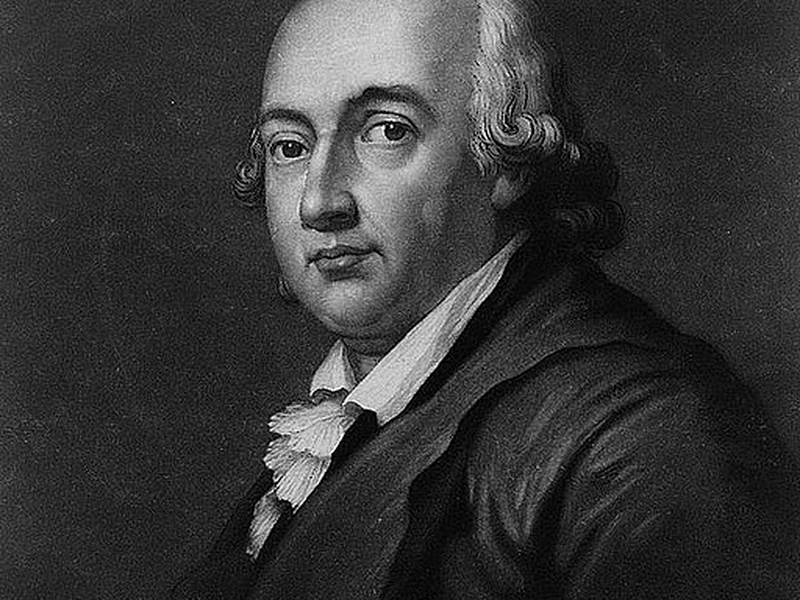
johann_gottfried_von_herder_by_john_sartain
Nationalism

Nations: Grown or Imagined?

R omantic thinkers like Johann Gottfried Herder, developed an organic conception of nationhood. For Herder, a nation is an extended family, and so a perfect nation, the most natural state, is “one nation, an extended family with one national character." (I rely on this essay by Richard White.) People have…

April 27, 2015

Imagining Finland

Nations are “imagined communities,” and one of the ways nations imagine themselves is to imagine themselves as very, very old. The Finnish epic, the Kalevala , serves as an illustration of the nexus between ancient literature and national identity. Anderson writes ( Imagined Communities , 74-5), “In the eighteenth century…

April 27, 2015

The Un-Dante

In a contribution to Petrarch: A Critical Guide to the Complete Works Teodolinda Barolini contrasts the love poetry of Petrarch's Rerum vulgarium fragmenta (also known as the Canzoniere ) with that of Dante. Petrarch continues the courtly paradigm. His interest is in the shifting psychology and drama of the male…

April 27, 2015

Deflating Humanism

In his E nglish Literature in the Sixteenth Century , CS Lewis makes two deflationary comments about the effects of Renaissance humanism. First, “The ‘barbarous’ books [of medieval Latin] have survived in the only sense that really matters: they are used as their authors meant them to be used. It…

April 24, 2015

Mystic Ark

Conrad Rudolph's The Mystic Ark is the product of impressive scholarship. Its focus is on the image of the mystic ark, a complex cosmic portrait showing “the Majesty” (looking like Jesus) enthroned, flanked by angels, holding a large disk, inscribed with a square turned sideways like a diamond. Inside the…

April 24, 2015

Showing page 435 of 2212

Browse by Category

In Medias Res

Your weekly digest for all things Theopolis.

Donate

Theopolis is nearly 100% donor-supported. Consider joining us on our mission.