Theopolis Logo

Writing

Explore our collection of theological essays, biblical studies, and reflections on faith and culture.

See all
last-supper
Luke

Table Talk

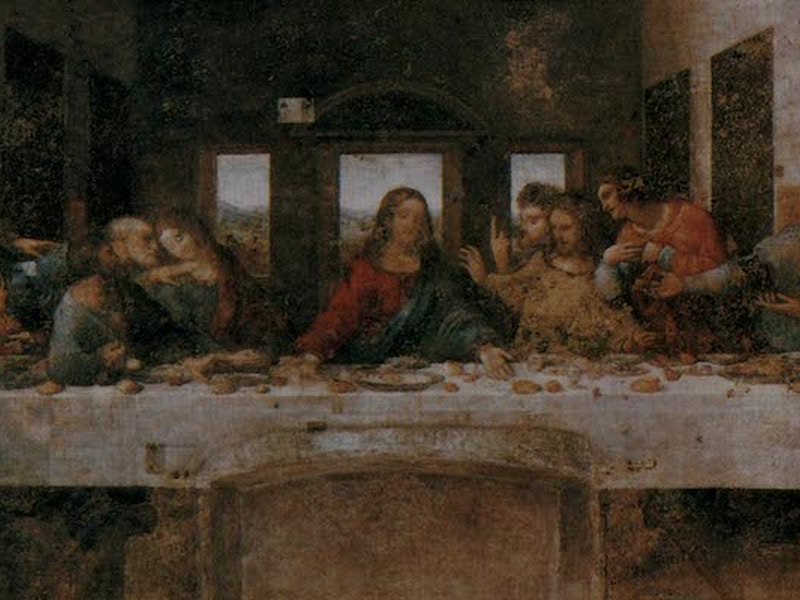
Along His journey to Jerusalem, Jesus stops frequently to have meals, three times with Pharisees (7:37-50; 11:37-54; 14:1-35). Meals were central to Jesus’ ministry. He comes “eating and drinking” (Luke 7:34). While His meals are not just for refreshment, they are opportunities for teaching the protocols of the kingdom. Meals…

by Peter LeithartApril 19, 2016

music-violin
Biblical Theology

A Musical Case for Typological Realism, (Part 4)

Time as a realm of participation can be difficult for us imaginatively to grasp. While music is a profoundly temporal art, exploring the medium of time like no other, most of our temporal experience seems decidedly unmusical in character, disjointed and unorchestrated. The form in which we naturally discover time…

by Alastair RobertsApril 14, 2016
John

Jesus' Burial Clothes

John devotes much attention to Jesus’ burial clothes. He tells us that Nicodemus brought about a hundred pounds of myrrh and aloes to spice Jesus body, and that He was bound in linen wrappings. We find out that His body and His head were wrapped separately. (John 19:39-40; 20:6-7). When…

by James B. JordanApril 12, 2016
clock
Biblical Theology

A Musical Case for Typological Realism, (Part 3)

Thinking about time in terms of music also helps us to appreciate its unity and inner relations. Henri Bergson observes our cultural habit of dividing time into discrete moments, and conceiving of these as if akin to objects in a spatial succession. [1] Against such a notion, Bergson argues for…

by Alastair RobertsApril 7, 2016
screen-shot-2016-03-31-at-9-32-11-am
Biblical Theology

A Musical Case for Typological Realism, (Part 2)

As we attend to these and other aspects of music’s temporality, Begbie suggests, we will find means by which to resist some of our habitual modern ways of conceptualizing time, most especially our tendency to conceive of time as if it were a homogeneous set of technologically quantifiable units laid…

by Alastair RobertsMarch 31, 2016
biblioteca-vasconcelos-crop
Biblical Theology

Systematic Typology (Part Three)

The Hidden Dimension In many fields of scientific study, the apparent complications and contradictions are dispelled once the internal logic is perceived. Biblical hermeneutics is no different, since the author of Creation is the Author of the Word. The Bible’s literary labyrinth radiates organically from an algorithm so simple it…

by Mike BullMarch 29, 2016

Showing page 133 of 309

See all

Showing page 37 of 43

See all

Suffer the Children

Judith Gundry's contribution to The Child in the Bible examines the place of children in Mark's gospel, with particular focus on the episode of Jesus blessing the children. It's an illuminating essay. Mark includes no infancy narratives, but regularly shows Jesus exerting the power of the kingdom to rescue and…

November 14, 2017

Justification in the Age of Emancipation

In his Happiness Paradox , Ziyad Marar explores the sources of "justification." Humiliation is a uniquely human form of suffering. How do we deal with it? Our strategies for staving off humiliation are strategies of "justification." Freud offers some possibilities, He "enumerates a range of ways we avoid this kind…

November 13, 2017

Mystical Atheism

Virginia Woolf, atheist though she was, couldn't avoid religious language when she spoke about her writing. Writing began from "a revelation of some order; it is a token of some real thing behind appearances; and I make it real by putting it into words." It was her "shock-receiving capacity is…

November 10, 2017

Tales of Reason

Robert Brandom ( Tales of the Mighty Dead , 13-14) observes a continuity between Hegel and Kant: Both take concepts as "norms for judgment. They determine proprieties of application to particulars of terms that, because of the normative role they play in such judgments, express universals." But then Hegel adds…

November 10, 2017

Tridentine Utraquism

Did the Council of Trent allow communion in both kinds, in bread and wine? The answer is complicated. Nathan Mitchell ( Oxford History of Christian Worship , 338-9) writes that "After intense behind-the-scenes negotiations, Pope Pius IV authorized communion in both species for German (16 April 1564). In effect, the…

November 10, 2017
Reformation

Misreading the Reformation

Reviewing Carlos Eire's Reformations at First Things , Eamon Duffy claims that "Protestantism 'desacralized' the world by accepting an essentially binary division of reality into spirit and matter. That division was expressed in Reformation iconoclasm and the rejection of the notion that material objects—the bread and wine of the Mass,…

November 10, 2017

Showing page 123 of 2212

Browse by Category

In Medias Res

Your weekly digest for all things Theopolis.

Donate

Theopolis is nearly 100% donor-supported. Consider joining us on our mission.