Theopolis Logo

Writing

Explore our collection of theological essays, biblical studies, and reflections on faith and culture.

See all
laura-nyhuis-vg_b61t8efs-unsplash
Advent

5 Reasons I Don't Like Advent

First, I love my Christmas songs. This is how I think of it: the season of Advent gets in the way of singing what I want to sing. How can you not listen to Nat King Cole in December? Or Bing Crosby, Harry Connick Jr., and Amy Grant? Even though…

by Caleb SkogenDecember 16, 2021

johnny-cohen-oxoxqlawve0-unsplash
Covenant

Grandparenting and the Transcendent Summons

Introduction Imagine the stereotypical American grandparents. Once you have the outline, start filling in the details. What picture emerges? Maybe something like what Ogden Nash said, “When grandparents enter the door, discipline flies out the window.” Or maybe the oft-repeated assertion that it’s the grandparent’s job description “to spoil the…

by Jason CherryDecember 14, 2021
guillaume-de-germain-z_br8toccpe-unsplash
Deuteronomy

The Audacity of Lament

Hundreds of generations of ancient Israelites grew up as children of Abraham, inheritors of the covenant—the promises of God. These promises were more than nice bumper stickers or framed photos to cover empty space in their homes–these promises were at the heart of their very identity–individually and collectively. Genesis “I…

by Zach MccartneyDecember 9, 2021
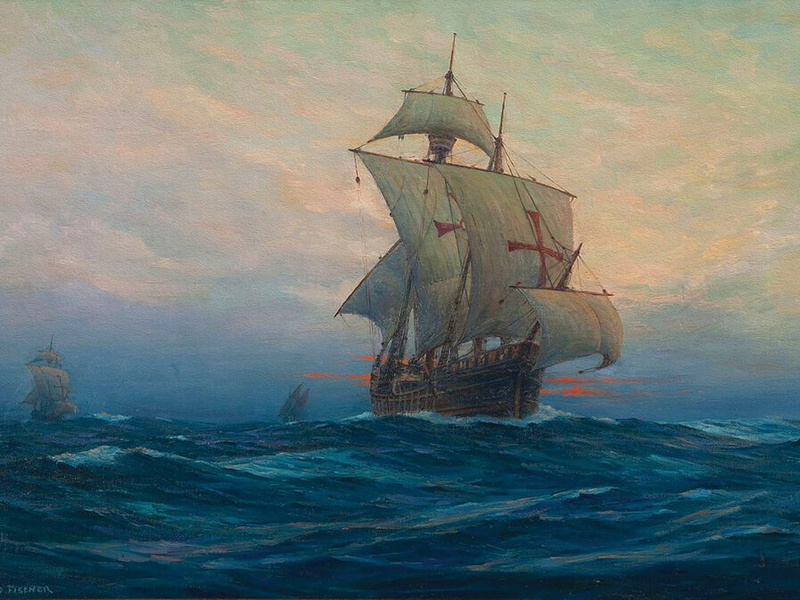
fischer-fleet-of-columbus-edit
Hermeneutics

Barren Worlds

Aliens and Sojourners When the question “Is there life on other planets?” is asked, even the best theologians can only reply, “The Bible doesn’t tell us.” Well, in truth, the Bible does tell us, but only if we are paying attention. …and there was not a man to till the…

by Mike BullDecember 7, 2021
vino-li-j4jjsfjkhpi-unsplash
John

Jesus’ Search for a Wife

John runs a theme throughout his gospel that bubbles under the surface—Jesus is searching for, and finding, a wife. John launches into the narrative proper with a statement of where he’s going. “On the third day there was a wedding” (John 2.1) is about as good an example of flash…

by Tim SuffieldNovember 30, 2021
jackson-david-cicbinoyb7u-unsplash

Touch

I have come to believe that a great many people are almost too weak to repent in any very open way. There must first be some level of healing. In some cases, including biblical ones, there is not even any evidence of faith on the part of the recipients of…

by Richard BledsoeNovember 23, 2021

Showing page 49 of 309

See all

Showing page 37 of 43

See all

Tale of Two Women

In Numbers 12, Miriam and Aaron object to Moses’ Cushite wife. Miriam becomes leprous, is excluded from the camp, and restored on the eighth day. That is to say: The Messiah’s Jewish sister objects to the Gentile bride, and is cast out of the camp, but then she is cleansed…

November 9, 2007

Sacrificial sequence

Hicks again: He organizes his discussion of the New Covenant fulfillment of the sacrificial system in the phrases “life surrendered,” “life transformed,” and “life shared.” Reconciliation is made on the basis of life surrendered, blood shed, but that’s not the end point of the reconciling sacrifice. This enables him to…

November 8, 2007

Burning flesh

FCN Hicks writes in his 1946 book on sacrifice that the burning of an animal on the altar was not destructive but transforming: “The offering is not destroyed but transformed, sublimated, etherealised, so that it can ascend in smoke to the heaven above, to the dwelling-place of God.” He cites…

November 8, 2007
Philosophy

Signs and domination

Only God, Augustine argues in his treatise on music, acts on rational souls directly, “per seipsum.” Human beings operate on one another’s souls through intervening bodies, that is, through the words and other signs. God has arranged the world this way, he says, as a check on human ambition and…

November 8, 2007

Signa data

Many translators and interpreters of Augustine’s de doctrina Christiana translate “signa data” as “conventional signs.” But there’s something to be said for taking the phrase literally (as some commentators do). The difference between naturalia and data, Augustine says, is that the latter occur by the will of a sign-user while…

November 7, 2007
History

Sixteenth-century exchanges

Shakespeare recognized that something new was in the offing, but the actual situation of England and Europe in the sixteenth and seventeenth centuries was far more complicated that Timon of Athens suggests. The gift-society to which Timon is attached was not being completely replaced, nor was the market the main…

November 7, 2007

Showing page 1609 of 2212

Browse by Category

In Medias Res

Your weekly digest for all things Theopolis.

Donate

Theopolis is nearly 100% donor-supported. Consider joining us on our mission.