Theopolis Logo

Writing

Explore our collection of theological essays, biblical studies, and reflections on faith and culture.

See all
screenshot-2025-01-28-at-9-02-46-am
Postmillennialism

Pessimistic Postmillennialism

For ye had compassion of me in my bonds, and took joyfully the spoiling of your goods, knowing in yourselves that ye have in heaven a better and an enduring substance. Hebrews 10:34 There is an old Puritan dictum that goes, “Sit lightly on the world.” George MacDonald places it…

by Garrett SoucyJanuary 28, 2025
1411px-diego_velazquez_065
Biblical Theology

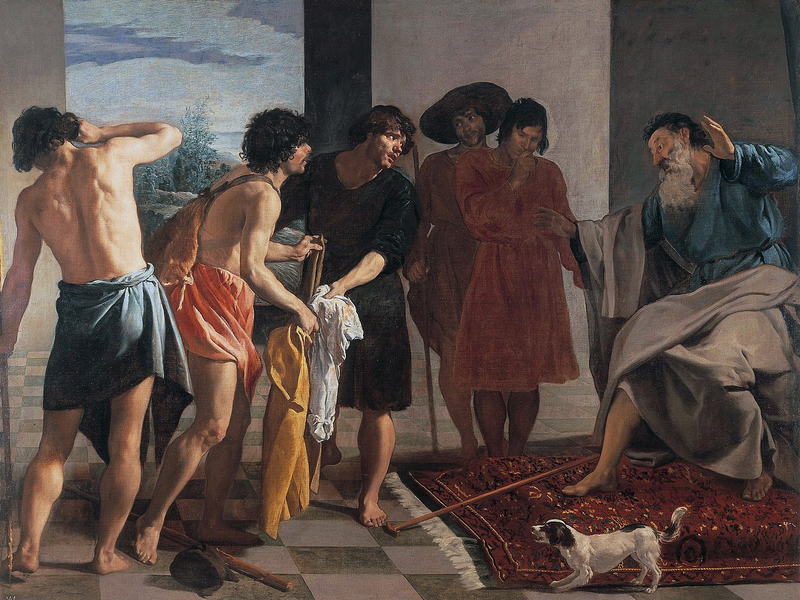
Joseph, Jesus, and the Descent to Egypt

As Genesis unfolds, God chooses a line of promise out of the nations. One by one its offshoots are peeled away as the story zooms in on God’s chosen people, Israel. First, the line of Cain is peeled away as Cain is sent out from the presence of YHWH. Though…

by James BejonJanuary 21, 2025
212342fgsdl
Exhortation

An Eschatological Vision for Ministry

The following article was an address given to Anselm Presbytery (CREC) in the Fall 2024. Grace to you and peace from God our Father and the Lord Jesus Christ. Pray with me. Father of Heavenly Lights and fount of all Wisdom, guide us we pray, by your Word and Spirit,…

by Bo CogbillJanuary 14, 2025
451199882_864804372346894_3713307977104331839_n
Books

What I Read Last Year

At my age, I’ve given up on the fantasy of “keeping up.” Much of my reading is now narrowly focused, research-reading in service of writing projects. If you want bibliography on the ontology of artifacts in Aristotle and Thomas Aquinas (which you don’t), or the purity laws of Leviticus, or…

by Peter LeithartJanuary 6, 2025
aaron-burden-qjdzyt_k8xg-unsplash
Books

What I'm Reading

I have been reading, thinking, and writing about the Internet and its effects upon our identities, communities, polities, and discourses for nearly a copy of decades. In that time, I have encountered no book as perceptive on the subject as Antón Barba-Kay’s A Web of Our Own Making: The Nature…

by Alastair RobertsDecember 31, 2024
screen-shot-2022-08-04-at-9-36-57-am
Philippians

Enemies of the Cross: Philippians 3:18

Identifying the men Paul refers to as “enemies of the cross” in Philippians 3:18 turns out to be relatively difficult. Peter O’Brian speaks of “all kinds of suggestions regarding their identity,” and offers a list of interpretations: “moral libertinists, behavioural materialists, orthodox Jews, lapsed or apostate Christians—because of persecution, Jewish…

by Ralph Allan SmithDecember 30, 2024

Showing page 14 of 309

See all

Showing page 37 of 43

See all

By the Spirit

Paul says that one can only say “Jesus is Lord” by the Spirit (1 Corinthians 12:3). He adds later in the same chapter that we are incorporated into the body, the one-and-many body of the visible church, by “one Spirit” (12:13). Surely Paul exaggerates. Anybody can say Jesus is Lord.…

February 22, 2007

Righteousness by faith

ERH sees faith not as a “religious” issue but as one of the driving forces of history. All revolutions begin in faith, and the faith that drives historical change is a faith that is reckoned as justice: “Faith is a belief in things unseen; it goes against hope, it defies…

February 22, 2007
History

American Revolution

Was the American Revolution a Revolution? ERH concludes it was a “half-revolution” rather than a total revolution on the scale of the Russian, French, Puritan, Reformation, and Papal revolutions. Evaluating the revolutionary character of the American Revolution rests partly on the question of what “revolution” meant to the participants. ERH…

February 22, 2007

Liturgical uniformity

To outsiders, the Roman Catholic church appears to have a uniform liturgical tradition, of long standing. Rosenstock-Huessy points out that the uniformity of the Mass is a rather late development. During the 19th century, “the movement of Solesmes united all the churches of the Catholic world by introducing the Roman…

February 22, 2007

Receiving brothers

Within two verses, John accuses Diotrephes of refusing to “receive us” and refusing to “receive the brethren” (3 John 9-10). The first refers to an acknowledgement of authority; receiving “us,” the elder and his co-workers, would mean listening and obeying. The second refers to hospitality; receiving the brothers means welcoming…

February 22, 2007

In manner of God

John commends Gaius not only for receiving traveling brothers but for sending them on their way “in a manner worthy of God” (3 John 6). What does this mean? Stott is certainly right to say that they are to be treated as servants of God. But John’s language is more…

February 22, 2007

Showing page 1713 of 2212

Browse by Category

In Medias Res

Your weekly digest for all things Theopolis.

Donate

Theopolis is nearly 100% donor-supported. Consider joining us on our mission.