Theopolis Logo

Writing

Explore our collection of theological essays, biblical studies, and reflections on faith and culture.

See all
tanner-mardis-xuxghzhibn4-unsplash-1-2
Biblical Studies

Tweets-turned-Notes on the Bible’s Chronology

Summary In what follows, I will consider the “year-stamps” employed in Scripture, i.e., statements of the form, “Such-and-such an event took place in the Xth year of Y.” In the process, I will suggest some ways in which the Biblical narrative might relate to events in the extra-Biblical world, though…

by James BejonJuly 16, 2019
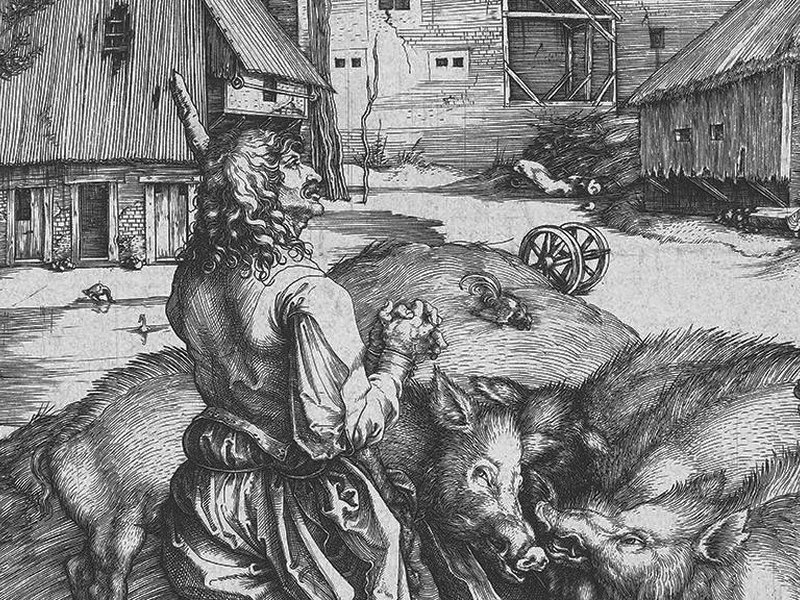
durer-prodigal-son-2
Luke

Perspectives on the Prodigal, (Part 2)

In the first essay on the parable of the Prodigal Son, I suggested that the problems commentators and others encounter in interpreting Jesus three-part parable are not accidental. These are not just problems in our ignorance of cultural background. They are intentional features of the stories —stories designed to poke…

by Ralph Allan SmithJuly 11, 2019
durer-prodigal-son-2
Luke

Perspectives on the Prodigal, (Part 1)

The story of the Prodigal Son is perhaps the most well-known story in the Bible. As others have observed, it may also be one of the most misunderstood. In two short essays, I will point out features of this story that are commonly neglected, aspects of Jesus’ parable that might…

by Ralph Allan SmithJuly 9, 2019
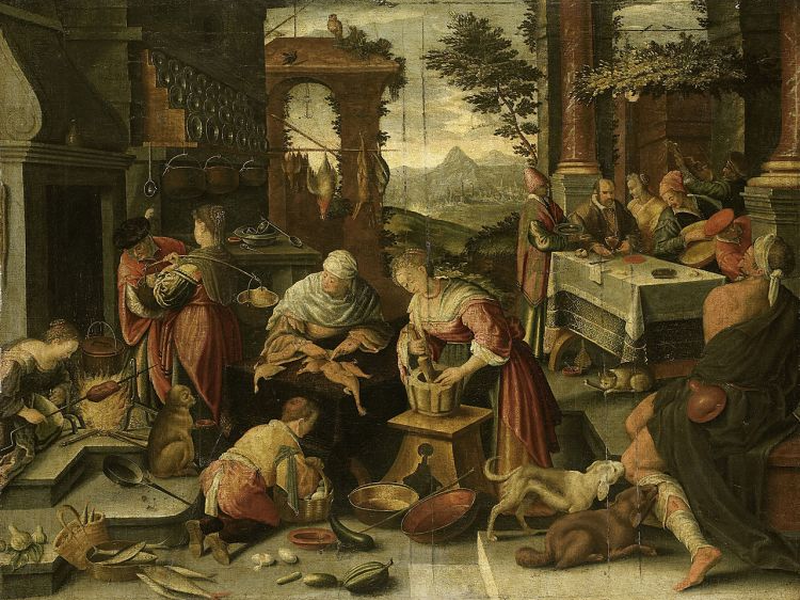
de-rijke-man-en-de-arme-lazarus-by-jacopo-da-ponte-16th-century
Luke

Lazarus and the Rich Man

The parable of Lazarus and the nameless rich man is not an independent story. It is part of a long context that begins in Luke 15:1, where Jesus is eating with tax collectors and sinners and the scribes and Pharisees grumble. In response to their hardheartedness, Jesus tells a three-part…

by Ralph Allan SmithJuly 4, 2019
aaron-burden-uynrnfdkjwg-unsplash
Luke

Everybody has Dropsy - Luke 14:1-24

The Bible is written so that even when a reader cannot pick up on what might be deeper or more detailed aspects of a text, there is virtually always a message to be heard. In the ancient world, where the “reader” of Scripture would likely be a church official facing…

by Ralph Allan SmithJuly 2, 2019
communion
Biblical Theology

Fruit Trees and Grain Plants

The distinction between garden (or vineyard) and field begins in Genesis 2. This relates to the ordering of the formless world. Plants of the field are contrasted with the garden planted by God in Genesis 2:5&8. Later on, under the Old Covenant the Israelites will be required to keep their…

by James B. JordanJune 27, 2019

Showing page 77 of 309

See all

Showing page 37 of 43

See all

Jihad

Despite the evidence of the past half-decade (longer, actually), many Muslims still insist on portraying Islam as fundamentally peaceful, tolerant of non-Muslims, and claim the holy-war interpretation of jihad as an aberration of a few fanatics. Perhaps not surprisingly, these apologists are found not only in Arab and Iranian mosques…

December 30, 2006

History of texts

One way to characterize the modern innovation in biblical interpretation is that it changes the Bible from a history of salvation into a history of documents. The Bible does not give access to history or the acts of God; it only gives us access to itself - the Bible as…

December 30, 2006
Literature

Oxford Companion

The new edition of the Oxford Companion to English Literature , edited by novelist Margaret Drabble, is a superb, entirely updated reference work. The range is astonishing: As one would expect, it includes biographical entries for British poets and novelists from the earliest times to yesterday, but also reviews the…

December 30, 2006
History

Allegory and the West

Gadamer traces the development of the notion of symbol and the corresponding, and contemporaneous, devaluation of allegory. Allegory came to be identified with “non-art” as experiential-expressive notions of art and poetry developed in post-Kantian romanticism. Along the way, he notes the importance that allegory played in the formation of Western…

December 29, 2006

Advice to young scholars, and old

In the same 1962 interview, Rosenstock-Huessy has some shrewd advice about the corrupting power of grant money on youn scholars. “If I have to solicit great foundations for money for my research,” he says, “then I have to propose something which is already obsolete for me. I know no researcher…

December 29, 2006

Masculine education

Rosenstock-Huessay notes that the differences between European and American elementary education have much to do with the fact that “The teaching function in America, until recent years [this from a 1962 interview], had been women’s work. All teaching up to higher education, therefore, had a completely different appearance than in…

December 29, 2006

Showing page 1745 of 2212

Browse by Category

In Medias Res

Your weekly digest for all things Theopolis.

Donate

Theopolis is nearly 100% donor-supported. Consider joining us on our mission.