Theopolis Logo

Writing

Explore our collection of theological essays, biblical studies, and reflections on faith and culture.

See all
sixteen-miles-out-al48tflf4e8-unsplash
Food

Gluttony In The Bible (As Opposed To Gluttony In The American Church)

In the Bible, fatness is such a blessing, that it is especially hard to understand why wicked men are permitted to enjoy such a state. It requires a theodicy and faith in God. Thus: “For they have no pangs until death; their bodies are fat and sleek . They are…

by Mark HorneAugust 12, 2013

jeremy-yap-j39x2xx_8cq-unsplash
How to Worship

Biblical Worship (Video with James B. Jordan)

[fve]http://vimeo.com/71901553[/fve]

by Peter LeithartAugust 8, 2013
chris-bair-ndczc5739ck-unsplash
Deuteronomy

Holy Things for Holy People

The allusion to the Exodus story is contained in the first words of Deuteronomy 14:1 — “ye are the sons of Yahweh your God” — as well as in 14:2 in the use of the technical term translated “treasured possession,” “His own possession,” “peculiar people,” “precious people,” and so forth.…

by Ralph Allan SmithAugust 5, 2013
adam-and-eve-in-the-garden-of-eden-wenzel-peter
Deuteronomy

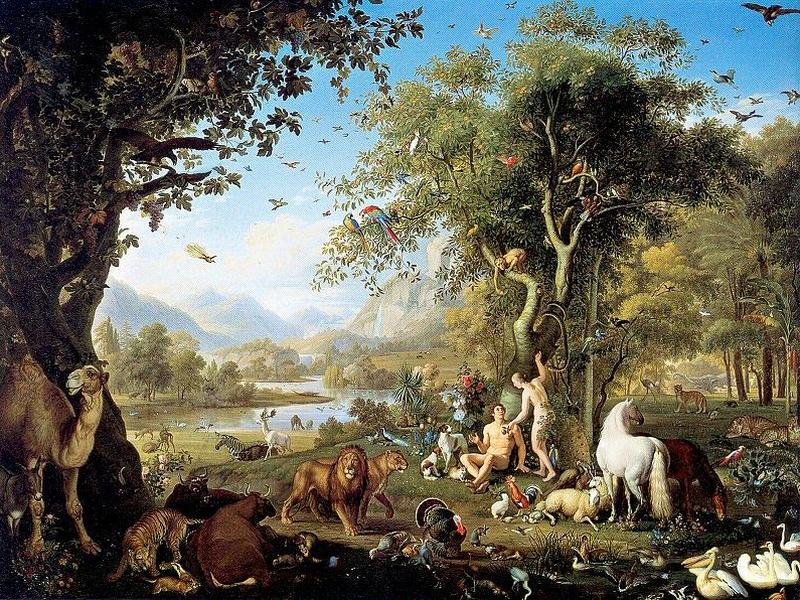
Forbidden Foods

I have argued that Deuteronomy 14:1-21 is an independent literary unit that applies the Third Word to the lives of Israelites from the time of Moses and Joshua. In this short pericope, Moses suggests broad and deep meaning by means of literary allusion to the stories of the creation and…

by Ralph Allan SmithJuly 31, 2013
david-weber-fwuo_zluhnw-unsplash
How to Worship

Pro-Sacramental Reformation

In his recently republished The New Creation , the late, delightful Herbert McCabe defends the priesthood of the plebs as roundly as anyone could want. Citing Hebrews, he claims that "there is an essential difference between the Christian community and the community of the Old Law, or any other religious…

by Peter LeithartJuly 29, 2013
eric-ward-7kqe_8meex8-unsplash
Augustine

Sexual Idolatry

Augustine famously prayed, “Our hearts our restless until they rest in You.” True indeed. Being creatures, we inherently sense our ontological poverty—our innate condition of dependence—and are compelled to find a sense of security. And it is also true—as Augustine’s own narrative painfully illustrates—that one of the things we most…

by Gerald HiestandJuly 24, 2013

Showing page 190 of 309

See all

Showing page 37 of 43

See all
Biblical Studies

Critical Scholarship

One of the most annoying things about critical biblical scholarship is the way that every discussion has to contribute to questions of composition, authorship, historical setting, etc. Harrington gives a very intriguing paper on holiness in Ezra-Nehemiah, but the whole thing is part of a “larger” argument about the common…

November 19, 2006

Purity and holiness

Hannah Harrington gave a very fine presentation on the holiness and purity terminology in Ezra and Nehemiah. She showed that these post-exilic texts display an expansion of holy space to encompass the whole city as well as an expansion of the duties of Levites, a closing of the gap between…

November 19, 2006
Biblical Studies

Criterion of antiquity

John Milbank claims that the Wellhausen documentary hypothesis is shaped by what he calls the “liberal Protestant metanarrative,” the view that Christianity moved from a religion of inner simplicity to a religion of complex external ritual (JEDP traces this story). In his SBL presentation, Nick Perrin of Wheaton showed how…

November 18, 2006

Theopoiesis

Carl Mosser of Eastern College gave a superb presentation on deification at the ETS meeting. A large part of the presentation was a study of terminology. He noted that the Greek work THEOS (often thought to be equivalent to “God”) had a broader meaning, referring to powers that were immortal,…

November 18, 2006
History

More from Latour

A few further scattered comments from and on Latour. 1) He disputes the notion that the modern world is disenchanted, claiming that the claim of disenchantment is merely the reflex of the Constitution of modernity and its premise that We are completely different from Them. He also attributes the modern…

November 17, 2006

Remnant, Edom, AD 70

Some reflections based on an ETS talk by Edward Meadors on Romans 9-11. Meadors suggested that “Esau” in Romans 9 refers to Esau as the patriarch of Edom, well-known for its opposition to Israel throughout the centuries. That is Malachi’s focus in the passage Paul cites. And this is set…

November 17, 2006

Showing page 1761 of 2212

Browse by Category

In Medias Res

Your weekly digest for all things Theopolis.

Donate

Theopolis is nearly 100% donor-supported. Consider joining us on our mission.