Theopolis Logo

Writing

Explore our collection of theological essays, biblical studies, and reflections on faith and culture.

See all
sixteen-miles-out-al48tflf4e8-unsplash
Food

Gluttony In The Bible (As Opposed To Gluttony In The American Church)

In the Bible, fatness is such a blessing, that it is especially hard to understand why wicked men are permitted to enjoy such a state. It requires a theodicy and faith in God. Thus: “For they have no pangs until death; their bodies are fat and sleek . They are…

by Mark HorneAugust 12, 2013

jeremy-yap-j39x2xx_8cq-unsplash
How to Worship

Biblical Worship (Video with James B. Jordan)

[fve]http://vimeo.com/71901553[/fve]

by Peter LeithartAugust 8, 2013
chris-bair-ndczc5739ck-unsplash
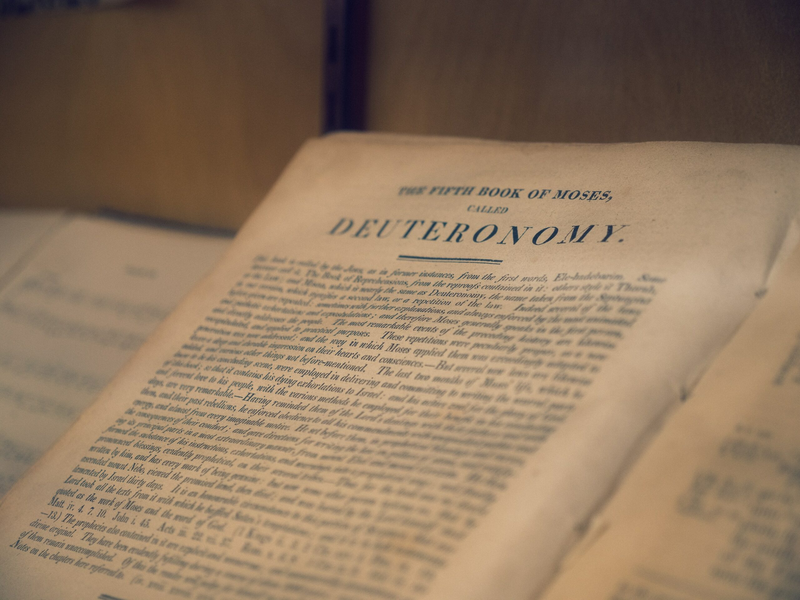
Deuteronomy

Holy Things for Holy People

The allusion to the Exodus story is contained in the first words of Deuteronomy 14:1 — “ye are the sons of Yahweh your God” — as well as in 14:2 in the use of the technical term translated “treasured possession,” “His own possession,” “peculiar people,” “precious people,” and so forth.…

by Ralph Allan SmithAugust 5, 2013
adam-and-eve-in-the-garden-of-eden-wenzel-peter
Deuteronomy

Forbidden Foods

I have argued that Deuteronomy 14:1-21 is an independent literary unit that applies the Third Word to the lives of Israelites from the time of Moses and Joshua. In this short pericope, Moses suggests broad and deep meaning by means of literary allusion to the stories of the creation and…

by Ralph Allan SmithJuly 31, 2013
david-weber-fwuo_zluhnw-unsplash
How to Worship

Pro-Sacramental Reformation

In his recently republished The New Creation , the late, delightful Herbert McCabe defends the priesthood of the plebs as roundly as anyone could want. Citing Hebrews, he claims that "there is an essential difference between the Christian community and the community of the Old Law, or any other religious…

by Peter LeithartJuly 29, 2013
eric-ward-7kqe_8meex8-unsplash
Augustine

Sexual Idolatry

Augustine famously prayed, “Our hearts our restless until they rest in You.” True indeed. Being creatures, we inherently sense our ontological poverty—our innate condition of dependence—and are compelled to find a sense of security. And it is also true—as Augustine’s own narrative painfully illustrates—that one of the things we most…

by Gerald HiestandJuly 24, 2013

Showing page 190 of 309

See all

Showing page 37 of 43

See all
Biblical Studies

Incarnational revelation

Westminster OT professor Pete Enns has been a friend since he taught me German at seminary nearly twenty years ago, and as editor of the Westminster Journal he regularly published my work. I have raised questions to him in private in the past, and we have had our friendly disagreements.…

November 17, 2006

Cleanse, consecrate, atone

Jay Sklar of Covenant Seminary carefully examined the uses of various terms for cleansing, consecrating, and atonement, particularly aiming to distinguish “atone” (Heb kpr) from the others. He took aim particularly at Milgrom’s claim that kipper “means purge and nothing else,” and is synonymous with other terms for purging. Against…

November 17, 2006

Eternity in the heart

Brian Gault gave a carefully-argued paper on the meaning of “ha-olam” in Ecclesiastes 3:11 - normally translated as “eternity.” Gault ran through a number of possible interpretations of the verse, finally suggesting a repointing leads to a translation as “darkness” or “ignorance.” The point is that God makes the world…

November 17, 2006

Vestigia trinitatis

Keith Johnson gave a solid exposition of Augustine’s views on the vestigia trinitatis in an ETS session this morning. He argued that Augustine is not using the vestigia to prove the Trinity or as a “second root” (Barth) in addition to the economic revelation of the Trinity. In fact, Augustine…

November 16, 2006
Politics

True Toleration

J. Budziszewski gave a sharply argued and spryly humorous deconstruction of liberalism’s neutralist view of tolerance, arguing that liberal states are confessional states that pretend not to be and that liberalism leads to a disguised dictatorship (a plenary ETS session). He suggested that a confessional state that follows what he…

November 16, 2006
History

Purity

No doubt it goes without saying after the previous few posts, but Latour’s anthropological assessment of modernity provides a lot of ammo for a study of modernity that would treat it as the creation of a purity culture, as dirt-avoidance.

November 15, 2006

Showing page 1762 of 2212

Browse by Category

In Medias Res

Your weekly digest for all things Theopolis.

Donate

Theopolis is nearly 100% donor-supported. Consider joining us on our mission.