Theopolis Logo

Writing

Explore our collection of theological essays, biblical studies, and reflections on faith and culture.

See all
screen-shot-2022-05-12-at-12-07-23-pm
Baptism

Do I Believe in Baptismal Regeneration?

I appreciate Andy Webb’s recent entry into the current discussion over baptismal efficacy. 1 This is an issue which has consumed a great deal of time and energy in the Reformed world in recent years. It is not likely to subside soon. As a contributing party to the discussion, I…

by Rich LuskMay 30, 2007

michal-parzuchowski-w9uljjwg2fa-unsplash
Children

How to Encourage our Children to Believe the Gospel

The Covenant Vision of the Heidelberg & Westminster Catechisms Regarding Children and Baptism 7 POINTS ABOUT THE TEACHING OF THE REFORMED CHURCHES Question 1. What is thy only comfort in life and death? Answer: That I with body and soul, both in life and death, am not my own, but…

by Mark HorneMay 22, 2007
arthur-chauvineau-enjfallamyo-unsplash
Christmas

Celebrating a Calvinist Christmas with a Clear Conscience

Is the Holiday Unpresbyterian? ‘Tis the season to be informed–sometimes in gentleness, often with vigor–by a variety of Christians (and others 1 ) claiming that it is wrong to celebrate Christmas. I have no desire to force anyone to celebrate Christmas against their will. Indeed, it would be insulting to…

by Mark HorneMay 20, 2007
aaron-burden-qjdzyt_k8xg-unsplash
Biblical Horizons

How To Do Reformed Theology Nowadays

This month we begin by considering Alan D. Strange’s article, “Understanding the ‘Federal Vision'” published in the February 2007 issue of New Horizons, the official denominational magazine of the Orthodox Presbyterian Church. Mr. Strange is an OPC minister, a teacher at Mid-America Reformed Seminary, and was a member of the…

by James B. JordanMay 5, 2007
aaron-burden-qjdzyt_k8xg-unsplash
Luke

Why Side with the Sadducees? | A Question for “Full” or “Consistent” Preterists

There is no reason to believe that Matthew 24, Mark 13, or Luke 21 records Jesus prophesying about what is now known in Christian theology as “the Second Coming.” In my opinion, the fact that most modern conservative Christian scholars and pastors are not yet willing to acknowledge that the…

by Mark HorneJune 7, 2006
quien-fue-francis-turretin-1024x576
Baptism

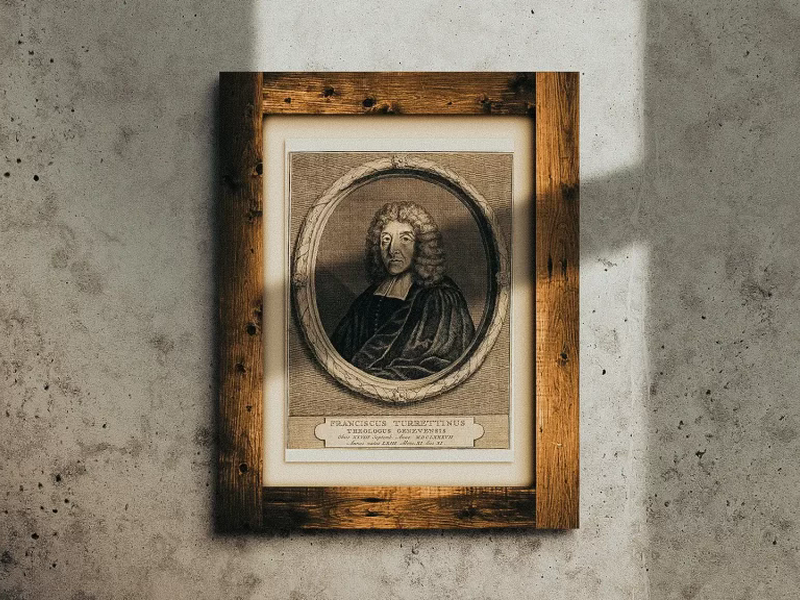
Francis Turretin & Benedict Pictet on Christian Infants

Francis Turretin, the Reformed theologian of the seventeenth century, carefully distinguishes the Reformed view of infant faith from Lutheran and Anabaptist claims. Anabaptists denied any faith to infants so that they could justify their refusal to baptize them. Lutherans affirmed (rightly) that covenant infants were believers, but made no distinction…

by Mark HorneJune 5, 2006

Showing page 220 of 309

See all

Showing page 37 of 43

See all
Philosophy

Heidegger in his woods

Latour is tired of being accused of having forgotten Being, and offers this clever brush-off of Heidegger: “If, scorning empiricism, you opt out of the exact sciences, then the human sciences,, then traditional philosophy, then the sciences of language, and you hunker down in your forest - then you will…

November 15, 2006
History

Semi-modernism

Postmoderns, Latour suggests, think they are still modern, but in fact they have greatly oversimplified the modern Constitution. Postmoderns might emphasize the separation of subject and world, and stretch that opposition to a breaking point (Latour vividly describes them as doing the splits to keep subject and world apart); but…

November 15, 2006
History

Modern temporality

In his very good section on modern temporality, Latour argues that modernity assumes that everything in the present, modern moment, is purely modern, novel. Anything that appears that is not up-to-date is a “archaism,” and moderns worry constantly that this or that event or trend might “turn back the clock.”…

November 15, 2006
History

Representation

One of the key moves made since the 17th century, Latour argues, is a distinction between modes of “representation.” In the laboratory Boyle is representing things before selected witnesses through scientific experiments, giving mute nature a voice through the scientist, while in politics Hobbes suggests that the Sovereign speaks for…

November 15, 2006
History

We Have Never Been Modern

Bruno Latour’s We Have Never Been Modern (Harvard 1993) is a rich study. He describes modernity in terms of a dual process of “purification” and “hybridization.” Purification involves the clean construction of a nature (and science) separated off from society and the self, while hybridization involves mixtures of nature and…

November 15, 2006

Tears of things

And/Or: Virgil is aware that the furor of civil war can be curbed only by an opposing, and more intense, furor. That, as Milbank says, is the way of paganism - peace established only by superior violence against violence. But in those tears Virgil expresses the the painful recognition -…

November 13, 2006

Showing page 1763 of 2212

Browse by Category

In Medias Res

Your weekly digest for all things Theopolis.

Donate

Theopolis is nearly 100% donor-supported. Consider joining us on our mission.