Theopolis Logo

Writing

Explore our collection of theological essays, biblical studies, and reflections on faith and culture.

See all
james-coleman-642705-unsplash
Biblical Studies

The Literary Structure of the Whole Bible

In this essay we will think about how the whole Bible is structured as one Word of God. To begin with, there is only one Bible, not two. While we divide the Bible into Old and New Testaments, that division has no more meaning than divisions into chapters and verse,…

by James B. JordanMay 16, 2019
img_1689
Catholicity

Catholicity and Integrity

How should one badly bruised and inadequate church relate to another? (I am not addressing the blessed possessors of absolutely perfect churches, naturally.) I believe there are three things to bear in mind. First, we must be open to the values in other Christian traditions - even Roman Catholic and…

by James B. JordanMay 14, 2019
screen-shot-2019-05-09-at-2-51-07-pm
Chiasm

Fertile Meaning

The third and sixth day have a second creative act. Note the chiastic arrangement of the material in these special acts and the parallelism between them, see the figure below. The author arranges the description of each day as a chiasm. Each line in the chiasm is mated with a…

by Scott FairbanksMay 9, 2019
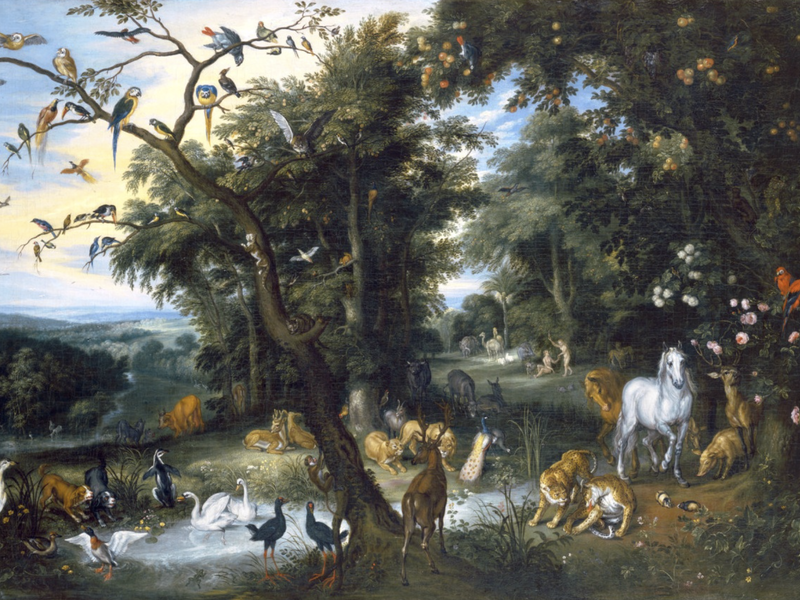
29994-adam-and-eve-in-the-garden-of-eden-800w-tn
Biblical Theology

Nakedness and Clothing

Now the two of them were naked, the man and his woman, and they did not sense shame (Genesis 2:25) The nakedness of Adam and Eve requires several comments. First of all, against those who think that nakedness is what God intended for humanity as a permanent estate, we have…

by James B. JordanMay 7, 2019
screenshot-2023-10-27-at-1-23-26-pm
Epistemology

Restoring the “Other” in Mother

I’ve been reflecting on the meaning of integration, and our longing for integration in a fragmented world. I’ve been connecting my own covenant epistemology further with the thought of scientist-philosopher Michael Polanyi, artist Makoto Fujimura, and Classical Christian metaphysician D.C. Schindler. In my last post , and now in this…

by Esther Lightcap MeekApril 30, 2019
sixteen-miles-out-al48tflf4e8-unsplash
Hermeneutics

Go Tell that Vixen!

Luke 13:31-33 is one of the strangest passages in the Gospel of Luke. It begins with a time note that sounds emphatic “At that very hour.” Then, we are told of Pharisees bringing a message that Herod wants to kill Jesus! In His answer, Jesus speaks of a three day…

by Ralph Allan SmithApril 23, 2019

Showing page 79 of 309

See all

Showing page 37 of 43

See all
Philosophy

Heidegger in his woods

Latour is tired of being accused of having forgotten Being, and offers this clever brush-off of Heidegger: “If, scorning empiricism, you opt out of the exact sciences, then the human sciences,, then traditional philosophy, then the sciences of language, and you hunker down in your forest - then you will…

November 15, 2006
History

Semi-modernism

Postmoderns, Latour suggests, think they are still modern, but in fact they have greatly oversimplified the modern Constitution. Postmoderns might emphasize the separation of subject and world, and stretch that opposition to a breaking point (Latour vividly describes them as doing the splits to keep subject and world apart); but…

November 15, 2006
History

Modern temporality

In his very good section on modern temporality, Latour argues that modernity assumes that everything in the present, modern moment, is purely modern, novel. Anything that appears that is not up-to-date is a “archaism,” and moderns worry constantly that this or that event or trend might “turn back the clock.”…

November 15, 2006
History

Representation

One of the key moves made since the 17th century, Latour argues, is a distinction between modes of “representation.” In the laboratory Boyle is representing things before selected witnesses through scientific experiments, giving mute nature a voice through the scientist, while in politics Hobbes suggests that the Sovereign speaks for…

November 15, 2006
History

We Have Never Been Modern

Bruno Latour’s We Have Never Been Modern (Harvard 1993) is a rich study. He describes modernity in terms of a dual process of “purification” and “hybridization.” Purification involves the clean construction of a nature (and science) separated off from society and the self, while hybridization involves mixtures of nature and…

November 15, 2006

Tears of things

And/Or: Virgil is aware that the furor of civil war can be curbed only by an opposing, and more intense, furor. That, as Milbank says, is the way of paganism - peace established only by superior violence against violence. But in those tears Virgil expresses the the painful recognition -…

November 13, 2006

Showing page 1763 of 2212

Browse by Category

In Medias Res

Your weekly digest for all things Theopolis.

Donate

Theopolis is nearly 100% donor-supported. Consider joining us on our mission.