Theopolis Logo

Writing

Explore our collection of theological essays, biblical studies, and reflections on faith and culture.

See all
31-03-0213
Hermeneutics

Apocalyptic Eyes

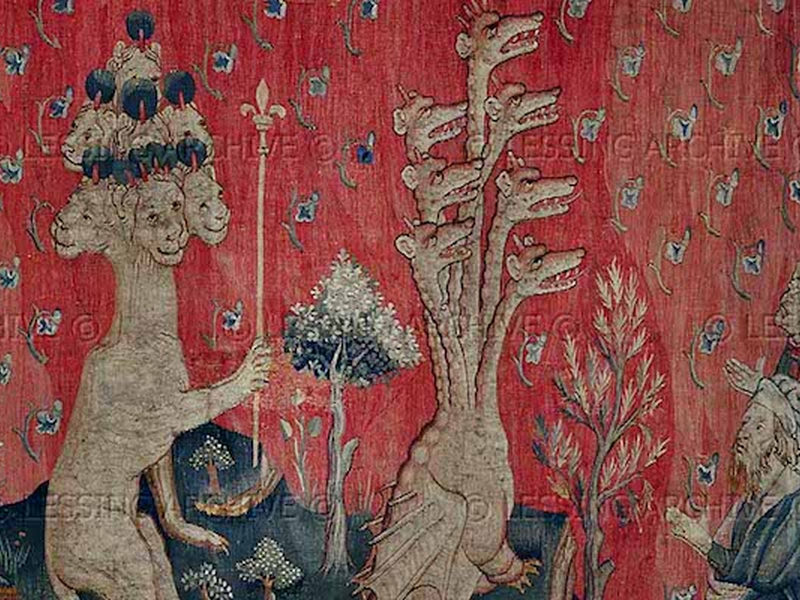
Flying scrolls. Red horses. Beasts coming out of the sea. Winged women. The list goes on. Apocalyptic literature in the Bible is like a cross between science fiction and Marvel comics. And the Bible has a fair bit of this sort of thing. Daniel sees visions in Babylon, Zechariah sees…

by Toby SumpterNovember 4, 2014

bhm-skyline-2
Theopolis News

New Name, New Look

Trinity House Institute has taken a new name, the Theopolis Institute. This striking new name expresses our unique vision and mission and captures the unified purpose behind all our specific programs and activities. We still have Bible, liturgy, and culture in our tagline. We still offer the same courses on…

by TheopolisNovember 4, 2014
istock_000012860926small
Atonement

Not Fearing the Devil

Adam Kotsko offers a socio-political variation on the Christus Victor atonement theory in his 2010 study, The Politics of Redemption: The Social Logic of Salvation . He does this by explaining "the devil" in terms of the Hegelian concept of "objective spirit," Geist . As Kotsko puts it, Geist "refers…

by Peter LeithartOctober 13, 2014
jez-timms-8muutamcwu4-unsplash
Leviticus

The Meaning of Sacrifice

Two factors keep Nahtali Meshel from discussing the meaning of sacrifice until late in his The "Grammar" of Sacrifice . The first has to do with the texts he draws from: "P says little about the meaning of its rituals" (174). The other has to do with the grammatical theory…

by Peter LeithartOctober 8, 2014
jez-timms-8muutamcwu4-unsplash
Leviticus

Praxemics

Chapter 5 of Naphtali Meshel's The "Grammar" of Sacrifice focuses on "praxemics," the physical actions of sacrificial ritual. Praxemes are constituted by six elements: an "atomact," an elementary physical act or gesture; an actor; an object that is acted up; a target for the action and often for the object…

by Peter LeithartOctober 6, 2014
markus-winkler-aid-xyrtlec-unsplash
Leviticus

Jugation and Hierarchy

Two chapters of Naphtali Meshel’s The “Grammar” of Sacrifice cover what he calls “jugation” and “hierarchies.” The first involves the addition of other materials to an animal offering. Jugates include wine, cereal, and oil that are added to the animals (zoemes) that are offered in sacrifice. Some jugates are coordinated…

by Peter LeithartOctober 1, 2014

Showing page 167 of 309

See all

Showing page 37 of 43

See all

Really Lost

Last year, we got the first season of Lost on DVD and were instantly hooked. These guys sure know how to hold an audience. But for me the hold is weakening as we begin watching the second seson, as it becomes increasingly clear that all these people escaped from a…

September 21, 2006

In Praise of Coffee

An early modern document celebrates the purifying qualities of coffee: Coffee is good for “fat persons whose thickened humors circulate with difficulty.” And, it reduces impurities and generally clears out the system: “it restores the stomach, consumes its superfluous humidity, dissipates wind, dissolves the phlegm of the bowels, where it…

September 20, 2006
History

Descartes’s exorcism

Madness in what Foucault calls the “classical period” is conceived as a dazzlement - the madman is darkened with excessive light. In this context, “the Cartesian formula of doubt is certainly the great exorcism of madness. Descartes closes his eyes and plugs up his ears the better to see the…

September 20, 2006
History

Descartes’s exorcism

Madness in what Foucault calls the “classical period” is conceived as a dazzlement - the madman is darkened with excessive light. In this context, “the Cartesian formula of doubt is certainly the great exorcism of madness. Descartes closes his eyes and plugs up his ears the better to see the…

September 20, 2006
History

Divine madness

For the Renaissance, Foucault argues, the line between madness and reason was thin and easily crossed. The madman, in fact, frequently gained insight that the sane did not; think Lear howling on the heath. Over time, madness and truth had been clearly distinguished, and madness ceased to be instructive. Foucault…

September 20, 2006

Exorcizing Zwingli

Dr Jim West is annoyed at me (http://drjimwest.wordpress.com/2006/09/19/confession-time-im-annoyed), though he doesn’t name me. He is responding to an article I wrote attacking what I called “Zwinglian poetics,” where I suggested that Protestants must “exorcise the ghost of Zwingli” if we are going to develop a solid Protestant poetics, which, I…

September 20, 2006

Showing page 1790 of 2212

Browse by Category

In Medias Res

Your weekly digest for all things Theopolis.

Donate

Theopolis is nearly 100% donor-supported. Consider joining us on our mission.